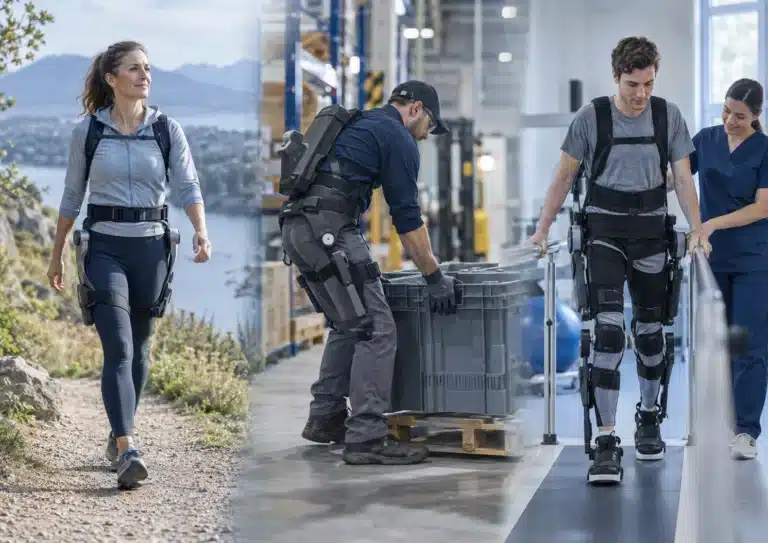

Updated September 2026. Exoskeletons are no longer sold through one recognisable distribution model. An industrial system may reach a buyer through an ergonomics specialist, a professional-tool network or the manufacturer itself. A medical system may depend on a rehabilitation distributor, an O&P or CRT provider, a certified clinical centre, a prescription pathway or an institutional lease. Consumer systems increasingly combine regional e-commerce with physical retail and experience networks. For the wider commercialization context, see The Exoskeleton Market in 2026.
For this 2026 edition, Exoskeleton Index rebuilt the research from the ground up and structured 193 current evidence-backed commercial-access records. This is not a count of 193 distributors. The dataset deliberately separates named commercial channels, manufacturer-direct routes, retail and DTC access, clinical/reference nodes, O&P/CRT pathways, institutional rental and payer/procurement routes. These different routes also help explain why exoskeleton pricing cannot be reduced to a single retail number; see Exoskeleton Prices 2026 for the transaction and pricing side of the market.
Key takeaways
Distribution is fragmenting into several access architectures. The same market now contains classic distributors, manufacturer-owned subsidiaries, multi-brand integrators, professional-tool and PPE networks, O&P/CRT providers, certified centres, institutional rental, DTC and retail. The right route depends heavily on whether the buyer is a factory, hospital, clinic, individual patient, family or consumer.
Europe is the most publicly mapped region in this dataset, not automatically the largest market. Its 131 current core records are driven partly by unusually detailed manufacturer partner pages. By contrast, North America has fewer territory rows but some of the industry’s most sophisticated clinical, prescription and fulfilment pathways.
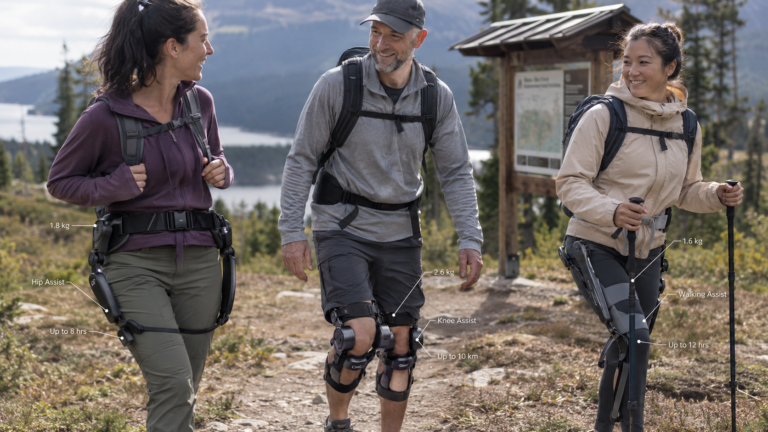
Construction, pediatric rehabilitation and consumer mobility now deserve their own channel logic. Hilti and Festool plug exoskeletons into professional-tool ecosystems; Trexo Robotics and Marsi Bionics depend on therapist and clinical networks; Hypershell is moving from DTC toward an omnichannel retail model.
Clinical access is not distribution. A Trexo clinical site, an ABLE Reference Center or a Marsi Bionics clinical centre may be essential to evaluation or training without being the entity that owns the commercial transaction.
Evidence boundaries matter. A regulatory authorization does not establish a named commercial seller; a dealer locator does not prove that every branch stocks an exoskeleton; a broad partner agreement does not automatically cover every SKU. The v2 dataset keeps those distinctions visible.
How to use this guide
The dataset is organised around geography × use case × channel type × evidence type. This lets a reader start either from a country—“who can help me access an exoskeleton in Portugal?”—or from a problem—“how are pediatric exoskeletons actually accessed around the world?”
Where possible, Exoskeleton Index preserves the source’s own relationship wording: distributor, supplier, commercial partner, provider, system integrator, reference centre, clinical site, retailer or manufacturer-direct route. Those labels are not treated as interchangeable. If you are still deciding which type of system fits the task, start with the Practical Exoskeleton Buyer’s Guide before evaluating the local channel.
Commercial-access models in 2026
| Model | What it means | Representative examples |
|---|---|---|
| Named distributor / commercial partner | A manufacturer names a local or regional organisation that provides commercial access. | Auxivo; HeroWear; Fourier Rehab / HealthTech Partners Global; B-Temia / KUXTAL Bioingeniería |
| Manufacturer-direct / local subsidiary | The manufacturer controls local qualification, demonstration, quotation or fulfilment through its own team or subsidiary. | German Bionic; HAPO / Ergosanté USA; selected Auxivo direct markets |
| Multi-brand specialist / integrator | A local specialist assesses applications and represents multiple exoskeleton systems. | Carl Stahl; Future Mobility; Stanley Handling; ExoLab Technologies |
| Adjacent-industry network | The exoskeleton enters an existing tool, PPE, material-handling, ergonomics or healthcare channel. | Hilti; Verve Motion with HexArmor / uvex |
| O&P / CRT / prescription pathway | Clinical evaluation, fitting, documentation and delivery are part of the access route. | Wandercraft with National Seating & Mobility; Myomo with Ottobock Care; Ekso Bionics |
| Clinical / reference centre | A centre provides evaluation, fitting or training without necessarily being the commercial distributor. | Trexo Centers; ABLE Reference Center; Marsi Bionics clinical centres |
| Rental / lease / fleet | The buyer gains access through recurring use, institutional rental or a fleet model rather than a conventional purchase. | CYBERDYNE Medical HAL; Hilti Fleet; Cosmos Bionics |
| DTC / retail | The manufacturer or a retail network handles consumer discovery and transaction directly. | Hypershell; NAVEE; Dephy; DNSYS |
The EI Commercial Access Stack
Calling an organisation a distributor can hide the parts that actually determine whether a pilot or purchase works. EI therefore separates six commercial-access layers.
| Layer | Typical functions | Why it matters |
|---|---|---|
| 1. Discovery | Local product visibility, qualification, local-language information | A technically available product may still be difficult to identify or evaluate locally. |
| 2. Evaluation | Demo, trial, workplace analysis, clinical assessment, sizing | Often the decisive step for task fit, patient fit and safe adoption. |
| 3. Transaction | Checkout, quote, tender, prescription, insurance or procurement | The buying mechanism changes sharply by segment. |
| 4. Deployment | Fitting, training, implementation and pilot support | Purchasing a device is not the same as integrating it successfully. |
| 5. Support | Repair, warranty, spare parts and maintenance | Local support affects downtime, confidence and lifecycle cost. |
| 6. Market access | Regulatory documentation, reimbursement and payer/procurement navigation | Especially important for medical and regulated buyers. |
Global snapshot
The audited v2 working set contains 193 current core records. These are intentionally not collapsed into one “distributor count”: a territory-level distributor relationship is a different commercial object from a manufacturer-direct country route, a clinical centre or a retail pathway.
| Commercial-access object | Current core records | What is being counted |
|---|---|---|
| Named commercial channels | 155 | Named distributor, dealer, reseller, integrator or commercial-partner territory relationships. |
| Manufacturer-direct | 14 | Country/territory routes controlled directly by the manufacturer or its local subsidiary. |
| Retail | 7 | Named retail or experience-channel routes tied to exoskeleton access. |
| Clinical / reference nodes | 6 | Evaluation, fitting or training nodes that are commercially relevant but not treated as distributors. |
| O&P / CRT pathways | 5 | Orthotics/prosthetics or complex-rehabilitation-technology fulfilment pathways. |
| DTC | 3 | Direct-to-consumer regional purchase routes. |
| Procurement / payer | 2 | Institutional or payer-specific access routes. |
| Institutional rental | 1 | Rental/deployment route where access is not a conventional sale. |
| Region | Current core records | What the number tells us |
|---|---|---|
| Europe | 131 | Very high public partner transparency across industrial, medical and construction channels. |
| Asia-Pacific | 23 | Mix of manufacturer-led expansion, institutional deployment and named suppliers. |
| North America | 19 | Fewer territory rows but highly developed prescription, CRT/O&P and partner ecosystems. |
| Latin America & Caribbean | 11 | Growing occupational and medical channel layer with uneven country transparency. |
| Middle East & GCC | 6 | Selective medical, workplace and professional-tool routes. |
| Africa | 2 | Sparse current bilateral evidence, but several materially different access models are now visible. |
| Global / multi-region | 1 | A current core relationship that is not cleanly attributable to a single regional bucket. |
These totals describe the audited evidence set. They are not estimates of revenue, installed base, market size or the number of unique distributor companies. For the broader commercialization, investment and adoption picture, see The Exoskeleton Market in 2026.
Current core records by use case
| Use case | Current core records | Commercial pattern |
|---|---|---|
| Manufacturing & logistics | 98 | Manufacturer enterprise teams, ergonomics specialists, material-handling/PPE partners and multi-brand integrators. |
| Institutional rehabilitation | 27 | Rehabilitation distributors, hospital procurement, institutional deployment and rental. |
| Personal / home mobility | 27 | Prescription, CRT/O&P, fitting, training and payer pathways. |
| Occupational health / return to work | 14 | Workplace analysis plus ergonomic or clinical integration. |
| Consumer / outdoor | 11 | Regional DTC, ecommerce, retailer and experience-store access. |
| Pediatric rehabilitation | 10 | Medical distribution, certified therapists, clinical centres and family prescription pathways. |
| Construction & trades | 4 | Professional-tool, dealer, service and fleet infrastructure. |
| Specialist / public sector | 2 | Institutional procurement or payer-specific routes. |
Europe
Europe is the most publicly mapped region in the v2 dataset. That density reflects strong channel infrastructure and unusually transparent partner pages—not automatically a larger market than every other region.
Verified access routes
| Company / system | Local route | Territory | Access model | Evidence status |
|---|---|---|---|---|
| Auxivo occupational range | Named country partners | Multiple European markets | Distributor + local advisor network | Current first-party |
| HeroWear Apex range | Named global partners | Spain, Portugal, France, DACH, Italy, CEE, Benelux and others | Partner network | Current first-party |
| HUNIC SoftExo range | Named partners with advice, demos and support | Germany, Austria, Poland, Spain, UK, Denmark | Distribution/support network | Current first-party |
| Carl Stahl | Multi-brand workplace-exoskeleton offering | Several individually evidenced European markets | Integrator / dealer | Mixed first-party |
| Fourier Rehab / INNTEGRA Robotics | ExoMotus M4 and wider Fourier Rehab portfolio | Spain + Portugal | Official distributor / integrator | Public + EI direct |
| Marsi Bionics / ATLAS 2030 | Medimex, Rehagirona, Skyfi | France, Spain, Poland | Pediatric medical distribution | Current first-party |
| Hilti / EXO-S / EXO-T-22 | Local Hilti professional-tool infrastructure | Multiple local European markets | Tool / service / fleet channel | Current first-party |
| WIRobotics / WIM S | PhysioParts / FysioSupplies | Germany, Austria, UK, Benelux | Exclusive commercial route | Bilateral public |
Industrial & workplace
Europe has the deepest publicly visible workplace channel layer in the current dataset. Auxivo and HeroWear publish broad partner networks; HUNIC combines local advice, demonstrations and after-sales support; Carl Stahl, Future Mobility and Stanley Handling illustrate the emergence of multi-brand specialists that can compare systems rather than simply resell one device.
EASE adds another model through certified resellers for its workplace systems. For an industrial buyer, that distinction matters: a strong channel should be able to analyse a real task, arrange a trial, support worker selection and onboarding, and remain available after deployment. The value of the channel is therefore partly technical and operational, not only transactional. EI’s Manufacturing & Assembly exoskeleton hub provides the wider product and task context for these deployments.
Construction & skilled trades
Hilti is the clearest example of an exoskeleton entering an established professional-tool ecosystem. EXO-S can be purchased or quoted through local Hilti infrastructure, with service and Fleet-style models where offered. Festool ExoActive follows a similar route through an existing professional dealer and service footprint.
This is a fundamentally different go-to-market model from a specialist exoskeleton distributor. Construction buyers already know the procurement channel, the service relationship exists, and the exoskeleton can be evaluated as another piece of professional equipment. Exact availability remains country-specific, however: neither the presence of a Hilti store nor a Festool dealer automatically proves that the exoskeleton is locally offered. See the Construction & Field Operations exoskeleton hub for the broader product and deployment landscape.
Institutional rehabilitation
Institutional rehabilitation remains fragmented by manufacturer and territory. INNTEGRA Robotics gives Fourier Rehab an Iberian route that includes ExoMotus M4. ABLE Human Motion publishes named medical distributors and is separately building a reference-centre layer. Bioservo publishes regional commercial routes for Carbonhand.
The institutional buyer is usually not just buying hardware. Demonstration, staff training, installation, service and clinical workflow integration can all sit inside the relationship. The channel therefore needs to be evaluated for implementation capability as well as territory coverage. The wider clinical product landscape is mapped in EI’s Healthcare & Rehabilitation exoskeleton hub.
Personal / home mobility
Europe’s personal-mobility pathways are less uniform than its workplace channels. B-Temia currently identifies commercial partners for Keeogo in France and the UK, while other mobility systems rely more heavily on prescription, clinic or provider networks. For the end user, the important distinction is whether the local route can actually assess eligibility, fit the system, train the user and support the device after delivery.
Pediatric rehabilitation
Marsi Bionics provides one of the cleanest examples of why a clinical site and a distributor should not be merged. The company separately identifies distributors in France, Spain and Poland and clinical centres in other markets. Trexo Robotics also has European demand pathways, but its commercial structure is not presented as the same type of country-by-country distributor network.
Consumer / outdoor
Hypershell shows how quickly consumer exoskeleton distribution is changing. The company combines regional DTC with named European retail and experience partners, including chains in Italy, France, Germany, Austria and Switzerland. NAVEE sells EXO S Pro through European ecommerce while maintaining a broader mobility dealer infrastructure.
The important caveat is SKU-level availability. A brand may have hundreds of dealers, but that does not mean every branch stocks the exoskeleton. EI therefore treats a verified exoskeleton retail route separately from a general brand dealer locator. For product-level architecture, evidence, pricing and commercial maturity, continue with the Consumer Exoskeleton Comparison 2026.
North America
North America has fewer territory rows than Europe, but some of the most sophisticated commercial-access pathways in the global exoskeleton market.
Verified access routes
| Company / system | Local route | Territory | Access model | Evidence status |
|---|---|---|---|---|
| Verve Motion / SafeLift | Partner programme + HexArmor / uvex | United States / wider commercial scope | Industrial partner ecosystem | Current first-party |
| Wandercraft Eve | National Seating & Mobility + VA pathway | United States | CRT / prescription pathway | Current first-party |
| Myomo / MyoPro | Ottobock Care | United States | O&P / clinical delivery | Current first-party |
| Ekso Bionics / Indego Personal | Named mobility/O&P provider routes | United States / North America | O&P / personal mobility | Current manufacturer |
| Fourier Rehab / ExoMotus M4 | HealthTech Partners Global | United States | Exclusive rehabilitation distribution | Bilateral public |
| Trexo Robotics / Trexo Theo | Assessment → prescription → purchase/lease → certified centre | United States | Pediatric clinical fulfilment | Current first-party |
| HAPO + Nuvo Exo | Manufacturer-owned U.S. infrastructure + separate channel layer | United States | Hybrid direct + distributor | Mixed current |
| Dephy / Sidekick | Direct customized purchase | United States | DTC / wellness | Current first-party |
Industrial & workplace
Verve Motion demonstrates a deliberate ecosystem strategy rather than a conventional distributor list. Its partner programme targets material-handling resellers, ergonomics and safety consultancies, exoskeleton resellers, automation/engineering providers and insurers. That is commercially important because these organisations are already embedded in warehouse and industrial buying decisions.
The result is a channel that can potentially do more than fulfil an order: identify suitable sites, qualify tasks, deploy SafeLift and remain involved after implementation. This adjacent-industry strategy is one of the clearest examples of how workplace exoskeleton commercialization is maturing. The next question is whether the deployment survives real work, which is covered in Why Workplace Exoskeleton Pilots Fail.
Construction & skilled trades
Current exoskeleton-specific construction channels are less transparently mapped than in Europe. EI does not convert broad equipment, PPE or tool distribution into a construction-exoskeleton route unless the exact product is explicitly supported.
Institutional rehabilitation
Fourier Rehab materially strengthened its U.S. route in 2026 by appointing HealthTech Partners Global as its exclusive U.S. distribution partner. The relationship includes commercial access to ExoMotus M4 and demonstration activity. This is a conventional rehabilitation-distribution route compared with the much more prescription-heavy personal-mobility pathways below.
Personal / home mobility
Wandercraft is the clearest example of a structured personal-mobility pathway: clinical evaluation, prescription, fitting and training surround Eve, with National Seating & Mobility acting as the exclusive CRT distribution partner and a separate VA-specific route for eligible veterans.
Myomo added Ottobock Care clinics to its U.S. access infrastructure for MyoPro. Ekso Bionics uses named providers for Indego Personal. These pathways illustrate why personal mobility often depends on clinical and reimbursement infrastructure rather than classic dealership coverage.
Pediatric rehabilitation
Trexo Robotics uses one of the market’s most distinctive pediatric pathways. A family can move through therapist assessment, prescription, purchase or lease, certified-centre fitting/training, home use and ongoing support. The certified centre is commercially important, but it is not automatically the independent seller of the device.
Consumer / outdoor
Dephy / Sidekick is a clean direct-commerce example using a custom-fit consumer purchase process. HAPO illustrates a more complex hybrid structure: HAPO USA provides manufacturer-owned local infrastructure, while Nuvo Exo presents a separate distribution/dealer layer.
Latin America & Caribbean
Latin America is materially richer than the first edition suggested, but access remains highly uneven by country and by product category.
Verified access routes
| Company / system | Local route | Territory | Access model | Evidence status |
|---|---|---|---|---|
| Auxivo occupational range | Named partners | Brazil, Mexico, Chile, Ecuador | Occupational distributor network | Current first-party |
| HeroWear Apex range | Named partners | Guatemala; Puerto Rico / Central America | Workplace partner network | Current first-party |
| B-Temia / Keeogo | KUXTAL Bioingeniería | Mexico | Medical commercial partner | Current manufacturer |
| ExoLab Technologies | Multi-brand sales, ergonomic assessment, demos, deployment and rental/WaaS | Colombia + wider LATAM activity | Occupational integrator | Current channel |
| ExoLab / HAPO | Channel-side authorization | Colombia | Named distribution relationship | One-sided current |
| Lifeward | Verita Neuro relationship | Mexico | Medical distribution | Current first-party |
| Wandercraft Atalante X | ARCSA authorization | Ecuador | Regulatory market entry; seller unresolved | Regulatory only |
Industrial & workplace
ExoLab Technologies materially changes the occupational picture in the region. The Medellín-based company presents a multi-brand model that includes ergonomic assessment, demonstrations, deployment support, training and rental/WaaS. That is closer to an integrator than to a simple online reseller.
Auxivo publishes named partners in Brazil, Mexico, Chile and Ecuador, while HeroWear has routes in Guatemala and Puerto Rico/Central America. Together these relationships show that workplace distribution is no longer limited to one or two isolated Latin American markets.
Construction & skilled trades
Publicly evidenced construction-specific exoskeleton channels remain much thinner than occupational ergonomics routes. EI does not extend a brand’s general industrial footprint into construction unless the exact exoskeleton and route are explicit.
Institutional rehabilitation
B-Temia currently identifies KUXTAL Bioingeniería for Keeogo commercialisation in Mexico. Lifeward has a Mexico route through its Verita Neuro relationship. These routes are more concrete than broad “Latin America” positioning because they identify a product/company relationship in a named country.
Personal / home mobility
Wandercraft has regulatory access for Atalante X in Ecuador, but regulatory clearance does not establish a named local distributor. EI therefore records the market entry without inventing a fulfilment channel that the evidence does not show.
Pediatric rehabilitation
Marsi Bionics maps pediatric clinical centres in Mexico, but those centres appear under its clinical-centre structure rather than its distributor list. That distinction matters because a family may gain evaluation or treatment access at a centre without that centre being the commercial distributor.
Consumer / outdoor
Consumer routes are emerging through local distributors, brand ecommerce and multi-brand specialists, but exact authorization can still be uneven. Ascentiz and Hypershell should therefore be represented only where product/territory evidence is explicit rather than extrapolated from global availability claims.
Asia-Pacific
APAC combines major domestic manufacturers, institutional deployment, named regional suppliers and some of the fastest-evolving consumer mobility models.
Verified access routes
| Company / system | Local route | Territory | Access model | Evidence status |
|---|---|---|---|---|
| CYBERDYNE Medical HAL | Manufacturer-controlled institutional rental | Japan | Institutional rental | Current first-party |
| Trexo Robotics | APEX Mobility | Australia + New Zealand | Named supplier | Current first-party |
| Auxivo occupational range | Named partners | Australia, New Zealand, Malaysia, South Korea, Singapore, Japan, Taiwan | Workplace distributor network | Current first-party |
| HeroWear Apex range | Named partners | South Korea; Australia / New Zealand | Workplace partner network | Current first-party |
| Innophys Muscle Suit | Manufacturer + international distribution | Japan / APAC | Manufacturer + distribution | Current first-party |
| Angel Robotics | Manufacturer-led Southeast Asian expansion | South Korea / Southeast Asia | Direct regional expansion | Current manufacturer |
| WIRobotics / WIM S | Domestic + export partnerships | South Korea / international | Manufacturer / partner model | Current first-party |
Industrial & workplace
APAC’s industrial market is anchored by both domestic manufacturers and imported brands. Auxivo and HeroWear publish named regional partners, while Japanese manufacturer Innophys has built international distribution around the Muscle Suit family.
South Korean companies are also moving beyond purely domestic sales. WIRobotics is developing international routes for WIM, while the broader region increasingly mixes direct manufacturer expansion with country-specific distributors.
Construction & skilled trades
Construction-specific commercial mapping is less transparent than broad industrial/workplace access. EI therefore keeps this category separate rather than assuming that an occupational distributor automatically serves construction and trade users.
Institutional rehabilitation
CYBERDYNE provides one of the strongest examples of a non-distributor medical model. Medical HAL is offered through institutional rental rather than conventional sale. That changes how a hospital evaluates price, service, deployment and lifecycle support. EI’s Healthcare & Rehabilitation hub provides the broader clinical product context.
Angel Robotics continues regional medical expansion, including Southeast Asian markets. EI only promotes a route into the core map when product, country and commercial relationship can be tied together with current evidence; broad expansion announcements are not automatically converted into distributor rows.
Personal / home mobility
Personal mobility in APAC increasingly overlaps with consumer mobility. WIRobotics is one example of a regional manufacturer pursuing direct consumer positioning alongside international partners. The exact transaction, fitting and after-sales model still varies substantially by country.
Pediatric rehabilitation
Trexo Robotics explicitly names APEX Mobility as supplier of its pediatric systems across Australia and New Zealand. Trexo separately lists clinical locations. This is the same methodological distinction seen with Marsi Bionics: supplier and clinical access node are different objects.
Consumer / outdoor
Consumer mobility is particularly dynamic in South Korea, Japan, China and Australia. Regional manufacturers are increasingly combining ecommerce, direct consultation, local partners and international distributors. That makes product-level availability more important than brand-level assumptions.
Middle East & GCC
The GCC is selective rather than uniform: medical distributors, clinical access, workplace partners and professional-tool channels coexist in the same regional market.
Verified access routes
| Company / system | Local route | Territory | Access model | Evidence status |
|---|---|---|---|---|
| ABLE Human Motion | Dar Al Zahrawi Medical | Saudi Arabia | Medical distributor | Current manufacturer |
| Ekso Bionics | Orthomena | United Arab Emirates | Medical distributor/provider | Current manufacturer |
| Lifeward | Verita Neuro | United Arab Emirates | Medical distribution | Current first-party |
| HeroWear Apex range | KITES | Kuwait / Middle East | Workplace partner | Current manufacturer |
| Hilti / EXO-S | Local Hilti store | United Arab Emirates | Professional-tool / direct | Current first-party |
| Trexo Robotics | Dubai clinical location | Dubai, UAE | Clinical access node | Current first-party |
Industrial & workplace
Workplace access is selective rather than absent. HeroWear names KITES for Kuwait/Middle East, while other workplace manufacturers use narrower or less transparent regional relationships.
EI does not split broad “Middle East” wording into individual Saudi, UAE or Qatari rights unless the source itself names those territories. This avoids turning regional marketing language into country-level authorization.
Construction & skilled trades
Hilti provides the clearest construction example. EXO-S is locally listed through the UAE Hilti commercial infrastructure, including local pricing/transaction context. This is an ordinary professional-tool channel rather than specialist rehabilitation or robotics distribution.
Institutional rehabilitation
ABLE Human Motion names Dar Al Zahrawi Medical in Saudi Arabia. Ekso Bionics lists Orthomena in the UAE. Lifeward includes the UAE through its Verita Neuro relationship.
Personal / home mobility
Current public evidence is thinner for personal home-use pathways than for institutional medical sales. Where an international manufacturer has regional regulatory or clinical activity but no named home-delivery pathway, EI keeps those categories separate rather than inferring personal access.
Pediatric rehabilitation
Trexo Robotics lists a Dubai clinical location, creating real pediatric evaluation/training access in the region. That site is recorded as a clinical node, not automatically as the commercial distributor.
Consumer / outdoor
Consumer and outdoor exoskeleton routes are less systematically disclosed than in Europe. Regional ecommerce or shipping availability should be checked at product level rather than inferred from a global web store.
Africa
Public channel transparency remains thin, but the region already shows at least three distinct architectures: local medical manufacturing, industrial integration and channel-side consumer/workplace distribution.
Verified access routes
| Company / system | Local route | Territory | Access model | Evidence status |
|---|---|---|---|---|
| Cosmos Bionics | Institutional partnerships, leasing, training and distributor recruitment | Egypt | Manufacturer-led medical route | Current first-party |
| SUITX by Ottobock → S4 Integration | Workplace evaluation and deployment | South Africa | Industrial integrator / partner | Bilateral public |
| Ascentiz → Dynamiccom | Local pricing, stock and support claimed by channel | South Africa | Consumer/workplace distribution | Contextual / one-sided |
Industrial & workplace
S4 Integration gives South Africa a genuine industrial route around SUITX by Ottobock. The evidence ties local activity to IX SHOULDER AIR and IX BACK AIR, including workplace evaluation and automotive-sector activity. That is materially stronger than simply finding an international company office in South Africa.
Construction & skilled trades
Current construction-specific exoskeleton access remains poorly mapped. EI does not infer construction availability from general industrial distributors or from the presence of tool companies on the continent.
Institutional rehabilitation
Cosmos Bionics changes the African medical picture. The Egypt-based manufacturer offers institutional partnerships, equipment leasing, staff training and technical support while separately recruiting distributors. Those functions must not be collapsed: leasing is a manufacturer-led deployment model, while distributor recruitment is a market-entry programme rather than proof of an existing distributor.
Personal / home mobility
The audited package does not yet establish a broad, named African personal-mobility fulfilment network comparable with North American CRT/O&P pathways.
Pediatric rehabilitation
Cosmos Bionics also gives the continent a pediatric manufacturer route through Cosmos Kids. The forthcoming Cosmos OMNI update remains company-confirmed future information and is not treated as a current commercial-access route until substantive launch information is public.
Consumer / outdoor
Ascentiz has a South African route claimed by Dynamiccom, which publishes local pricing, stock and support. Because current manufacturer-side corroboration has not yet been located, EI labels the relationship as one-sided rather than presenting it as bilateral confirmation.
Global access by use case
Geography is only one way to navigate the market. The commercial infrastructure changes just as much according to what the exoskeleton is expected to do.
Manufacturing & logistics
| Representative company | Typical commercial route | What a buyer should expect |
|---|---|---|
| Auxivo | Direct teams + country partners | Local qualification, demos and partner support depending on market. |
| HeroWear | Regional partner network + direct fallback | Task evaluation and regional implementation support. |
| Verve Motion | Manufacturer + partner ecosystem | Enterprise assessment, deployment and partner-led support. |
| HUNIC | Named partner network | Local advice, demos and after-sales support. |
| Carl Stahl | Multi-brand specialist | Comparison, testing, implementation and local support. |
| German Bionic | Manufacturer-led enterprise sales | Use-case assessment, demo/pilot and quotation. |
This is the segment where realistic task testing matters most. A technically strong device can still fail commercially if the route to market cannot assess the real work cycle, worker population, shift conditions or deployment process. Multi-brand specialists can be useful because they are able to compare concepts rather than force every task into one product.
Construction & skilled trades
| Company / product | Channel logic | Why it is different |
|---|---|---|
| Hilti / EXO-S / EXO-T-22 | Professional-tool direct/dealer/service infrastructure | The exoskeleton can be procured like other jobsite equipment, with familiar commercial and service infrastructure. |
| Festool ExoActive | Established local dealer and service network | Access follows a pre-existing trade-channel footprint rather than a specialist robotics network. |
Construction is one of the clearest examples of adjacent-industry distribution. A manufacturer with an established tool network may have an adoption advantage because the buyer already knows the sales representative, repair system and procurement process.
Occupational health / return to work
Japet Medical is a useful example of the overlap between healthcare and workplace ergonomics: the commercial offer includes workplace analysis, testing, implementation, training and maintenance rather than a simple product sale. HAPO / Ergosanté similarly emphasises local advisor support and testing in real working conditions.
For this category, the quality of the provider can matter as much as the brand. Employers may need ergonomic assessment, pilot design, worker onboarding, occupational-health alignment and follow-up. A generic reseller label does not tell the buyer whether those capabilities exist.
Institutional neurorehabilitation
| Company / system | Access architecture | Representative route |
|---|---|---|
| Fourier Rehab | Regional rehabilitation distribution | HTPG in the U.S.; INNTEGRA in Iberia. |
| ABLE Human Motion | Official distributors + reference centres | Named European/GCC distributors plus a separate reference-centre layer. |
| Ekso Bionics | Distributor/provider network | Named rehabilitation and mobility providers by territory. |
| CYBERDYNE Medical HAL | Institutional rental | Medical institutions rather than conventional retail sale. |
| Cosmos Bionics | Manufacturer-led institutional access | Leasing, staff training and technical support. |
Institutional rehabilitation is often a deployment problem rather than a simple distribution problem. Hospitals and rehabilitation centres need staff training, service continuity, clinical workflow integration and sometimes a rental or procurement framework that can differ sharply from the retail logic seen in consumer exoskeletons.
Personal / home assistive mobility
| Company / product | Commercial path | Key access functions |
|---|---|---|
| Wandercraft Eve | CRT + VA pathways | Evaluation, prescription, fitting, training and delivery. |
| Ekso Indego Personal | O&P / mobility-provider route | Provider evaluation, fitting and delivery. |
| Myomo / MyoPro | O&P / clinic delivery | Clinical assessment, documentation and fitting. |
| B-Temia / Keeogo | Regional medical partners | Commercialisation through named country partners. |
Personal mobility is usually the furthest thing from a normal ecommerce purchase. The device may be only one part of a pathway involving clinical eligibility, prescription, payer documentation, custom fitting, training and ongoing support.
Pediatric rehabilitation
| Company / system | Access model | Where the model is visible |
|---|---|---|
| Trexo Robotics / Trexo Theo | Prescription + certified-centre + purchase/lease | U.S. pathway; APEX Mobility in AU/NZ; international clinical locations. |
| Marsi Bionics ATLAS 2030 | Named distributors + separate clinical centres | France, Spain and Poland distributors, with clinical centres tracked separately. |
| Cosmos Kids | Manufacturer-led institutional route | Egypt / African manufacturer context. |
Pediatric access is unusually sensitive to the difference between a seller and a clinical support node. Families may need therapist assessment, prescription, fitting, training and ongoing support, so the commercial infrastructure is inseparable from the care pathway.
Consumer / outdoor / active ageing
| Company / product | Commercial model | Current signal |
|---|---|---|
| Hypershell | DTC + retailer/experience network | European retail partners alongside regional ecommerce. |
| NAVEE EXO S Pro | Direct ecommerce | European online purchase; broader NAVEE dealer network is not assumed to stock the exoskeleton. |
| Dephy / Sidekick | Direct customized purchase | Consumer/wellness route with sizing and after-sales support. |
| DNSYS | Regional ecommerce + corporate purchase | Consumer mobility positioning rather than a medical-device pathway. |
| Ascentiz | Regional ecommerce + selected distributors | Country-specific availability needs to be verified individually. |
This segment is developing its own distribution logic: DTC → regional storefront → retail/experience network → dealer infrastructure → local returns and support. That is very different from both workplace deployment and prescription mobility. Readers comparing specific outdoor systems can continue with Hiking With an Exoskeleton in 2026, while Exoskeleton Prices 2026 tracks the current transaction and pricing layer.
What buyers should verify before choosing a channel
Channel due diligence should sit inside the wider product-selection process. Our Practical Buyer’s Guide covers task definition, evidence, fit, usability and pilot planning before supplier selection.
Territory & product scope
Does the organisation explicitly cover your country, and does the relationship cover the exact model or only the manufacturer generally?
Evaluation
Can the channel provide a meaningful demo, workplace assessment, therapist evaluation or sizing process before purchase?
Deployment
Who handles fitting, worker or patient training, pilot support and implementation after the initial sale?
Service & warranty
Where are repairs performed? Is there local stock, a replacement process, spare parts and a clear warranty owner?
Regulatory / payer status
A commercial partner does not by itself prove regulatory clearance, reimbursement or eligibility for a particular payer. Use the Exoskeleton Standards & Regulation Guide to verify what a regulatory or certification claim actually establishes.
Price basis
Taxes, shipping, service packages, rental, reimbursement and procurement can make local economics very different from a headline price.
What manufacturers should verify before appointing a channel
The strongest channel is not necessarily the organisation with the largest catalogue. It is the one that covers the parts of the commercial-access stack the product actually needs.
Industrial systems need access to factories, ergonomists and safety teams plus the ability to run realistic trials. Medical products may require clinical relationships, fitting, documentation, service and payer expertise. Consumer systems depend much more on logistics, returns, customer support and retail discovery.
Manufacturers should define territory, product scope, lead ownership, competing brands, demo obligations, training, service, warranty and regulatory/access responsibilities explicitly. Multi-brand specialists can accelerate category education, but only when those responsibilities remain clear. For workplace products, the next step after channel selection should be a controlled evaluation rather than immediate scale; see Why Workplace Exoskeleton Pilots Fail.
How Exoskeleton Index verifies a commercial route
EI uses an evidence hierarchy instead of treating every web mention as equivalent:
- Current manufacturer first-party evidence
- Current channel/distributor first-party evidence
- Direct written company confirmation to Exoskeleton Index
- Regulatory, procurement or payer evidence for the status it actually establishes
- Current bilateral public evidence
- Historical evidence, clearly labelled and excluded from current counts unless revalidated
Direct confirmation to EI is valid first-party intelligence, but it is labelled as such. It is not used to transform unrelated claims—such as certification or regulatory approval—into independently verified facts.
Known gaps and unresolved routes
The map is deliberately designed to make uncertainty visible. Current gaps include exact Nuvo Exo manufacturer-authorization wording, manufacturer-side corroboration for Dynamiccom / Ascentiz in South Africa, selected Carl Stahl brand-country combinations, exact Festool ExoActive country availability, some Angel Robotics ASEAN assignments and retailer-level consumer SKU availability.
Those gaps are not filled by inference. They remain visible until stronger evidence appears.
Methodology
The September 2026 v2 research package contains 202 row-level research records and 193 current core records. Each row can carry manufacturer, product/family, product segment, use case, industry, country/territory, channel organisation, channel type, commercial functions, evidence source, verification date, evidence state and inclusion state.
Mechanical QA found no duplicate route identities, no current core rows without evidence and no historical-only relationships counted as current core. Eight current core rows remain explicitly one-sided rather than being upgraded to bilateral confirmation.
The previous edition’s headline of 145 manufacturer-channel-territory records cannot be compared directly with the v2 total. Its underlying row-level source package could not be independently reconstructed, while v2 deliberately models additional commercial objects such as manufacturer-direct routes, clinical nodes, retail and O&P/CRT access separately. Readers who want to move from channel mapping to individual systems can use the Product Directory or compare exoskeletons side by side.
Selected first-party source base
The research package uses 59 unique evidence URLs. The links below are a representative—not exhaustive—selection of the current source base used to distinguish channel types and verify major routes.
- HeroWear — global partners
- Trexo Robotics — locations and access
- Trexo Robotics — U.S./international locations
- Wandercraft — Eve commercial launch and U.S. access
- B-Temia — current Keeogo commercial partners
- WIRobotics — partner information
- WIRobotics Europe — PhysioParts/FysioSupplies relationship
- Ottobock / SUITX — partner network
- HAPO — local expertise and U.S. infrastructure
- Nuvo Exo — U.S. distribution activity
- Hypershell — European retail / experience network
- Hilti — EXO-S local professional-tool route
- Marsi Bionics — distributors vs clinical centres
- CYBERDYNE — Medical HAL rental model
- EASE — certified reseller network
- ExoLab Technologies — LATAM occupational-exoskeleton services
- Dynamiccom — Ascentiz South Africa route
- ABLE Human Motion — distributors
- APEX Mobility — Trexo Australia / New Zealand
- Festool — ExoActive
Continue your market investigation
Exoskeleton Companies Directory · Product Directory · Compare Exoskeletons · Exoskeleton Prices · Buyer’s Guide · Standards & Regulation