
Can a walking exoskeleton tell how you feel?
Consumer exoskeletons are becoming increasingly capable of recognizing movement: walking, climbing, descending and changing pace. Chinese robotics company EULON is now introducing a more ambitious claim.
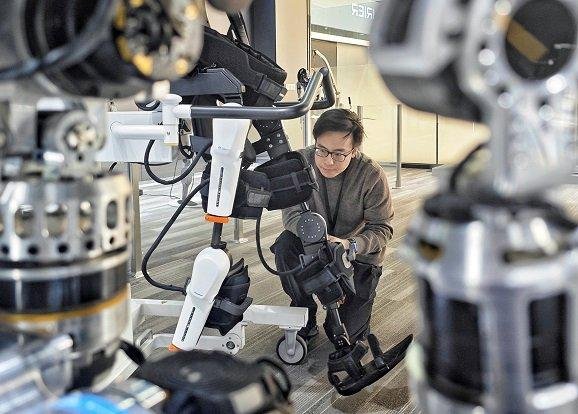
Its newly unveiled Shadow Dance exoskeleton is designed not only to react to movement, but to interpret the wearer’s physical and emotional state from walking patterns.
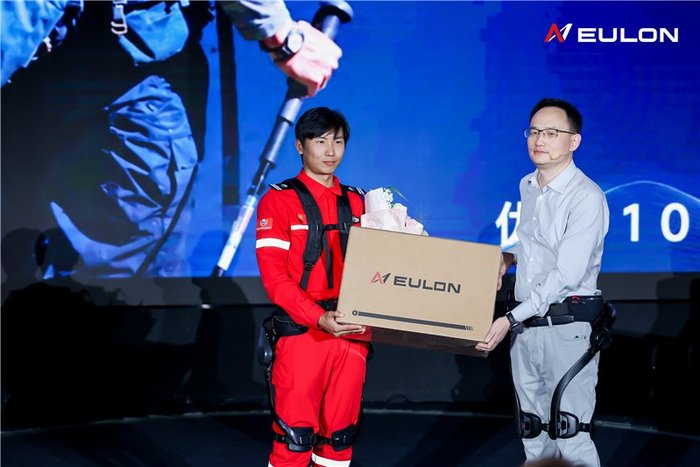
At a November 20 event in Changsha, the company presented Shadow Dance, known in Chinese as 如影, as a new generation of consumer walking-assistance technology.
According to EULON, its Tianshu algorithm combines gait information and terrain sensing to adjust motor assistance in real time. The company further claims that it can distinguish fatigue, calm movement and excitement through gait.
That last claim is what makes the launch particularly intriguing. Detecting a movement pattern is one thing. Inferring a person’s emotional state from that movement is a considerably more difficult proposition.
Manufacturer-reported specifications from the November 20 launch. The figures should not be interpreted as independent performance-test results.
What does emotion recognition actually mean?
EULON describes a control approach based on continuous movement analysis. Its Tianshu algorithm reportedly processes gait and terrain information to select appropriate assistance as the person moves.
Adaptive gait control is already an established direction in powered wearable robotics. Sensors can help estimate movement phase, speed, inclination and intended activity.
Shadow Dance’s unusual claim is that the same movement data can indicate whether the wearer is tired, moving calmly or excited.
These states are not interchangeable. Fatigue may affect stride length, cadence and coordination, while excitement is a psychological state that can produce different movement responses depending on the individual.
A change in gait does not necessarily reveal why it happened. Faster walking could reflect excitement, urgency, exercise or environmental conditions. Shorter steps could reflect fatigue, terrain, caution or discomfort.
That ambiguity makes independent validation particularly important.
Public launch material does not provide the participant sample, emotion labels, reference measurements, classification accuracy or real-world validation protocol necessary to evaluate the claim.
EULON’s characterization of Shadow Dance as an emotion-aware exoskeleton should therefore be understood as a developer claim, not independently established emotional recognition capability.
What else is new in Shadow Dance?
Beyond its AI positioning, EULON has introduced several product features aimed at making powered walking assistance more convenient.
Adaptive assistance
Tianshu software reportedly uses gait and terrain information to adjust assistance automatically.
Detachable battery
A 5,000 mAh battery is associated with the company’s claimed four-to-six-hour operating range.
Quick fitting
EULON advertises 10-second fitting, three-second removal and voice-assisted mode switching.
The product also includes reported resistance-training and muscle-relaxation modes, with control options involving a smartwatch, voice assistant and companion application.
These features address practical barriers to consumer adoption. A wearable robot may provide useful assistance, but complicated fitting, uncomfortable straps or difficult controls can prevent regular use.
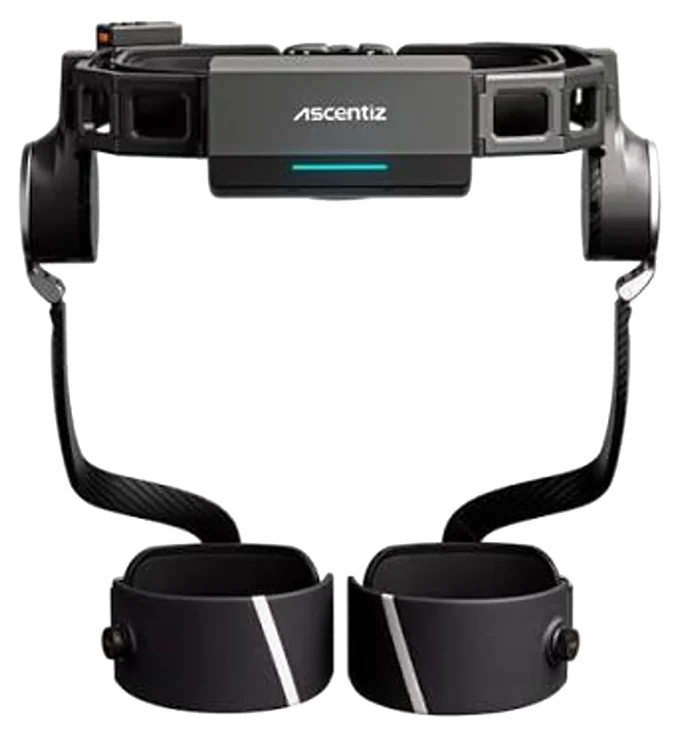
That was one of the recurring lessons from our hands-on Ascentiz H Ultra review, where fit, changing users and the behaviour of adaptive assistance mattered during real hiking.
The two devices have different manufacturers and control systems. The comparison concerns the broader challenge of making assistance practical, not proven equivalence of their AI capabilities.
EULON is making a bigger commercial claim
At the same event, EULON reported that its cumulative exoskeleton production and delivery had reached 30,000 units.
The company presented the milestone alongside Shadow Dance’s launch. It also announced a programme intended to donate 1,000 exoskeletons to workers across six categories, including emergency response, mountain-area operations and forest patrols.
These figures require careful interpretation. The 30,000 figure concerns EULON’s reported cumulative product activity, not verified Shadow Dance sales. The donation figure is an announced initiative, not evidence that all 1,000 devices have already reached users.
The launch nevertheless fits a wider commercial trend. Our analysis of China’s exoskeleton market documented growing consumer shipment volumes alongside the country’s much larger medical-rehabilitation equipment market by value.
EULON also plans to take Shadow Dance to international buyers through Kickstarter in December 2026.
A pre-launch page is available, but the planned campaign should not be confused with confirmed international deliveries, service arrangements or final retail availability.
How does Shadow Dance fit EULON’s existing range?
EULON is not an unfamiliar name in the Exoskeleton Index directory. The company already develops lower-limb mobility and rehabilitation systems covering different applications.
Its Youlong 1.0 PRO is positioned for consumer walking and hiking, with sensor-based movement recognition and powered hip assistance.
The company also develops rehabilitation-oriented systems, including the Ruyi family and pediatric mobility devices.
Shadow Dance extends its consumer range with a more pronounced focus on continuous software adaptation and convenience.
Whether it represents a substantial improvement over the existing Youlong technology remains an open question until comparative performance data become available.
Exoskeleton Index analysis
Shadow Dance illustrates how consumer exoskeleton companies are shifting their marketing toward increasingly sophisticated interpretations of human movement.
First came assistance for walking and climbing. More recent systems have introduced terrain recognition, adaptive torque and personalized control.
EULON is now proposing that an exoskeleton can also recognize what a person’s walking pattern says about their internal state.
The idea could be useful if genuinely validated. Assistance that responds to developing fatigue might help make extended movement more comfortable or reduce unwanted resistance.
But the emotion-sensing claim introduces a higher evidentiary bar. To substantiate it, EULON would need to show how emotional states were established independently of gait, how accurately they were classified and whether adaptation improves actual user outcomes.
We have previously examined the broader difficulty of comparing marketed assistance figures in our Consumer Exoskeleton Comparison Insight. Shadow Dance raises a similar challenge for AI: an impressive feature name is not yet a reproducible test result.
For consumers, the immediate questions remain practical. How well does the exoskeleton fit different people? Does it provide predictable assistance? Can users comfortably wear it for several hours? And what level of independent evidence supports its promised advantages?
Those answers will ultimately matter more than the emotion-aware label.
What comes next for Shadow Dance?
The company’s planned December international launch should provide clearer information about pricing, package contents and commercial availability.
The most valuable technical disclosure would be a transparent validation study of the claimed fatigue and emotion recognition.
EULON has introduced an interesting direction for consumer exoskeleton control. The unanswered question is whether detecting psychological states from walking can deliver measurable benefits beyond conventional adaptive assistance.
Shadow Dance is a notable new product announcement. Its most unusual feature remains a claim to be tested.
When an exoskeleton promises AI assistance, what should buyers actually compare?
Explore how consumer exoskeletons differ in mechanical architecture, control, weight, endurance, commercial availability and the quality of supporting evidence.
Explore the Consumer Comparison Insight Independent research and product analysis.Sources and reporting notes
Launch reporting. Rednet / Hongwang, November 20, 2026 (Chinese, republished by Sina) . Product announcement, claimed specifications, 30,000-unit milestone and donation plan.
Regional reporting. Hunan Daily, November 21, 2026 (Chinese) . Additional account of Tianshu control, product functions and commercial rollout.
Company technology. EULON Robotics official website . Brand positioning and manufacturer-described adaptive-assistance technology.
International availability. Shadow Dance pre-launch page . Campaign interest registration; not evidence of completed global deliveries.
Reporting boundary. Emotional-state recognition, torque, battery endurance and fitting speed are manufacturer-reported claims. No independent validation of the emotional classification method was located. The 30,000-unit figure refers to the company’s reported cumulative exoskeleton activity, not sales of Shadow Dance alone.