
One of the most revealing moments of our Ascentiz H Ultra test came when we took it off. After spending time hiking with powered assistance, continuing on our own legs suddenly felt more demanding. That contrast was subjective, not a measured reduction in energy expenditure, but it made the device’s contribution easier to appreciate.
We spent more than two hours on forest trails near Falkenstein, then continued wearing the device over subsequent days. It impressed us most uphill, while fit and downhill control left room for refinement. This is the experience behind our verdict.
A proper hike, not a quick demonstration
We tested an H Ultra unit over several days, including brief informal try-ons by a small group of younger and older adults. Those demonstrations lasted only minutes; our main assessment came from extended wear.
Our principal outing was a more-than-two-hour hike near Falkenstein, outside Frankfurt am Main. In sunny but cold weather, around 8°C, we covered forest paths, climbs, descents and stairs.
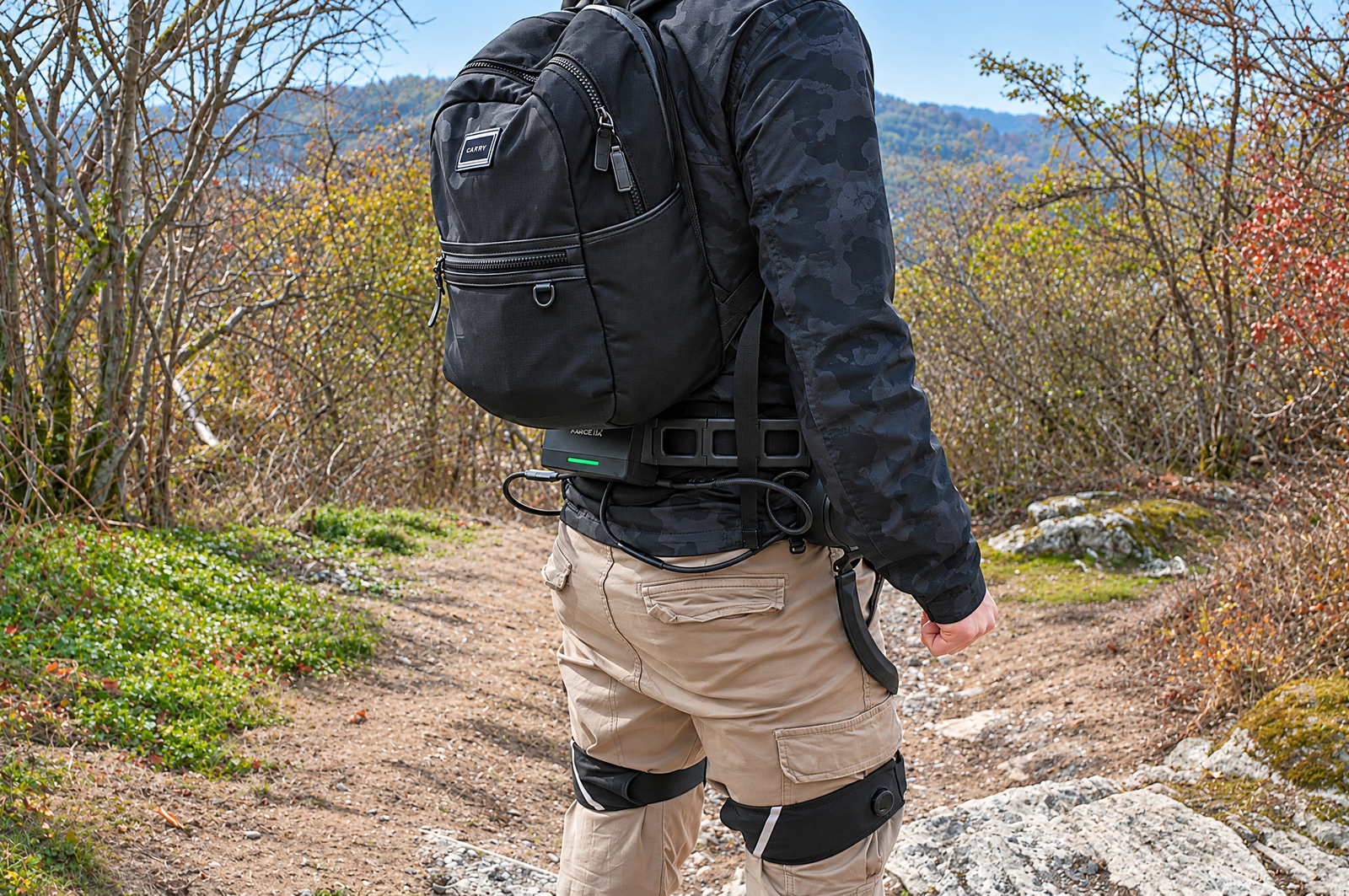
We repeatedly changed assistance levels and modes, including higher assistance and resistance-based training, rather than leaving the device on one setting.
Two physically active primary reviewers shared the unit during the hike. Raphael continued using it over the following days, giving us a chance to reassess the experience with greater familiarity.
A qualitative field review, not a clinical study or biomechanics test. We did not measure oxygen consumption, muscle activity, delivered torque or exact battery depletion. Our findings describe perceived assistance, fitting, comfort and control.
The H Ultra is part of something bigger
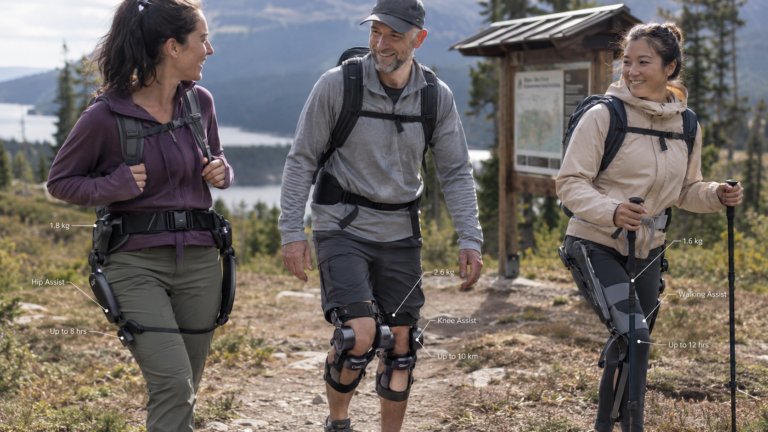
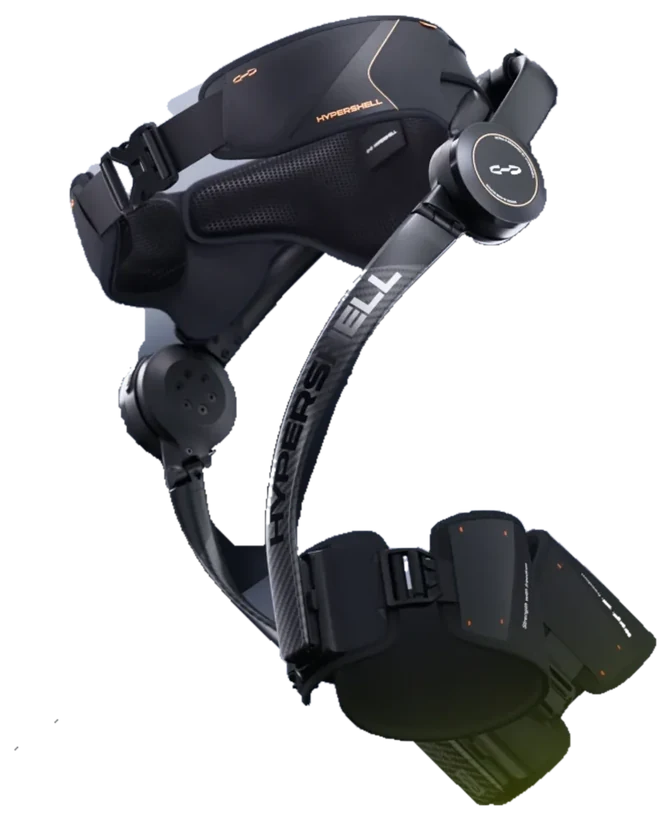
The H Ultra belongs to Ascentiz’s modular platform, built around a shared Exo-Belt that accepts modules for different joints and activities.
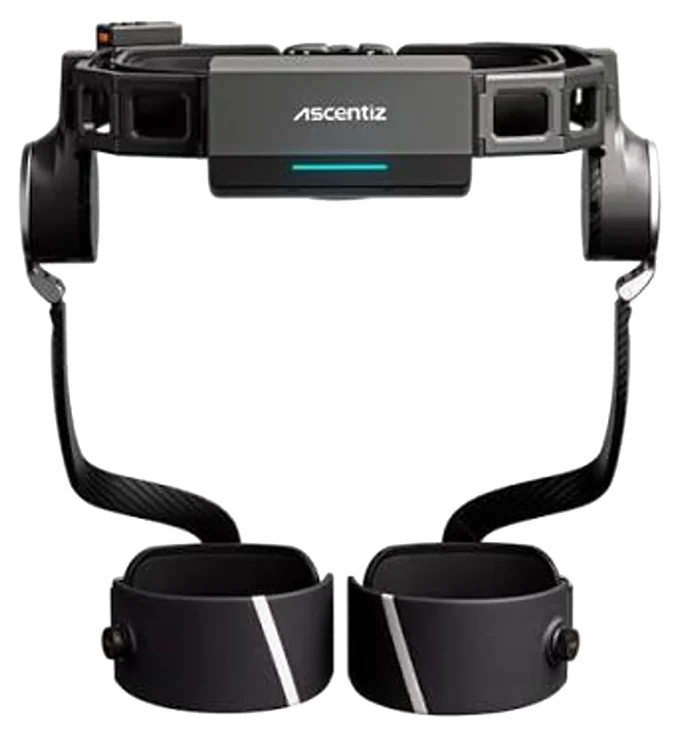
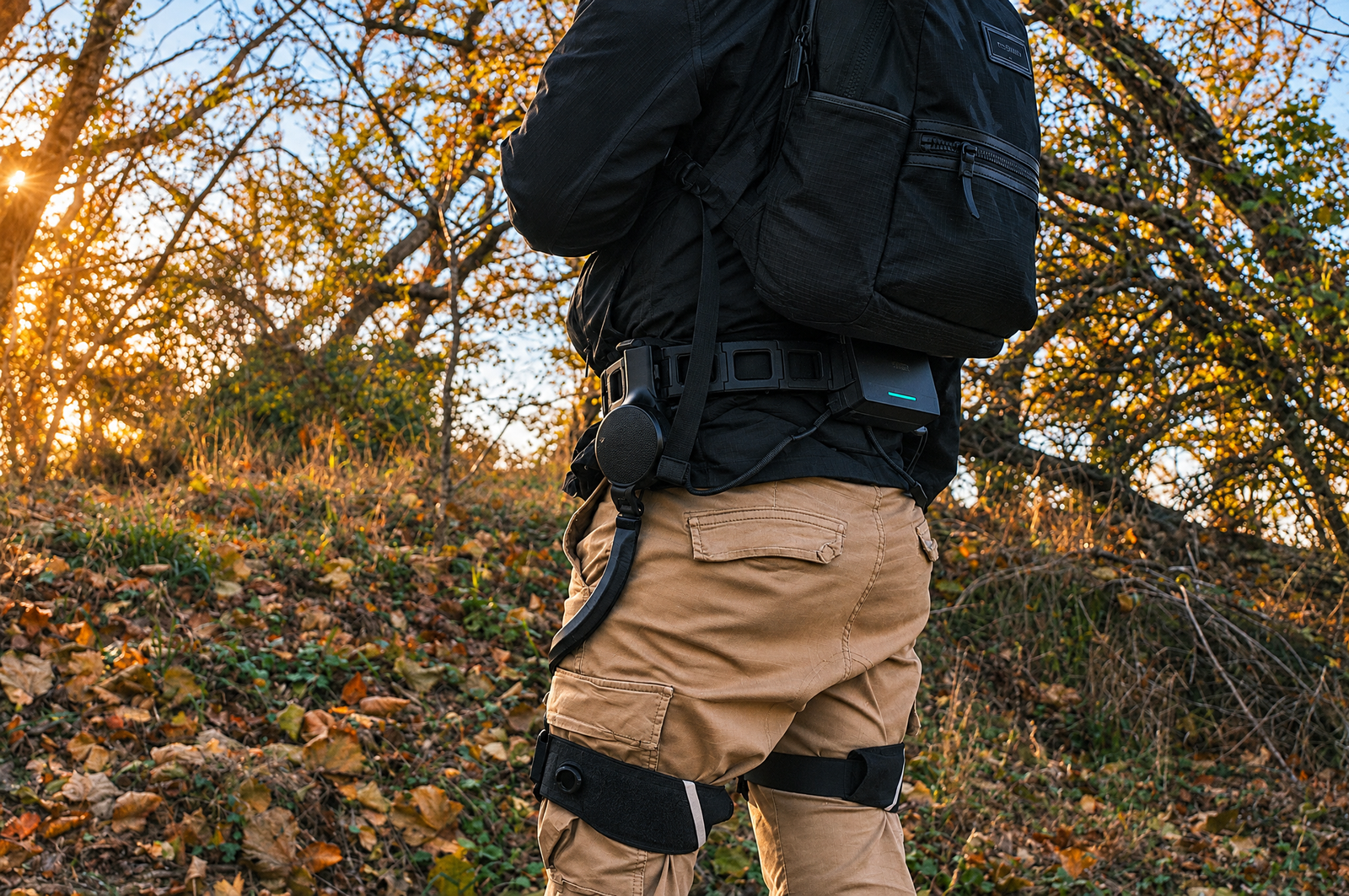
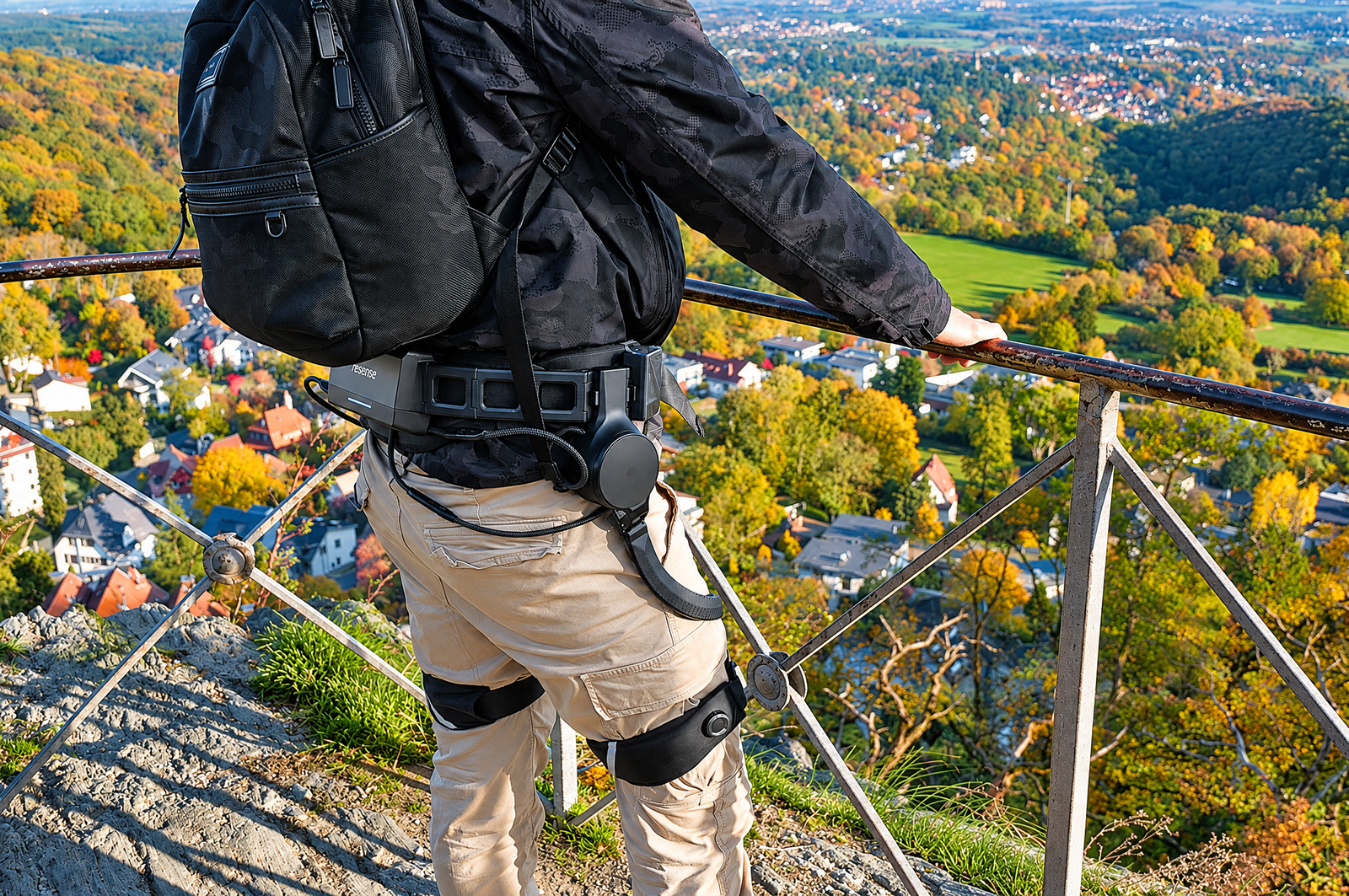
The hip configuration we tested has two side-mounted motors, thigh supports and a rear belt assembly designed to assist walking, hiking and active movement.
Ascentiz says the same belt can also be paired with a Knee module. We only tested the hip configuration; the potential value of swapping modules will depend on their availability and cost.
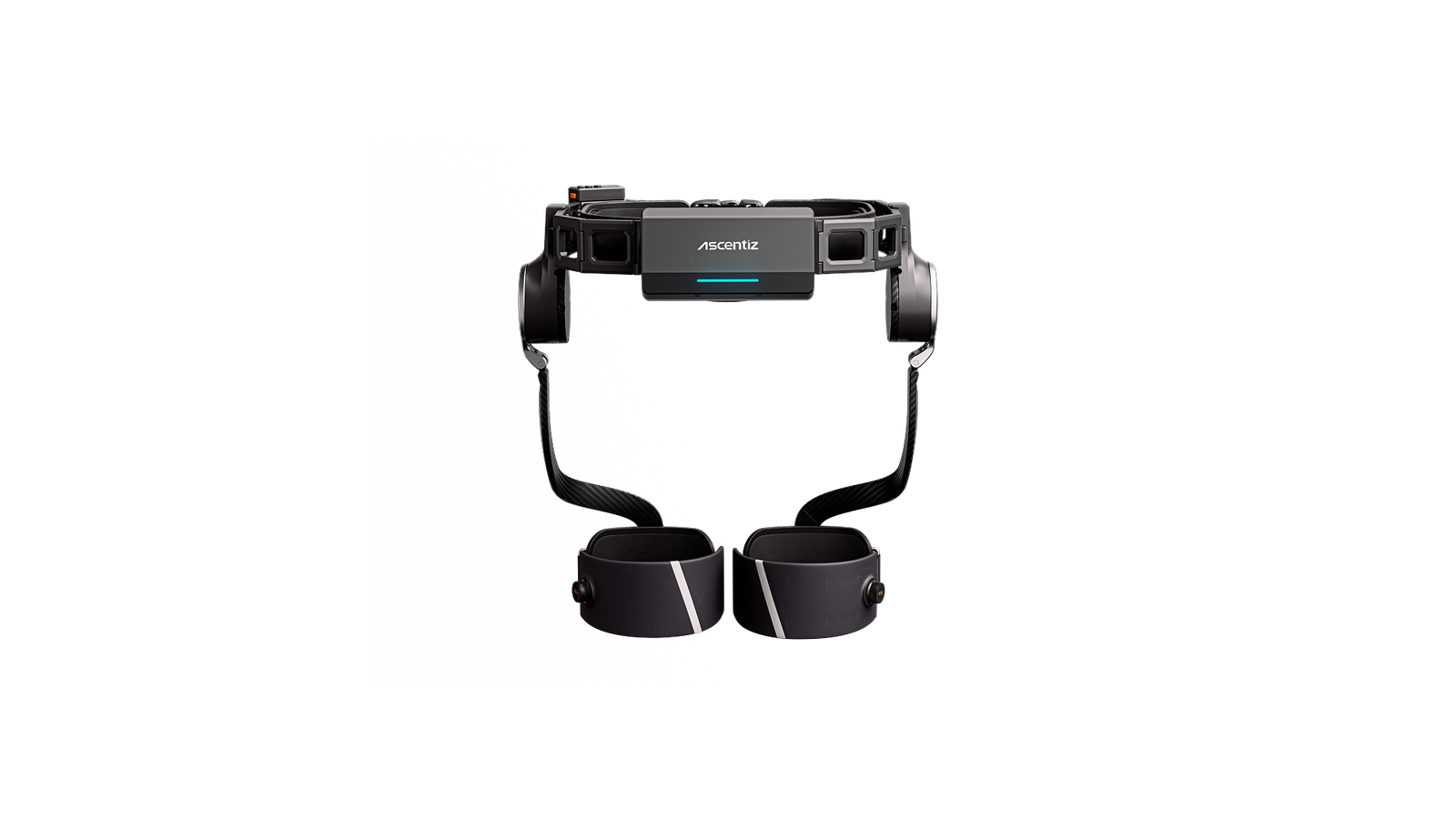
Ascentiz describes the modules as interchangeable configurations, not a simultaneous hip-and-knee system. We tested the hip configuration only. Knee-module availability and cost should be confirmed separately.
Ascentiz also describes 16 recognised movement scenarios. These specifications come from the manufacturer; we did not measure peak power, torque, range or system weight ourselves.
Optional modules can carry a camera, water bottle, keys and other small items. We did not test these accessories, so their effects on comfort and weight distribution remain unverified.
The climb is where it earns its place
At first, we noticed everything: hip motors, thigh straps and the unfamiliar sensation of assistance affecting each step. After a few minutes, we found a more comfortable rhythm, and the device began to feel better coordinated with our walking.
As the hike progressed, the weight became less noticeable. There was still a learning curve around fit and downhill movement, but the overall experience was positive enough that we would happily take it on another hike.
The standout was uphill terrain. Once our cadence settled, the motors felt surprisingly well timed, and the additional assistance was easy to appreciate on sustained climbs.
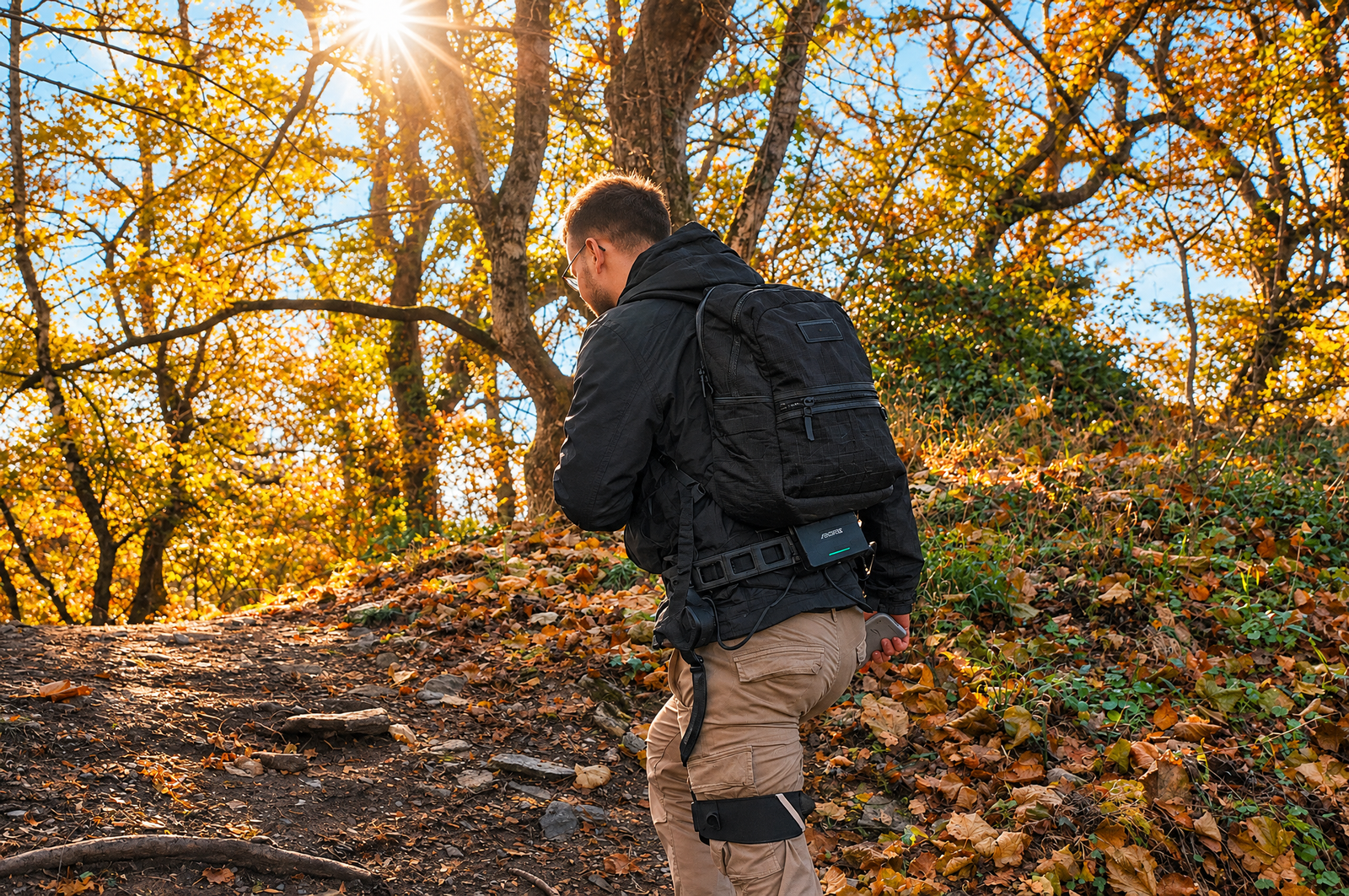
Once our cadence settled, the uphill assistance felt naturally timed.
Ascentiz lists Ease, ACC and Train as its three regular modes. It also offers Boost, which we treated as a brief app-triggered burst rather than a fourth sustained mode.
We preferred relatively high assistance in Ease and ACC, then used Boost for short demanding sections. Being able to fine-tune output mattered more than simply choosing the strongest setting.
The gentler setting we enjoyed on steady walks and easier terrain.
More assertive assistance, which we often preferred at a higher intensity.
Resistance rather than assistance, giving an ordinary walk a workout dimension.
A short burst of extra output, available through the app when you need it. Unlike the three modes above, it is not a sustained setting for the entire walk.
Each regular mode has adjustable intensity, set through the plus/minus buttons or the app. We found that fine control useful, and have not assigned an unverified fixed number of levels.
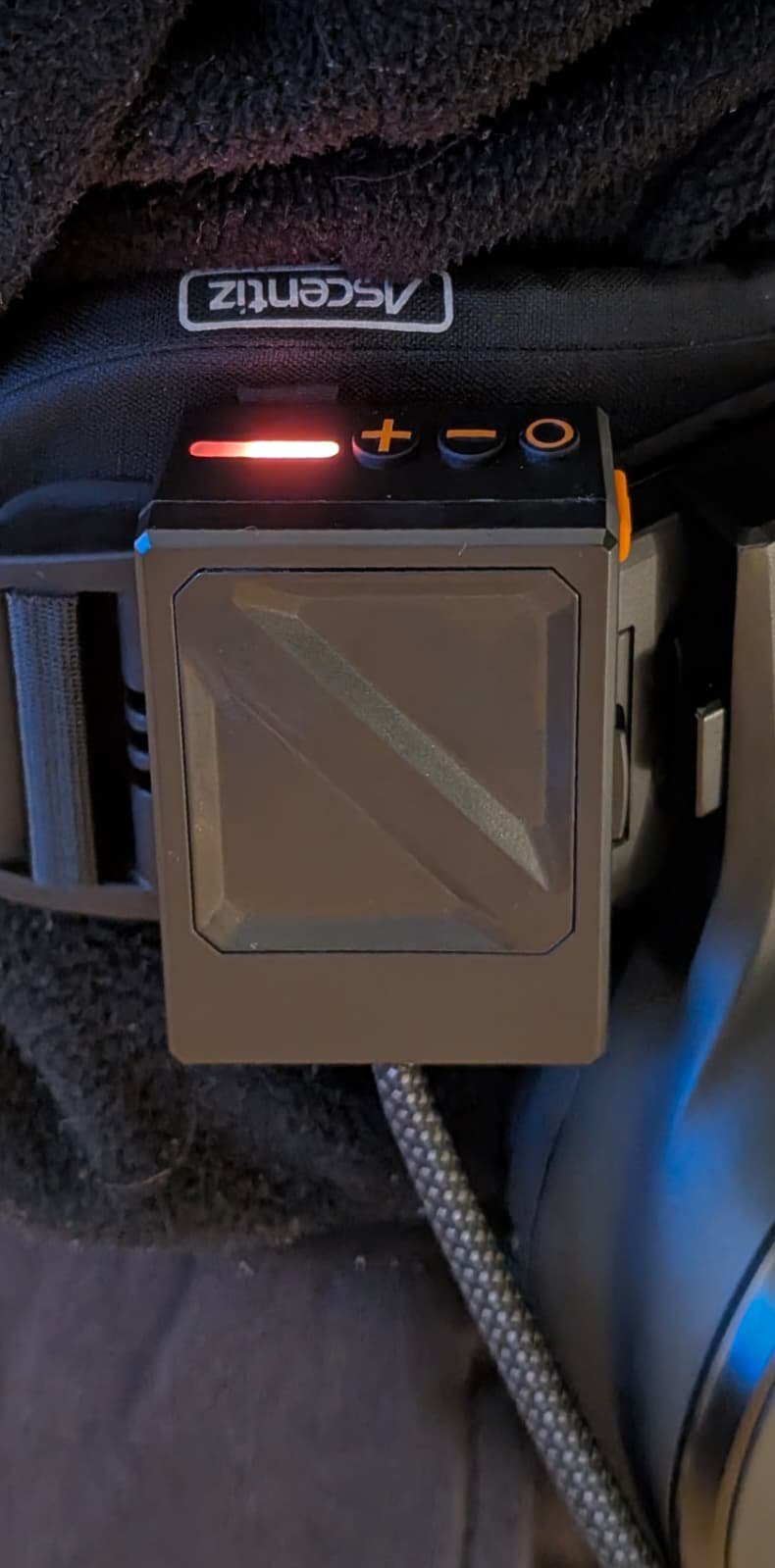
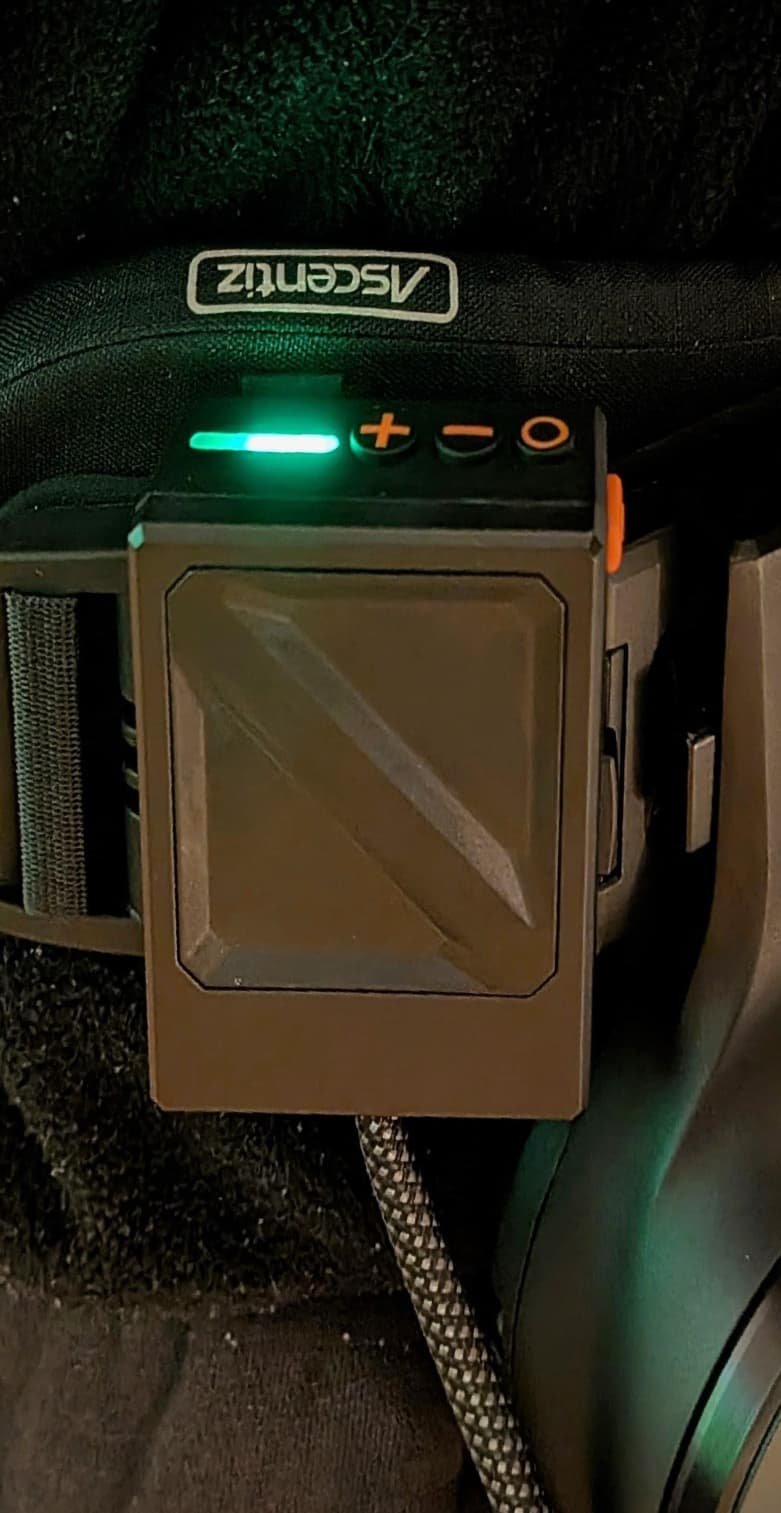
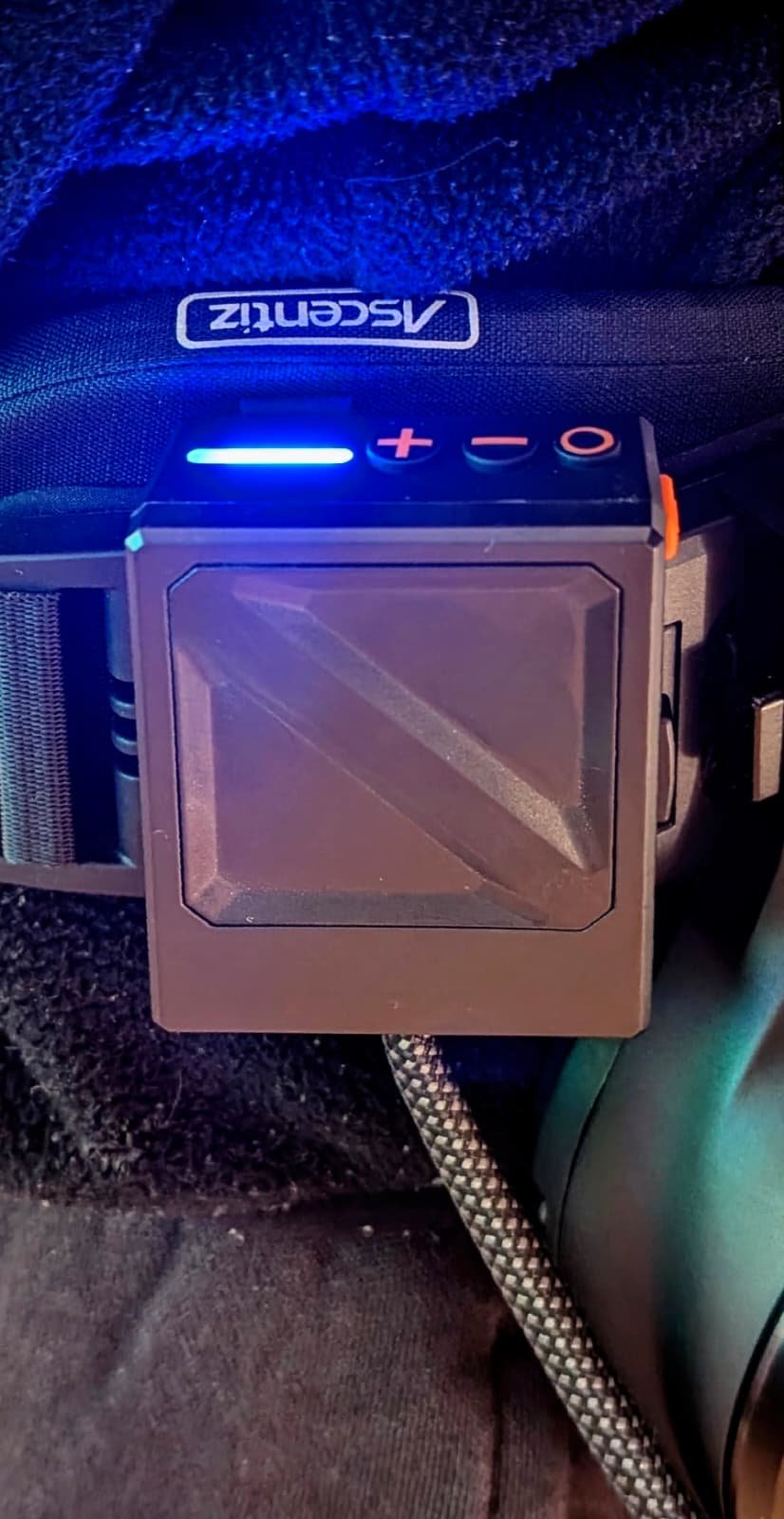
The coloured LEDs show different controller states. The plus/minus buttons let us tune intensity without repeatedly opening the app. The photographs do not establish a complete colour-to-mode key.
The appeal could extend to independent walkers who enjoy longer outings but find the sustained effort tiring. That is our interpretation—not evidence of medical benefit or a substitute for mobility aids. Fit, balance and physical capability still matter.
Downhill was a different story
Our main reservation was downhill control. On descents and stairs, transitions were less consistent than on climbs. At times, assistance seemed to arrive later than expected or felt unnatural.
We asked Ascentiz whether this was motor latency, a problem with our unit or an intended control behaviour. Its product manager described a two-stage downhill strategy used in the commercial firmware.
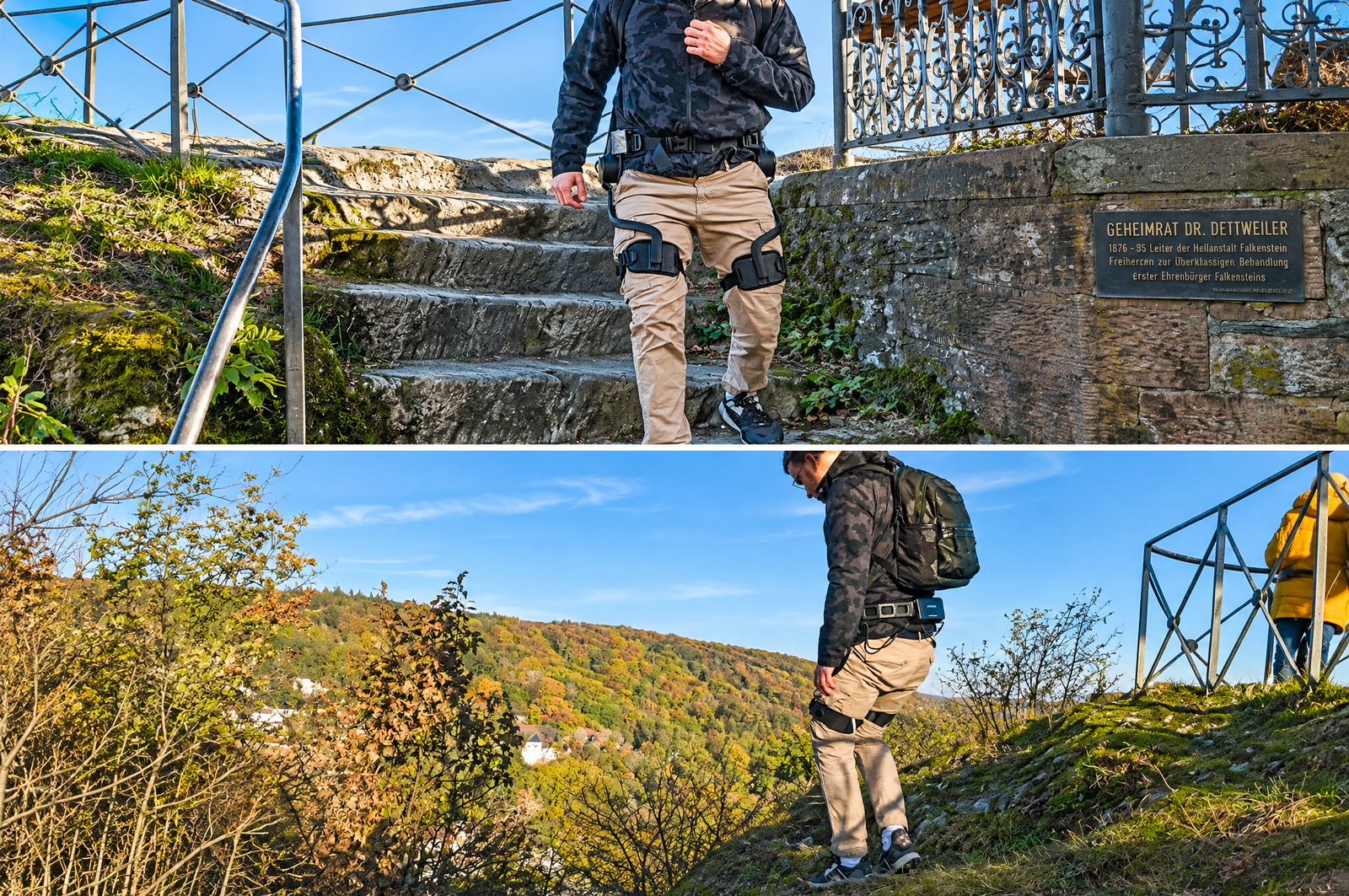
The system first reduces active lifting torque while checking whether the wearer is entering a descent.
Once a sustained downhill gait is recognised, the controller gradually resists hip flexion.
That helps explain the trade-off between recognising terrain, changing torque and managing safety. But the explanation does not erase what we felt: on shorter or changing descents, the transitions could be smoother. Ascentiz says it is refining the recognition and switching logic.
After several more days, Raphael found descents more natural. We cannot tell whether he adapted to the system, the device adapted to him, or both. It is one reason we would not judge this product after a few demonstration steps.
What if the exoskeleton makes the walk harder?
Train mode reverses the usual proposition: instead of helping, the motors add resistance. We felt that resistance clearly during our test, and it was one of the functions that attracted the most curiosity from people around us.
Several younger, active people were intrigued by the possibility of making a familiar walk more demanding. That potential is interesting, but we did not test whether Train improves conditioning, running performance or long-term fitness.
Fit, controls and the little things
Fit matters as much as the motors. Positioning the waist section and thigh supports correctly made the difference between unobtrusive assistance and distracting strap pressure. Tighter was not always better.
The reversible waist belt is useful with a hiking backpack: it can be worn front-to-back to reduce interference.
After the first adjustment, putting the H Ultra on became a much simpler part of the routine.
Comfort improved
During our main hike, we experienced no significant discomfort once fitted, and the device’s weight faded from attention. Our two principal reviewers were physically active adults weighing around 84 kg; that is not evidence that every wearer would have the same experience.
Sizing takes attention
Wider hips or different leg-to-waist proportions required more experimentation with straps and, where appropriate, extenders. We cannot define a body-shape limit from our small group. Check sizing carefully and try a properly fitted unit if possible.
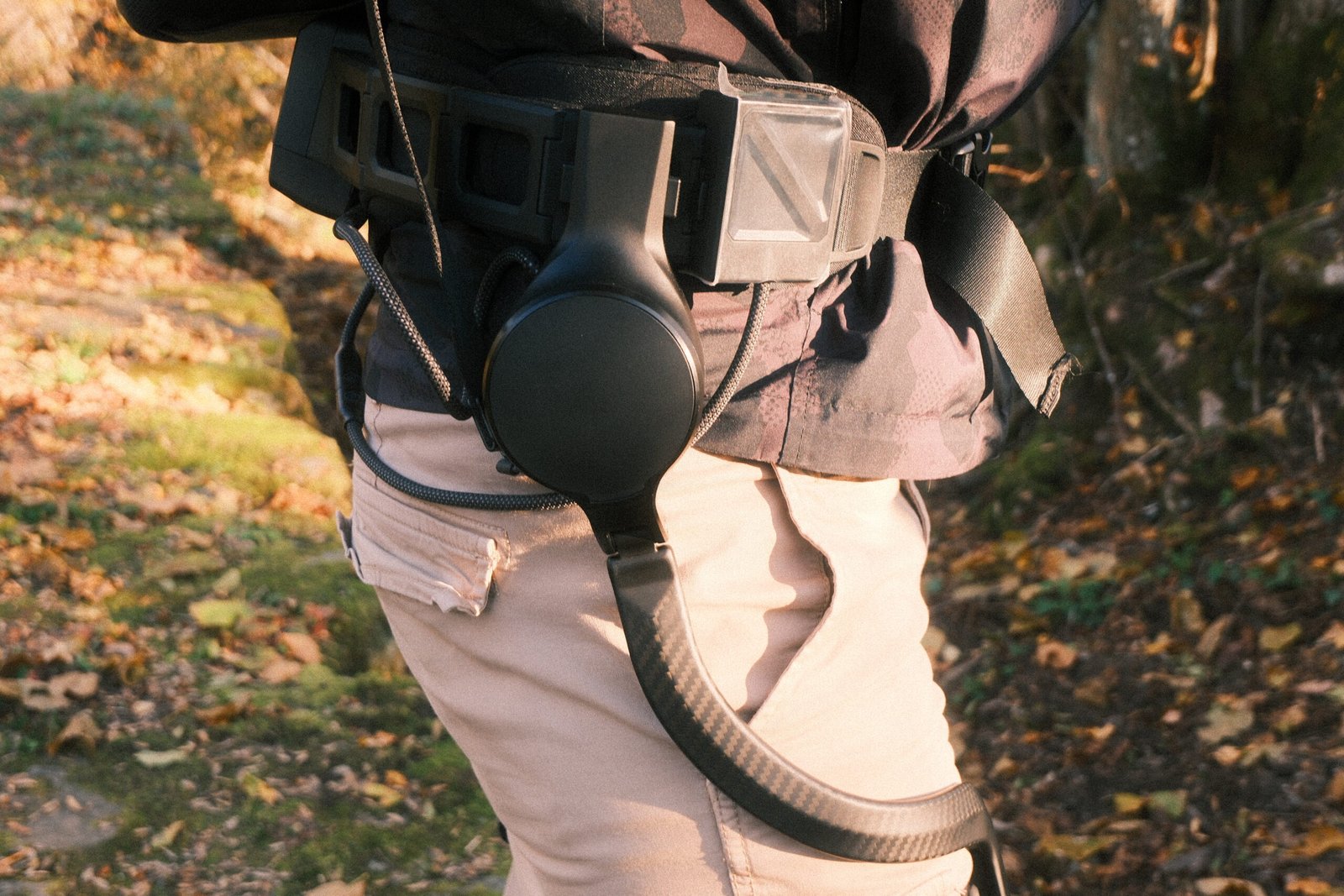
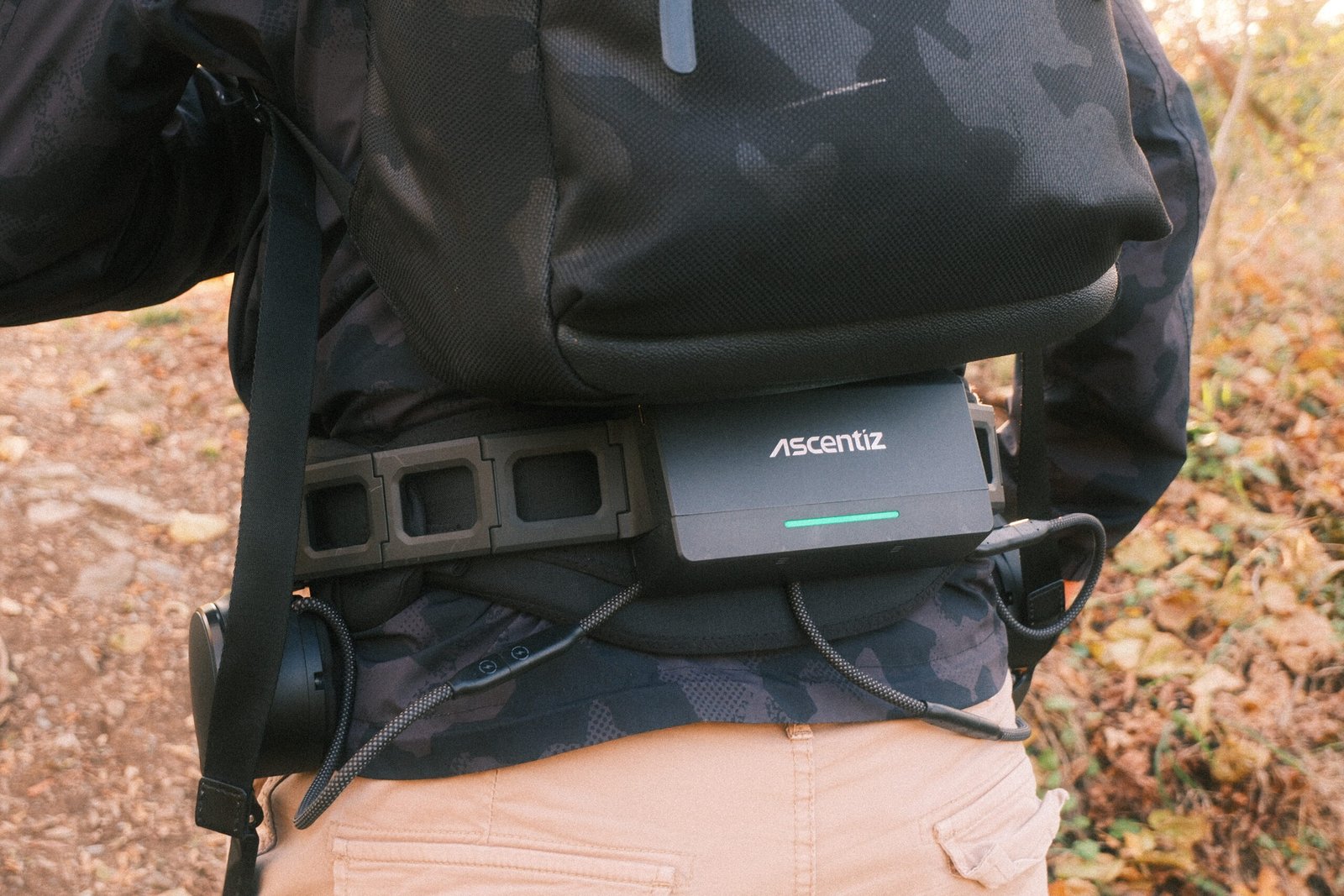
In practice, we mostly used the physical controller, not the phone, to switch modes and adjust intensity. The coloured LEDs and buttons were straightforward once familiar.
Motor noise was barely noticeable to us during normal walking. Ascentiz lists approximately 35 dB in operation, while its supplied TÜV SÜD documentation states a low-noise criterion of ≤37 dB(A). We did not measure sound ourselves, but the quietness made the hardware feel less intrusive in public.
Battery life was not a constraint on our roughly two-hour hike, despite 8°C conditions, repeated mode changes and frequent high assistance. We did not run the batteries flat or record a full discharge curve, so we cannot verify Ascentiz’s advertised maximum of up to 50 km on two batteries (the company reports an assisted-range criterion of at least 25 km). The H Ultra comfortably covered our planned outing.
AI OmniTerrain is useful, but it is not a personal profile
Ascentiz calls its terrain-recognition system AI OmniTerrain. It uses movement and sensor data to adjust when and how much torque the motors deliver. We mostly left automatic recognition enabled during the hike.
The app shows battery percentage, estimated remaining distance, steps and distance. It also allows mode and intensity changes or manual activity selection. Automatic terrain recognition usually worked well enough that we rarely needed to intervene.
In the version we tested, we could not find a persistent history of previous outings; the session data appeared to reset. A proper walk history would make the app more useful over time.
Ascentiz says the system adapts immediately while also retaining learning data locally. We have not inspected the algorithm or measured how quickly it learns.
When we swapped reviewers, assistance sometimes felt less natural before settling. Ascentiz confirmed that the unit has no separate wearer profiles: the long-term learning data is shared. That distinction matters for families or rental programmes using one device.
Technical note: what does the system actually sense?
Ascentiz described a nine-axis inertial measurement unit, joint-angle encoders, current and voltage measurements, and a barometer. These are manufacturer-described inputs. We have not independently inspected the control algorithm, and our shared-device observations do not isolate learning from changes in fit or familiarity.
What we observed, and what the certification says
We felt useful uphill assistance, found the motors quiet, and completed the mixed-terrain outing without a battery interruption. We did not measure physiological change, certified range, torque, sound levels or lab performance.
Ascentiz provided TÜV SÜD Product Certification No. Z2GCN 139898 0001 Rev. 00. The company directed us to the official certificate explorer using search code AOVXM.
These figures are criteria reported by Ascentiz for the certified product under specified conditions—not measurements by EI or guaranteed results for every wearer. We have not independently verified the complete test protocols or precise certificate scope.
Different people, different first impressions
Immediate curiosity
Younger adults who tried the H Ultra generally noticed the assistance quickly and responded positively, even if the initial fitting required patience.
More mixed reactions
Older testers were more divided. One technologically confident participant enjoyed it and expressed interest in ownership; others were less comfortable with an unfamiliar wearable. Brief try-ons left little time to adjust fit or get used to the gait response.
These were informal demonstrations, not a representative sample. A guided fitting and more than a few minutes of use are especially important when someone is considering the H Ultra for another person.
The H Ultra is a consumer walking-assistance product, not a clinical rehabilitation device. Our test does not establish safety or effectiveness for people with significant balance or neurological difficulties.
Who should seriously consider the H Ultra?
Hikers and long-distance walkers
People who regularly tackle hills, travel on foot or love longer walks but are beginning to find the effort tiring. The device still requires independent walking ability, suitable balance and a proper fit.
Active people exploring resistance
Train mode caught the attention of several younger, active testers. They wondered about making their usual walks or runs harder. We felt the added resistance, but did not test whether it improves fitness or performance.
For occasional short, flat walks, the extra hardware and cost may be harder to justify. Regular outdoor use makes a stronger case. We liked the H Ultra’s modern, understated appearance, but comfort and fit matter more than looks.
Ascentiz’s advertised Black Friday prices are shown in USD, with the campaign dates for each model. Actual checkout terms apply. Check sizing, availability, shipping and warranty details before purchasing. If possible, try the device on a route similar to your own.
Try it on the kind of route you actually walk.
Start with fit, terrain and comfort. For details, compare the EI H Ultra profile with the manufacturer’s current Black Friday offer.
Why this feels like an inflection point
Consumer exoskeletons are moving into an interesting phase. Once a technology associated mainly with industrial and clinical use, powered assistance is now being offered as equipment someone can wear on an ordinary walk.
The H Ultra is not a universal breakthrough, nor just a gadget. For the kinds of uphill hikes we tested, it delivered assistance we could genuinely appreciate. Fit and downhill transitions show where everyday consumer wearables still need polish.
The best future product may be the one you stop thinking about while walking.
That is why we are optimistic: the useful parts are no longer confined to a demonstration. The next leap may be less about more power and more about getting fit, responsiveness and control so right that they disappear into the experience.
Would we choose to wear it again?
Uphill assistance felt convincing, the motors were quiet and the H Ultra became comfortable after proper fitting. Physical controls were easy to use, battery life covered our cold two-hour outing and Train mode gave the device an unexpected second use.
First-time fitting needs patience. Downhill transitions were not always natural, and the software does not keep separate gait profiles for different users. These are meaningful compromises, but they did not outweigh what we enjoyed on the trail.
We would wear it again. If you are considering the H Ultra, try it for more than a few steps—ideally on the hills, walks or trails you actually use. It made us more optimistic about consumer exoskeletons precisely because the benefits were tangible without pretending the product is perfect.
Methodology, editorial independence and sources
Our field assessment involved two physically active primary testers, a more than two-hour mixed-terrain outing around Falkenstein, subsequent follow-up wear and a small number of short demonstrations with other people. These sessions were not clinical research. All subjective impressions are our own. Manufacturer-provided information and the certification criteria are identified separately from our observations.
Ascentiz supplied the test unit and answered questions about the technology and downhill-control strategy. It reviewed a factual draft but did not determine our verdict. The manufacturer later supplied the corrected TÜV SÜD certificate reference. Some outgoing product links use our Ascentiz/Impact affiliate tracking URL. We may earn a commission on qualifying purchases. This does not change our editorial assessment. The H Pro link is a separate direct manufacturer link, not an H Ultra affiliate redirect.
Further detail: H Ultra product profile; Ascentiz official European site; TÜV SÜD Product Service certificate explorer (AOVXM).