

Could walking assistance also make exercise feel easier?
The mechanical benefit of an exoskeleton is only one part of its potential value. For an older adult who is already able to walk, the experience of exercise itself may matter: whether walking feels tiring, whether balance feels secure, and whether repeated sessions build confidence to keep moving.
A new randomized study by Changjian Wang and Tianyou Zhang investigated those questions alongside walking performance. Published on 9 November 2026, it compared an eight-week program of supervised exoskeleton-assisted walking with a similar exercise program without wearable assistance. The results suggest gains in several measured walking outcomes and in participants’ perception of their exercise ability. But they also require a more cautious reading than the paper’s headline conclusion.
What the researchers actually tested
Sixty adults aged 60–75 were randomized. The final results tables report 29 people in each group. Participants were independently mobile and screened to exclude significant conditions affecting exercise, so this was not a trial of exoskeleton rehabilitation in frail older adults or people unable to walk unaided.
The assisted group trained with the Aider3S lower-limb exoskeleton, which the paper identifies as a Chengdu Buffalo Robot Technology system. Both groups followed walking and stepping exercises three times weekly, with progressive training intensity. Sessions lasted 40 minutes, including warm-up and cool-down, and were supervised under controlled conditions.
The program measured walking speed, six-minute walking distance, gait variability and balance sway, alongside ratings of perceived exertion, exercise self-efficacy and balance confidence. The reported participant counts are drawn from the study tables.
Walking performance improved in the assisted group
At the end of training, mean walking speed in the exoskeleton group had increased from 0.82 to 1.03 metres per second. The mean distance covered in six minutes rose from 326.58 to 389.25 metres. By comparison, the control group’s six-minute distance changed from 324.92 to 331.65 metres.
The researchers also reported reduced gait variability and less balance sway in the assisted group. These are potentially useful indicators of walking performance within the study protocol. They do not establish fewer falls, improved independence in the community or benefits that persist after supervised training stops.
One result needs closer attention
The paper describes stride-length improvements as statistically significant, yet Table 1 reports a group-by-time interaction of p = 0.06 for that measure. This is above the conventional 0.05 threshold. We therefore do not count stride length among the clearly significant between-group outcomes without clarification from the authors.
The psychological results are the real point of difference
Beyond gait measurements, the researchers asked participants how difficult exercise felt and how confident they were about exercising and keeping their balance. All three self-reported indicators moved in a favorable direction in the assisted group.
These are scores on three different scales, not comparable percentages or proof of psychological treatment. Lower perceived exertion is favorable; higher confidence scores are favorable.
Interviews with 12 participants from the assisted group added context. Some described feeling less reluctant to exercise and more secure while walking. The authors proposed that reduced perceived exertion could help strengthen confidence, which in turn might be associated with better physical performance.
Exoskeleton Index analysis
This is an interesting direction for exoskeleton research because it asks a question beyond joint assistance: can the experience of supported movement change someone’s willingness to exercise?
But the proposed psychological mechanism is based on statistical mediation and participant accounts. It cannot demonstrate that confidence itself caused the walking gains. Participants also knew whether they were using an exoskeleton, which can influence subjective ratings. The measured improvements are worth investigating, but they do not establish a general effect on mental health, fall risk or everyday independence.
Why these results need careful interpretation
The trial is more informative about supervised training in independently mobile adults than about the wider older-adult mobility market. Three distinctions are particularly important for readers evaluating the evidence.
Participants could walk independently. Outcomes cannot be transferred to people with significant neurological impairment or those requiring a walking aid.
Knowing that they were receiving powered assistance may have influenced ratings of effort, ability and balance confidence.
The study does not establish continued use, sustained performance gains or independent benefit after the structured program ended.
There is also a reporting issue in the participant-flow description: the paper mentions 65 recruits and seven exclusions before stating that 60 were randomized. Those figures do not reconcile arithmetically. The outcome tables consistently show 29 participants per arm, and that is the denominator we use here.
How this adds to what we already know
Our previous report on a 12-week Danish feasibility study examined a different question: would people continue wearing a passive hip exoskeleton during ordinary routines? Only seven of 16 participants completed that protocol and follow-up. The new study instead investigates supervised training using a powered device, with a stronger emphasis on walking outcomes and exercise confidence. The two findings are complementary, not directly comparable estimates of effectiveness.
For readers researching actual devices, costs and access routes, our 2026 Exoskeletons for Older Adults guide separates consumer walking support, clinical systems and realistic purchase or trial options. Meanwhile, our Sit-to-Stand and Stand-to-Sit Insight addresses another functional challenge altogether. Better walking speed cannot be taken as evidence that a device helps someone rise independently from a chair.
What better studies should tell us next
The next research step is to reproduce these results with clearer reporting and a prespecified set of functional outcomes. Longer follow-up would help determine whether gains remain after supervised sessions, while objective usage data could show whether participants choose to continue exercising with the system.
Future work should also compare different user populations, report adverse events and discomfort consistently, and separate the effect of the wearable assistance from the motivational effect of receiving a novel technology. For clinicians and manufacturers, the goal is not simply a higher confidence score. It is reliable, useful movement that people can sustain in settings that matter to them.
Which devices are actually available for older adults?
Our 2026 buyer-focused Insight compares mobility-support categories, available products, practical fitting considerations and the evidence behind common claims.
Explore the Older Adults Insight Independent research and product-market information; not individualized clinical advice.Sources and reporting notes
Primary study. Wang C, Zhang T. “Empirical study on how lower limb exoskeleton robots improve older adults’ physical performance through psychological mechanisms.” Frontiers in Psychology. Published 9 November 2026. DOI: 10.3389/fpsyg.2026.1980345.
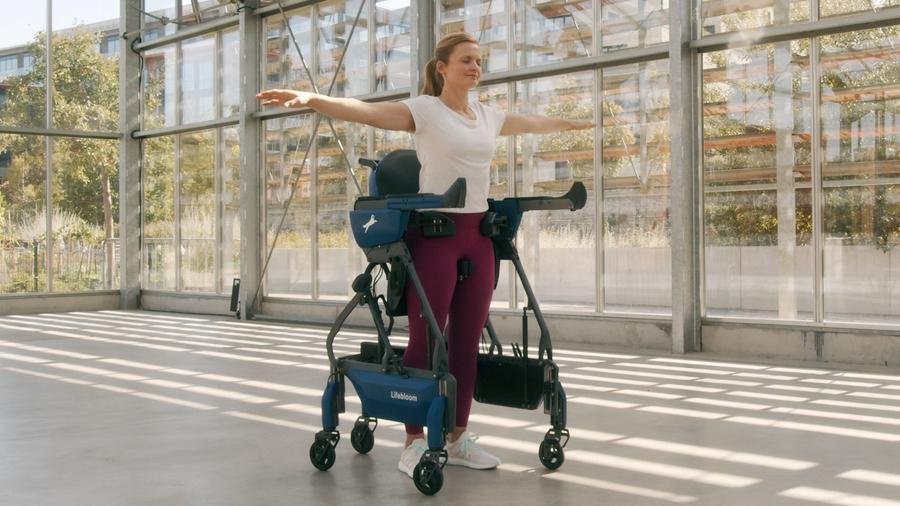
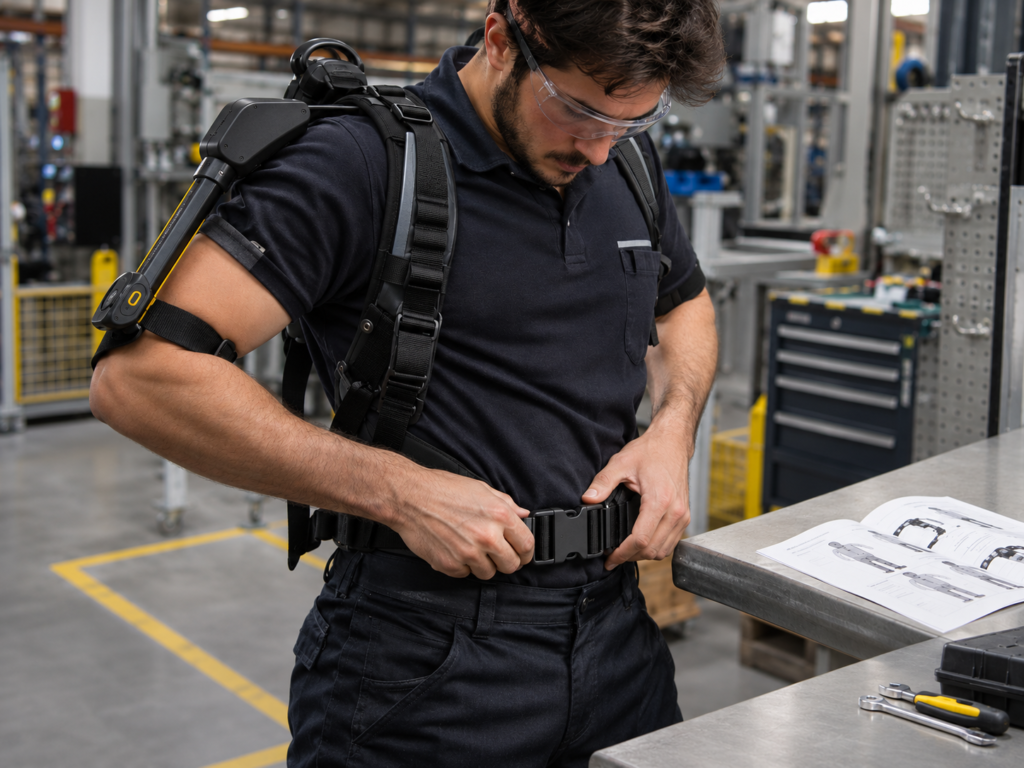
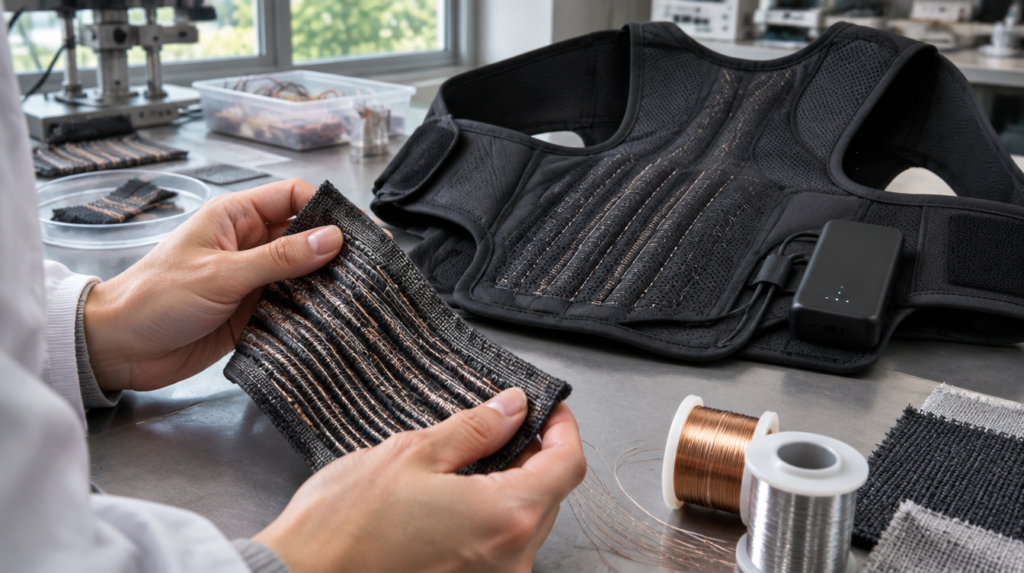
Interpretation. All values reported are study-group means. The article separates objective gait measurements from self-reported psychological scores, notes the stride-length p-value discrepancy and identifies the participant-flow inconsistency. The featured image is an illustrative scene, not a photograph of the study or the named device.