
What if the fabric provides the assistance?
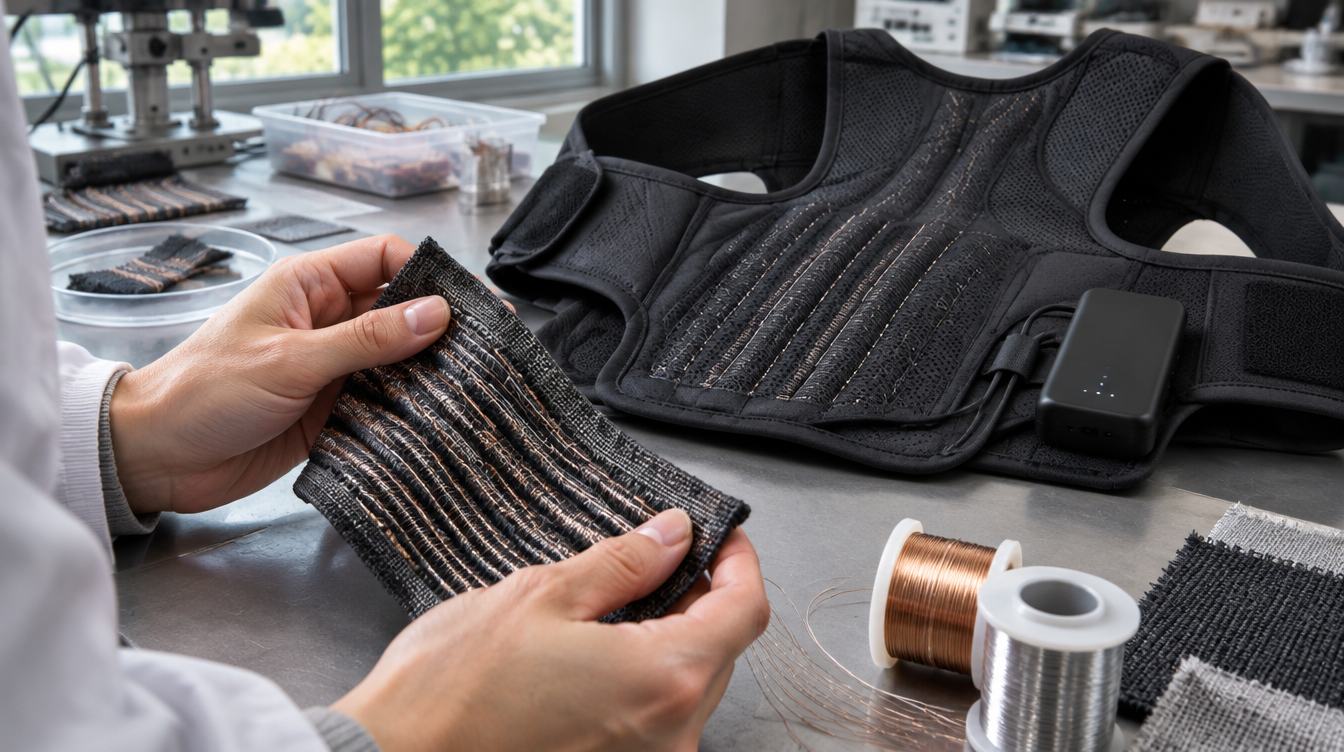
Most powered exoskeletons generate assistance through motors, gearboxes, cables or other mechanical assemblies. Sartexo is pursuing a different design: a garment in which the textile itself becomes the actuator. Its Bionic Suit uses shape-memory-alloy fibres woven into a flexible structure that contracts when electrically activated.
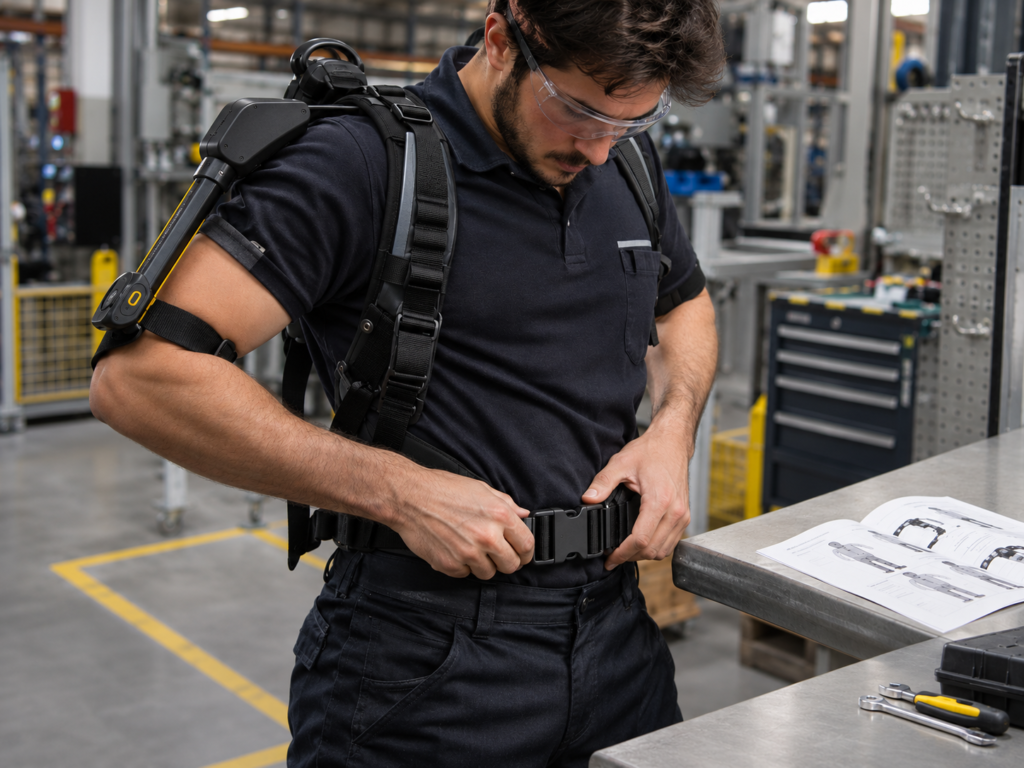
The South Korean company, built on research at the Korea Institute of Machinery and Materials (KIMM), announced a commercialisation push on 5 November 2026. The headline product is a 1.3 kg waist-assistance suit, a figure the company says includes its battery and controller. That makes the product particularly interesting in a market where fitting, weight and unrestricted movement are common barriers to workplace adoption.
These numbers refer to different configurations and evaluations. They are not independently comparable performance ratings or proof of reduced workplace injury risk.
How the artificial-muscle fabric works
The actuator contains thin shape-memory-alloy wire that is coiled and woven into a fabric-like sheet. Electrical current causes the material to contract, which can transmit a pulling force through the garment. When the actuator cools, it returns toward its original shape. This avoids a separate electric motor and conventional rigid force-transmission frame, although the system still requires electrical power, control electronics and careful garment fit.
Sartexo says that 10 grams of its actuator material can lift 10–15 kilograms in a materials demonstration. That is not an exoskeleton wearer lifting an extra 15 kilograms. The laboratory ratio describes the actuator’s force under specified test conditions; it cannot be translated directly into human lifting capacity or safe manual-handling limits.
The company also identifies waist, shoulder and elbow assistance configurations. Those architectures may appeal to workplaces that need assistance for repeated forward bending or sustained arm positions, but providing support across several joints introduces questions about how the material contracts during complicated movements.
Does the suit actually reduce physical demand?
Sartexo reports more than a 40% reduction in lower-back muscle activity during repetitive lifting assessments with healthy adult workers. That is an encouraging task-specific physiological finding. The public summary does not provide sufficient information about the exact workload, number of participants, measurement protocol or independent replication to establish a general benefit across jobs.
There are also distinct clinical research claims for other configurations, including a shoulder-assistance study. Those results should not be merged with the industrial-lifting figure: different participants, body regions and outcome measures are involved. For employers, the next evidence step is to test the system during full work sequences rather than only the movement it assists best.
Exoskeleton Index analysis
The genuinely novel aspect is not the 10 g lifting headline. It is the possibility of putting active assistance into a textile form factor that may be easier to wear and integrate with clothing than traditional rigid hardware. That would matter for user acceptance, but light weight alone does not settle questions about pressure points, durability, control timing or maintenance.
Shape-memory alloys also have practical constraints. Their contraction and recovery depend on electrical heating and cooling, which makes response, thermal management, energy consumption and sustained repetition important areas to evaluate. Independent, longer-duration workplace trials will determine whether the elegant actuation approach produces useful day-to-day assistance.
The 10–15 kg figure comes from an actuator-level load demonstration.
A short-task reduction cannot establish fewer injuries or sustained all-day comfort.
A product line and pilot enquiries do not prove broad inventory or local service coverage.
Where Sartexo fits in the industrial market
Industrial exoskeletons already span rigid passive supports, soft straps and powered systems. Sartexo’s design adds a form of active textile actuation, rather than fitting neatly into the familiar passive-versus-motorised distinction. That makes it a useful case study alongside our 2026 Industrial Exoskeletons Insight, which examines how task matching, actual use and measured outcomes determine workplace value.
The commercial test is straightforward: can a worker put it on quickly, move freely when unassisted, obtain repeatable support when needed and keep wearing it through a real shift? Those questions will matter more than an impressive laboratory material ratio.
Beyond the lightweight headline
Explore how textile, passive and powered exoskeletons are being evaluated for real industrial tasks, including the gap between laboratory results and sustained adoption.
Read the Industrial Insight Independent exoskeleton research and product-market coverage.Sources and reporting notes
Company technology. Sartexo: Fabric Muscle technology and Bionic Suit testing disclosures. Device configurations and the company’s distinctions between material-level and worker-level claims.
Announcement. Korea.net, 10 November 2026. Official national-information service reporting on the 5 November commercialisation announcement.
Korean reporting. Asia Economy, 5 November 2026 (Korean). Additional account of the KIMM spinout and product plans.
Reporting boundary. Technical and muscle-activity claims are company- and institute-reported. No broad retail rollout, independent long-term injury reduction or universal lifting-assistance figure is established.