
China moves from supporting rehabilitation robots to standardizing them
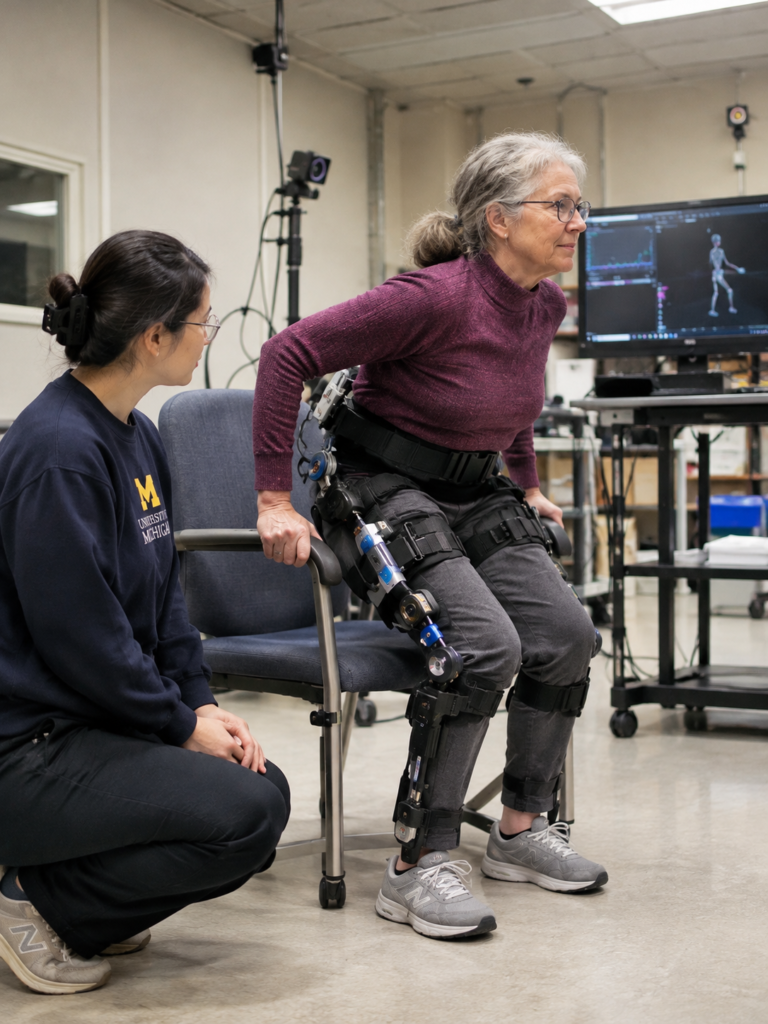
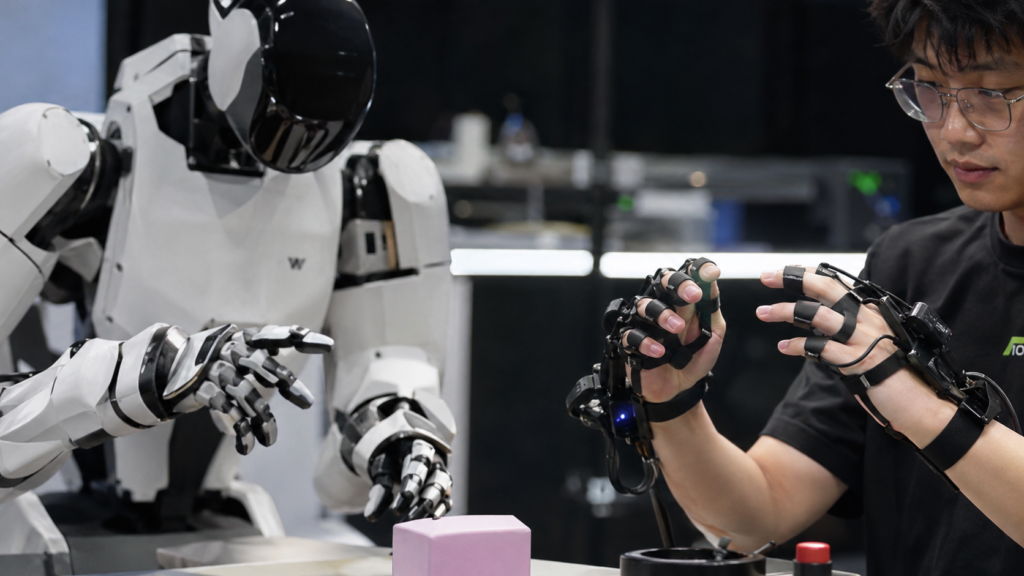
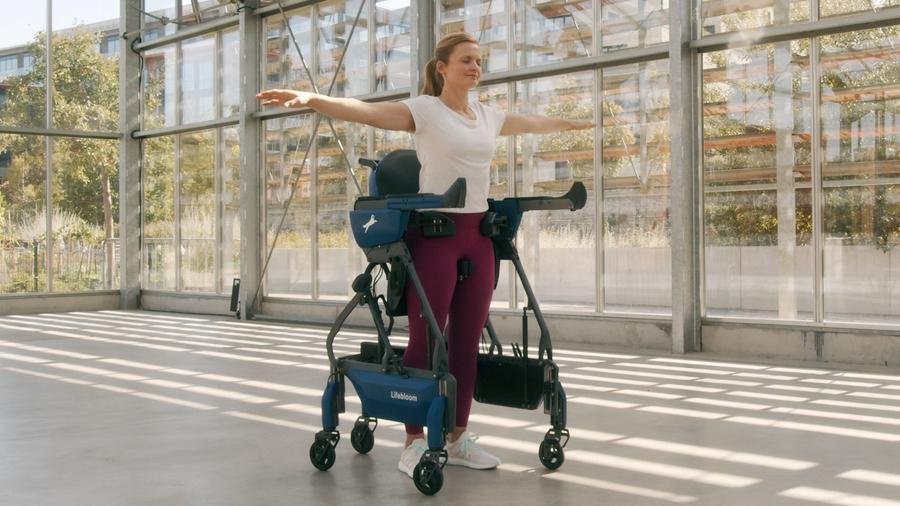
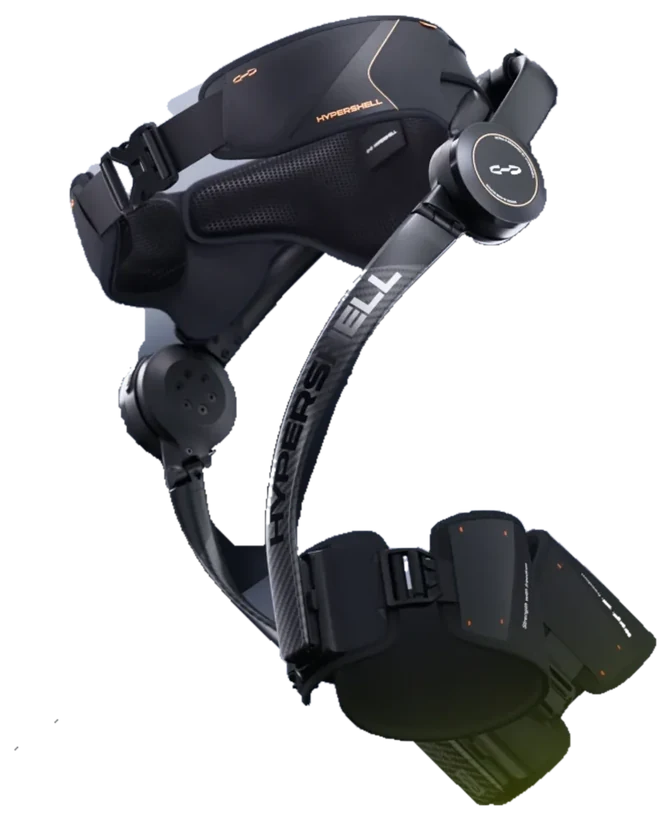
China’s rehabilitation exoskeleton industry is moving through an important phase. Government policy has increasingly supported medical robotics, hospitals are exploring new reimbursement pathways, and developers are introducing more advanced robotic rehabilitation systems.
Now, the country has introduced a dedicated technical standard for the devices themselves.
On November 13, 2026, China’s Ministry of Civil Affairs released MZ/T 262—2026, General Technical Requirements for Exoskeleton Rehabilitation Training Robots. The standard entered into effect on the same date.
It was one of 12 new industry standards announced together, covering products and services ranging from wheelchair power-assistance systems and orthoses to rehabilitation equipment.
The distinction is important. This is not another announcement that China wants to invest in wearable robotics. It introduces a common technical reference for a category of rehabilitation equipment that is becoming increasingly important in healthcare and assistive technology.
Official announcement: Ministry of Civil Affairs, Notice No. 592, November 13, 2026.
What does MZ/T 262—2026 cover?
The standard’s Chinese title is 外骨骼康复训练机器人通用技术要求.
According to Anhui Sanlian University, whose researchers participated in drafting it, the standard establishes terminology and classification for rehabilitation-training exoskeleton robots.
It also addresses technical requirements, testing methods, inspection rules, product identification, packaging, transportation and storage.
Its reported application concerns exoskeleton systems used to assist motor rehabilitation in people with impaired limb function.
For a sector that includes different robotic architectures and rehabilitation applications, a shared technical reference can make equipment requirements and evaluations more consistent.
The potential relevance extends beyond engineering departments. Hospitals, rehabilitation centres, testing organisations and procurement teams all need ways to assess equipment before introducing it into clinical practice.
However, the available public summary does not establish the exact test thresholds, accepted configurations or conformity procedures for every device category.
Those details require direct examination of the complete standard rather than inference from the announcement alone.
A technical standard is not the same as medical-device approval
One important point could easily be misunderstood.
MZ/T 262—2026 is a recommended industry standard issued within China’s civil-affairs standardization framework.
Its publication does not mean every rehabilitation exoskeleton has received medical-device authorization, nor does it automatically establish a new mandatory certification scheme.
China already has another relevant industry standard: YY/T 1973—2025, Powered Lower Extremity Exoskeleton.
Issued under the medical-device standardization system, YY/T 1973—2025 came into effect on July 1, 2026. It applies specifically to medical lower-limb exoskeleton robots.
The two documents therefore originate from different administrative frameworks and should not be treated as interchangeable.
A third reference, T/CSI 0073—2026, addresses clinical rehabilitation training practices involving mobile lower-limb exoskeletons. It was published in April 2026 as a group standard.
Together, these developments illustrate the different dimensions of standardization: device requirements, medical-product regulation and rehabilitation practice.
MZ/T 262—2026
General technical framework for exoskeleton rehabilitation training robots. Effective November 2026.
YY/T 1973—2025
Requirements and testing for medical powered lower-extremity exoskeletons. Effective July 2026.
T/CSI 0073—2026
Group standard covering lower-limb exoskeleton rehabilitation training procedures and assessment.
These standards address related but different questions. Their precise interaction depends on a product’s intended use, classification, applicable regulations and the requirements of the relevant authority.
Why is China introducing another exoskeleton standard now?
The new standard arrives during a broader effort to expand China’s rehabilitation and assistive-equipment industry.
In July 2026, the Ministry of Civil Affairs and other national authorities issued a three-year action plan for rehabilitation and assistive equipment covering 2026–2028.
The plan identifies exoskeleton robots, rehabilitation robots, brain-computer interfaces and intelligent wearable devices among the technologies targeted for development.
It also calls for a stronger standardization system, including at least 60 standards across the wider rehabilitation and assistive-equipment sector by 2028.
This provides useful context for the November announcement: technical standardization is part of an industrial strategy, not an isolated administrative exercise.
The same direction was visible in the national medical-industry plan we examined in our earlier analysis of China’s 2030 exoskeleton and brain-computer-interface priorities.
That policy explicitly identifies exoskeleton robots and BCI-driven rehabilitation technologies as development priorities.
MZ/T 262—2026 adds a more specific technical reference to this broader policy picture. The challenge now is translating policy support into equipment that can be consistently evaluated and used.
Technical standards and hospital adoption are separate challenges
Better-defined technical requirements may help create a more structured environment for developers and equipment evaluators.
But technical specifications are only one part of clinical adoption.
Hospitals also need evidence that a device is appropriate for particular patient groups, that staff can operate it safely and that its benefits justify the costs of purchasing, maintaining and using it.
China is already experimenting with another part of this process: payment for exoskeleton-assisted rehabilitation services.
As Exoskeleton Index reported in October, regional reimbursement pilots are creating new pathways for medical exoskeleton rehabilitation.
Those developments concern qualifying clinical services, not automatic insurance coverage of the robot itself.
Technical standards and reimbursement initiatives can therefore contribute to the same broader objective, but they solve different problems.
A device can satisfy relevant engineering requirements without demonstrating superior rehabilitation outcomes. Equally, an encouraging clinical study does not automatically establish compliance with applicable product standards.
A rapidly expanding research environment
The standard also arrives as Chinese researchers explore increasingly complex forms of rehabilitation robotics.
One example is the brain-controlled exoskeleton study registered in Tianjin in November 2026.
That project combines brain-signal processing, spinal stimulation and a lower-limb exoskeleton in a research programme for people with chronic stroke-related mobility impairment.
The clinical-research filing represents progress in the research pathway, not proof of therapeutic effectiveness or regulatory approval for routine use.
Projects involving multiple technologies also highlight why clear technical definitions and boundaries matter.
Product-level specifications, medical-device regulations and clinical-research protocols may each apply to different aspects of an integrated system.
The new civil-affairs standard should not be assumed to cover every component or regulatory requirement of such systems.
From exhibition floors to equipment evaluation
China’s rehabilitation-technology market is becoming increasingly visible through major industry exhibitions and medical-equipment events.
At the Care & Rehabilitation Expo China 2026, held in Beijing in September, rehabilitation robots, mobility assistance and intelligent assistive technologies formed part of a large product and procurement ecosystem.
The China International Medical Equipment Fair in October provided another setting for medical robotics, hospital equipment and rehabilitation technology.
These events illustrate the commercial and institutional environment into which the standard is arriving. They were not launch venues for MZ/T 262—2026.
A common technical reference could become useful when buyers compare devices from different suppliers.
But product demonstrations and manufacturer specifications remain only part of the evidence. Healthcare institutions still need appropriate documentation, training, maintenance arrangements and clinical suitability.
Our Healthcare & Rehabilitation sector directory provides a broader overview of exoskeleton companies and technologies operating across these applications.
Exoskeleton Index analysis
China’s latest standard represents a less visible but potentially important stage in the development of rehabilitation robotics.
The industry has spent years demonstrating that robotic exoskeletons can support different forms of movement.
The harder question is how those systems can be evaluated consistently as more developers, healthcare providers and institutions enter the market.
A dedicated technical standard can provide a shared reference for product development and evaluation.
That matters in a category where two devices may both be described as rehabilitation exoskeletons while differing substantially in mechanical architecture, intended patients, assistance functions and operating environments.
The meaningful development is therefore not simply another official document. It is the growing effort to distinguish technical performance, product safety, clinical evidence and reimbursement as separate requirements.
However, publishing a standard is not the same as demonstrating that products meet it.
For manufacturers, laboratories and hospitals, the next questions concern how the standard will be applied in testing, purchasing decisions and product documentation.
The answers will depend on the complete technical requirements and on how relevant institutions choose to implement them.
China has already established strong policy support for rehabilitation robotics. Standardization is another piece of the infrastructure needed to turn promising devices into dependable equipment.
A wider international shift toward measurable performance
China’s move also reflects a broader issue facing the global exoskeleton industry.
Manufacturers, clinicians and institutional buyers increasingly need more than product demonstrations and performance claims.
International technical standardization activities, including work by ASTM Committee F48 on Exoskeletons and Exosuits, address methods for describing, testing and evaluating wearable robotic systems.
Our ASTM F48 December 2026 meeting listing tracks the next scheduled committee event.
ASTM’s work and China’s MZ/T framework are separate standardization activities. Their existence does not imply harmonization, mutual recognition or equivalent conformity requirements.
The common challenge is nevertheless clear: wearable robotics needs credible methods for evaluating technology beyond the exhibition floor.
What comes next for MZ/T 262—2026?
The November 13 release establishes a dedicated technical reference for rehabilitation exoskeleton robots within China’s civil-affairs standardization system.
The immediate questions concern how testing bodies, equipment developers and healthcare institutions will use it in practice.
It will also be important to clarify its relationship with existing medical-device requirements and determine whether suppliers begin publishing verifiable conformity information.
The new standard does not resolve questions about clinical outcomes, accessibility or reimbursement.
But it provides another element of the technical infrastructure surrounding China’s growing rehabilitation robotics industry.
The next meaningful milestone will not be another policy announcement. It will be evidence of how these standards are applied to real products and clinical procurement decisions.
China’s bigger rehabilitation robotics strategy
The new technical standard is part of a wider shift. Explore China’s national plan for rehabilitation exoskeletons, brain-computer interfaces and AI-supported medical technology through 2030.
Explore China’s Medical Technology Plan Independent industry research, technology and policy analysis.Sources and reporting notes
Official announcement. Ministry of Civil Affairs, Notice No. 592, November 13, 2026 . Official announcement republished by the Hanzhong Municipal Civil Affairs Bureau. Lists MZ/T 262—2026 among 12 newly released industry standards.
Standard development and scope. Anhui Sanlian University, November 18, 2026 . Drafting participation, intended applications, standard structure and implementation date.
Existing medical-device standard. National Institutes for Food and Drug Control — YY/T 1973—2025 . Official standard information, scope and July 1, 2026 implementation date.
Industry-standard legal framework. State Administration for Market Regulation — Measures for the Administration of Industry Standards . Explains the recommended industry-standard framework, designation and administration.
Rehabilitation-training group standard. T/CSI 0073—2026, Guidelines of Rehabilitation Training for Lower Limb Exoskeleton Robots . Scope, publication date and relationship to rehabilitation training procedures.
National industrial strategy. Rehabilitation and Assistive Equipment Industry Three-Year Action Plan, 2026–2028 . National development targets, exoskeleton research priorities and standardization objectives.
Original technical text. MZ/T 262—2026, Ministry-hosted standard PDF . The official file address has been identified, but full-text access was unavailable during this review.
Reporting boundary. The announcement and general scope of MZ/T 262—2026 are verified. Exact numerical requirements, individual test thresholds and clause-level compliance interpretations have not been independently confirmed from the complete standard. No commercial product is described as certified or compliant solely because the new standard exists.