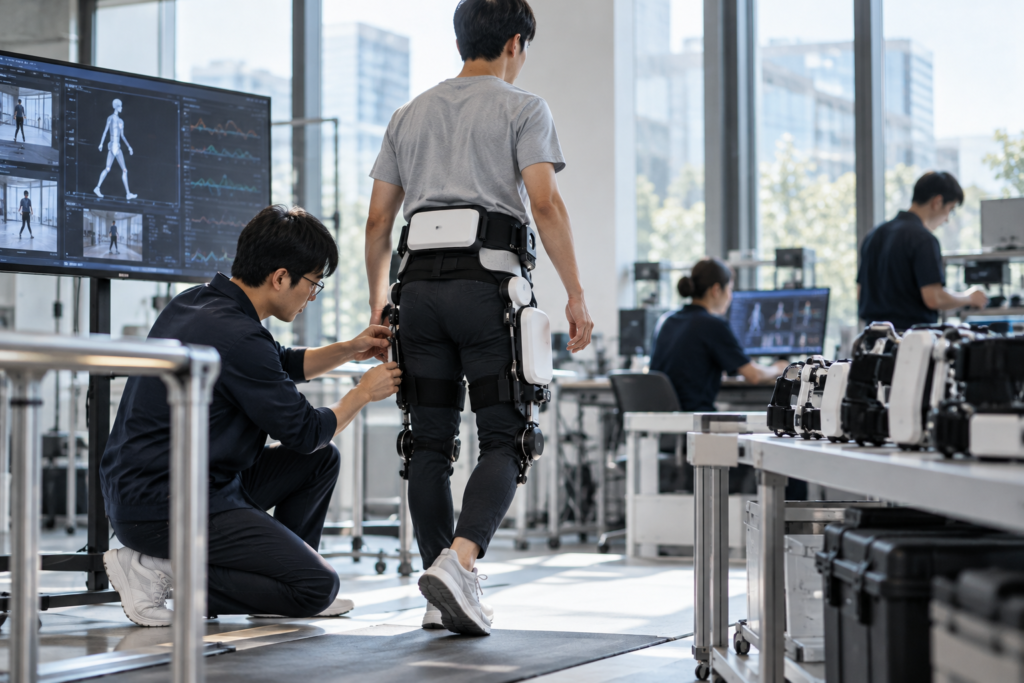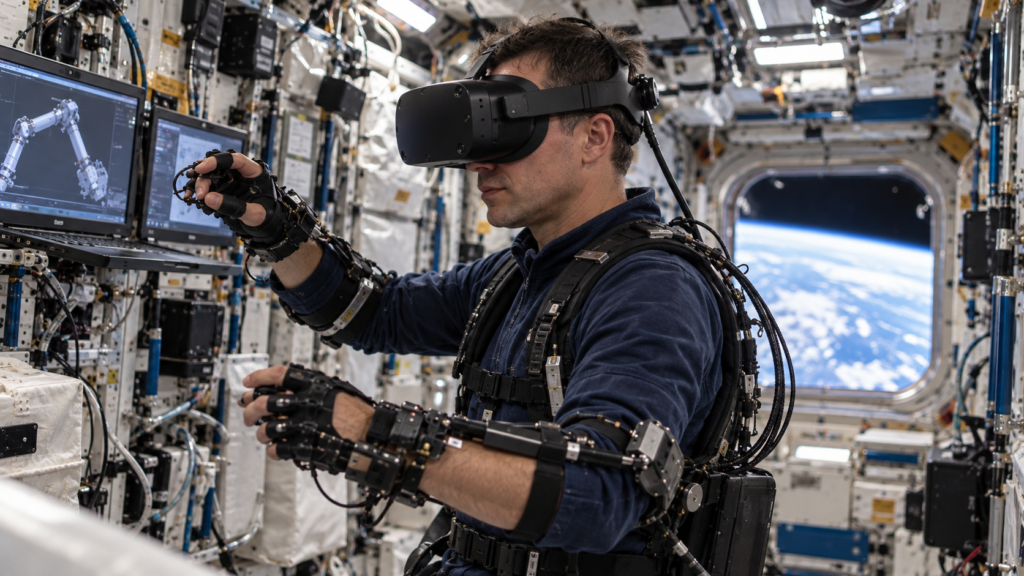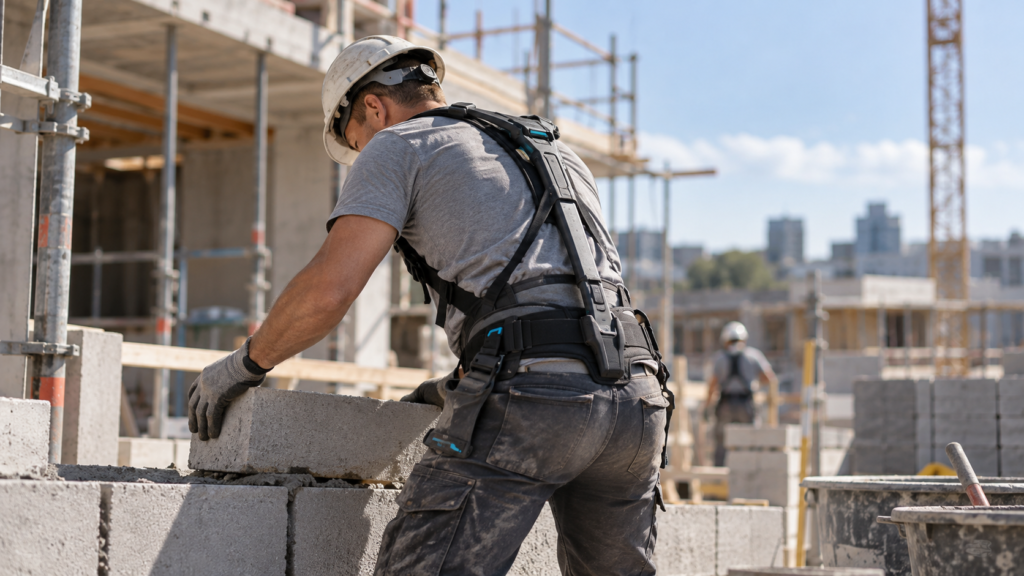


A consumer exoskeleton has entered one of the world’s most visible annual technology lists. TIME has selected the Hypershell X Ultra S for its Best Inventions of 2026, highlighting the wearable robot’s movement-control system and its use across activities including hiking, running and cycling.
A consumer exoskeleton enters the mainstream technology conversation
Exoskeletons have spent decades being associated primarily with rehabilitation laboratories, industrial ergonomics, military research and highly specialized assistive technology.
The Hypershell X Ultra S sits in a different part of the market.
It is a commercially available consumer product designed around outdoor mobility, including hiking and mixed-terrain movement.
TIME’s inclusion of the product in its 2026 Best Inventions list therefore matters for a reason beyond the award itself.
A powered exoskeleton is being presented alongside mainstream technology products to a general consumer audience rather than only appearing in robotics exhibitions, scientific publications or specialist industry media.
That does not establish mass adoption.
But it does show how rapidly the public positioning of wearable robotics is changing.
What TIME actually highlighted
TIME describes the X Ultra S as a “smooth-moving exoskeleton” and focuses heavily on the problem of making powered assistance feel natural rather than rigid.
The publication highlights Hypershell’s HyperIntuition control system, which the company says analyzes and anticipates user movement in real time before translating that movement into assistance.
The basic proposition is straightforward: an outdoor exoskeleton has to help without making the person feel as though they are fighting the machine.
That control problem is one of the central challenges across consumer wearable robotics.
A product can have substantial motor output and still deliver a poor experience if assistance arrives at the wrong point in the gait cycle, feels abrupt or interferes with natural movement.
TIME also points to use across hiking, running and cycling, positioning the device as an outdoor mobility product rather than a single-task hiking aid.
Specifications are manufacturer-reported. They describe the Hypershell X Ultra S and should not be interpreted as independent performance measurements.
The X Ultra S is already a real retail product
This is another reason the recognition stands out.
The Hypershell X Ultra S is not a laboratory prototype or a concept device being shown ahead of an uncertain launch.
Exoskeleton Index currently tracks it as an available consumer mobility exoskeleton priced at US$1,999 in the United States and €1,999 in Europe.
Hypershell lists up to 1,000 W of peak assistance, 12 assist modes, IP54 protection and two 72 Wh batteries.
The manufacturer states up to 30 km of range per battery under its specified conditions. The package includes two batteries, although Exoskeleton Index does not combine those figures into a guaranteed 60 km real-world range because terrain, assistance mode, user weight, temperature and other conditions can materially affect endurance.
The X Ultra S is also explicitly positioned as a consumer product rather than a medical aid. Users must be capable of independent walking and balance.
Consumer exoskeletons are becoming an actual product category
That distinction is important when interpreting the TIME recognition.
The broader consumer exoskeleton market is no longer defined by a single device.
Exoskeleton Index now tracks multiple commercially accessible powered systems aimed at hiking, recreational walking and personal mobility, with current products from Hypershell, DNSYS, Ascentiz, VIGX, NAVEE and other manufacturers.
Our 2026 consumer exoskeleton comparison now separates products by architecture, price, commercial status, weight, endurance and evidence rather than treating “consumer exoskeleton” as one experimental category.
The same shift is visible in pricing.
Current powered hip-assist products increasingly cluster within a consumer-hardware price band rather than requiring hospital, enterprise or research-level purchasing budgets. Our 2026 exoskeleton price guide tracks multiple mainstream consumer systems between roughly US$800 and US$2,000.
That does not make the products inexpensive.
It does make them increasingly comparable with premium e-bikes, outdoor equipment, camera systems and other high-value consumer hardware rather than only with specialized robotics.
Consumer exoskeletons are increasingly sold through normal purchase channels rather than research programmes alone.
TIME’s recognition puts the category in front of a much broader audience than specialist robotics coverage.
Multiple manufacturers are now competing on price, weight, control, range and assisted-joint architecture.
Hypershell has also moved beyond controlled demonstrations
The TIME selection arrives during a year in which Hypershell has accumulated more public visibility outside conventional product launches.
In September, a Hypershell exoskeleton was used during a real rescue operation on Table Mountain in South Africa, where a rescue professional used the device while ascending difficult terrain.
Exoskeleton Index treated that event carefully because the exact Hypershell model used was not publicly confirmed.
It nevertheless provided a qualitatively different data point from a manufacturer-organized demonstration: a commercially produced consumer exoskeleton being used during an operational mountain rescue.
Read our full analysis of the Hypershell Table Mountain rescue deployment.
The combination of retail availability, independent hands-on testing, outdoor deployments and now mainstream recognition is beginning to give the consumer-exoskeleton market a different profile from only a few years ago.
Exoskeleton Index analysis
The most important part of TIME’s selection is not whether one Hypershell model wins an editorial award.
It is that a consumer exoskeleton can now plausibly sit inside a mainstream “best inventions” list without needing the reader to first understand medical rehabilitation or industrial robotics.
That is a meaningful shift in category visibility.
Consumer exoskeleton manufacturers are increasingly competing on familiar consumer-product questions: How much does it weigh? How far can it go? How comfortable is it? How quickly does it respond? What terrain does it support? Can it be purchased and serviced reliably?
Those questions are very different from asking whether wearable robots are technically possible.
The category is moving toward a more mature problem: whether manufacturers can turn impressive demonstrations into products people repeatedly choose to buy, wear and use.
TIME’s recognition does not answer that commercial question.
But it does suggest that consumer exoskeletons are increasingly being judged as consumer technology rather than treated purely as futuristic robotics.
Recognition is not the same as independent validation
There is an important boundary to maintain.
TIME’s Best Inventions selection is editorial recognition. It is not a clinical trial, certification of comparative performance or evidence that the X Ultra S is objectively superior to every competing consumer exoskeleton.
The specifications cited by Hypershell, including peak power, range and performance-related physiological claims, remain manufacturer-reported unless independently tested.
Exoskeleton Index therefore separates the significance of the TIME recognition from technical validation of individual performance claims.
The product also remains a consumer mobility device rather than a medical device and should not be interpreted as a treatment for impaired mobility.
What this recognition does and does not mean
TIME selected the Hypershell X Ultra S for its 2026 Best Inventions list and highlighted its movement-control approach and outdoor applications.
The selection is a meaningful mainstream visibility signal for consumer wearable robotics.
It does not establish clinical effectiveness, market leadership, comparative superiority or mass-market adoption.
Hypershell is also broadening its product architecture
Hypershell’s current portfolio is already moving beyond a single powered hip design.
The company’s X Ultra S, X Max S and X Pro S remain hip-assist consumer exoskeletons at different price and performance levels.
Its newer Hypershell Halo, meanwhile, adds powered knee assistance alongside hip assistance through a four-motor full-leg architecture.
That product is currently tracked by Exoskeleton Index as a preorder rather than a normal shipping product.
The architectural expansion matters because consumer exoskeleton competition may increasingly shift from comparing motor power within one design format to comparing which joints should be assisted for different use cases.
For hiking specifically, Exoskeleton Index currently ranks the X Ultra S as its premium all-round reference product in the Best Hiking Exoskeletons of 2026 guide, while also tracking competing systems with different price, weight and evidence profiles.
What comes after mainstream recognition?
Consumer exoskeletons have now reached a point where visibility alone is unlikely to be the industry’s biggest challenge.
The more important questions are becoming commercial.
How many people will purchase a wearable robot after trying one?
How frequently will owners actually use it after the novelty wears off?
How durable will these systems prove over years of outdoor use?
How easy will repairs, battery replacement and after-sales service become as the installed base grows?
And will assistance become useful enough that consumers eventually treat wearable robotics less like an unusual gadget and more like a normal mobility product?
TIME putting the X Ultra S on its Best Inventions list does not answer those questions.
But it is another indication that the category has moved far enough for mainstream consumers to start asking them.
Sources and reporting notes
TIME, October 15, 2026. “Hypershell X Ultra S: The Best Inventions of 2026.” TIME describes the product as a “Smooth-moving exoskeleton” and highlights its HyperIntuition movement-control system and outdoor use cases.
Hypershell. Current official X Series product information covering manufacturer-stated specifications, pricing, assistance modes, battery configuration and consumer-use positioning.
Exoskeleton Index. Product, company and market records used to verify current commercial positioning, pricing, specifications and internal comparison context.
Reporting note: Manufacturer specifications and performance claims are identified as such throughout. TIME’s editorial selection is treated as a visibility and recognition signal, not as clinical validation or proof of comparative superiority.