
2026 BUYER GUIDE
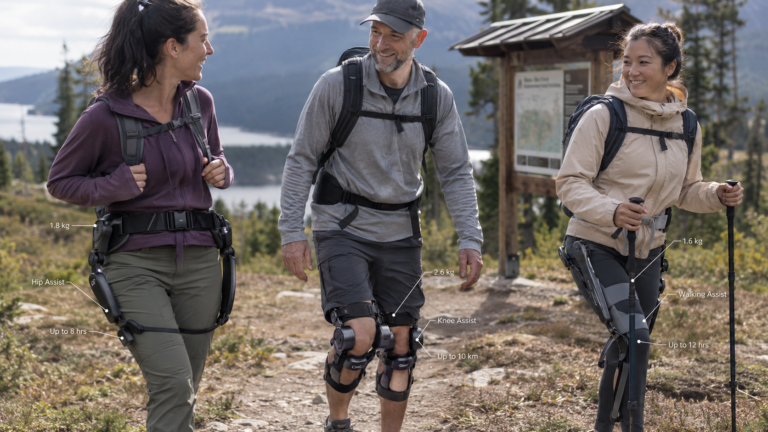
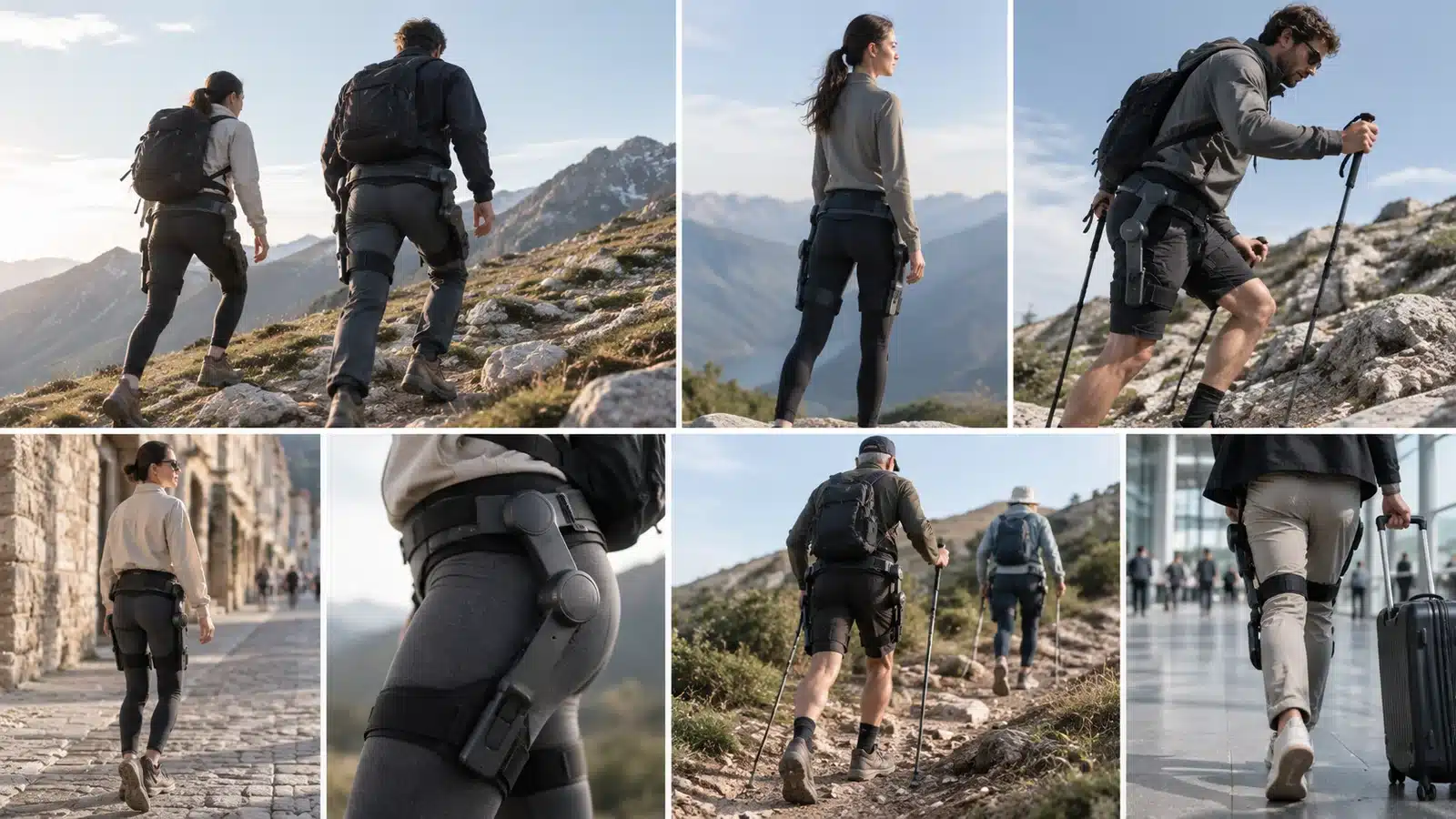
Consumer exoskeletons crossed an important threshold in 2026. Powered walking assistance is no longer represented by one or two experimental products: buyers can now choose between commercially available hip, knee and ankle systems, while the first multi-joint consumer platforms are entering preorder.
That changes the question. The useful question is no longer simply “Can I buy an exoskeleton?” It is which architecture, product and level of assistance best fits how you want to move.
This guide compares the best consumer exoskeletons Exoskeleton Index believes are most relevant in late 2026, using current commercial availability, price, independent hands-on evidence, fit, support and architecture rather than ranking every device by headline motor power.
Where is assistance applied?
What does the complete system actually cost?
What has been tested beyond manufacturer claims?
Can somebody actually buy or trial it now?
Best consumer exoskeletons in 2026: the short answer
There is no universal winner because hip, knee and ankle systems solve different movement problems. But several products now stand out for specific buying decisions.
Refined hip assistance, strong outdoor positioning and one of the deepest independent review records in the consumer category.
A lower-cost entry into powered hip assistance, with multiple variants and a mature direct-sales channel.
A commercially available hip platform competing on modularity, range and a broader upgrade path.
Direct EU retail at €1,099, low weight and a growing body of independent real-world testing.
A genuinely different proposition from hip systems, aimed at powered knee assistance for stairs, slopes and repeated movement.
Ankle-powered “bionic footwear” for everyday walking, with a very different feel and use case from waist-mounted systems.
2026 shortlist at a glance
The table below is deliberately decision-focused. It avoids pretending that wattage, range and weight are directly comparable across different architectures or even across manufacturers using different measurement methods. For a deeper methodology discussion, see our Consumer Exoskeleton Comparison 2026.
| Product | Assistance | Price at cutoff | Commercial status | Best fit | EI evidence view |
|---|---|---|---|---|---|
| Hypershell X Ultra S | Hip | US$1,999 MSRP; US promo US$1,699 at cutoff | Available | Premium hiking, mixed terrain, buyers prioritising refinement | Established consumer evidence |
| DNSYS X1 | Hip | From US$829 on current official listings; variant pricing differs | Available | Value-focused hip assistance, walking and outdoor use | Established / developing |
| Ascentiz H Pro | Hip / modular platform | US$1,199 sale; US$1,499 list | Available | Modularity, everyday movement and outdoor use | Developing |
| NAVEE EXO S Pro | Hip | €1,099 in EU store | Available | EU buyers wanting a lighter, competitively priced system | Developing |
| WIRobotics WIM S | Lightweight walking assistance | ₩2.79 million in Korea | Regional | Everyday walking, portability and lower-profile assistance | Developing / strong hands-on |
| DNSYS Z1 | Knee | From US$1,099; configuration pricing varies | Available | Stairs, slopes and users specifically seeking knee assistance | Early / developing |
| Dephy Sidekick | Ankle | US$4,500 Starter Pack | Available | Everyday walking and push-off assistance closer to the foot | Developing + independent hands-on |
Prices were checked against public manufacturer/store pages on 11 October 2026 and may include temporary promotions. Taxes, regional prices, configurations and accessories can materially change the final purchase price.
First choose where you want assistance
“Consumer exoskeleton” sounds like one technical category. It is not. A powered device at the hip can assist leg swing and propulsion, a knee system can directly support flexion and extension, and an ankle system can add power closer to push-off. Multi-joint systems try to coordinate more than one of those functions.
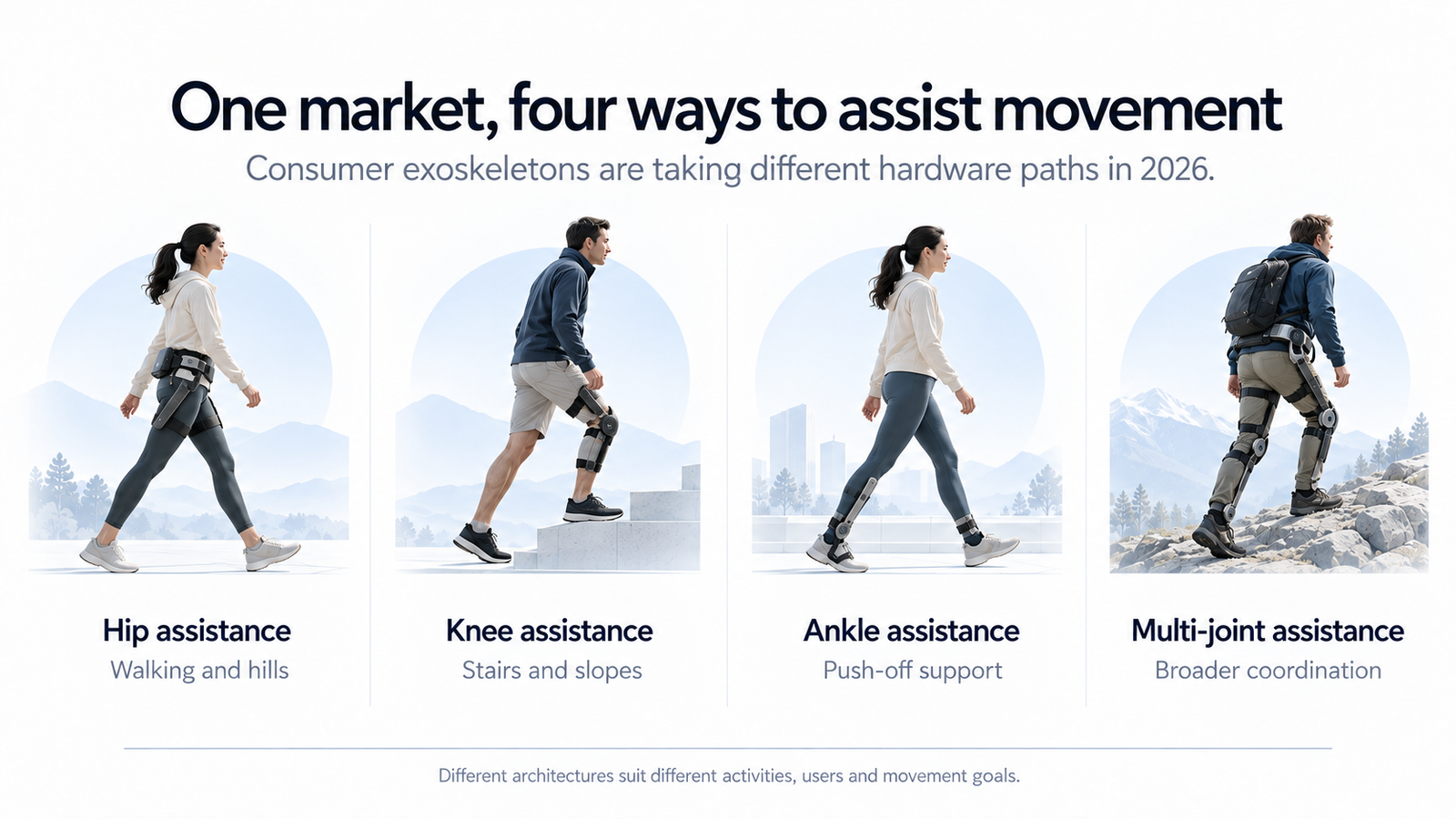
Why this matters: a 1,000 W hip device and a lower-powered knee or ankle device are not simply “stronger” and “weaker” versions of the same machine. They apply assistance to different joints at different moments in the gait cycle. The right architecture can matter more than the largest number on a specification sheet.
Our picks: the consumer exoskeletons to consider
Hypershell X Ultra S — best premium all-rounder
Hypershell remains one of the clearest premium reference points for what a consumer exoskeleton can feel like when hardware, control software and retail infrastructure mature together.
Why it stands out
The current X Ultra S is positioned at US$1,999 MSRP, with a US$1,699 promotion running at the research cutoff. Hypershell lists up to 1,000 W of assistance, 12 intelligent modes, IP54 protection and a dual-battery configuration. The company has also expanded through European retail channels rather than relying only on direct ecommerce.[1]
What independent testing tells us
WIRED’s 2026 review found the X Ultra S materially smoother and more intuitive than earlier consumer systems, with the clearest value on inclines. The same review was much less convinced by flat-ground and running use, which is an important reminder that benefit is activity-dependent rather than universal.[2]
Main trade-off
Premium price remains the obvious barrier. The product is easier to justify for somebody who regularly encounters hills, long walks or mixed terrain than for a highly fit user seeking a dramatic advantage on ordinary flat ground.
EI view
Hypershell currently provides one of the strongest demonstrations of category maturity. The key advance is not simply peak output: it is increasingly natural control, wider retail access and enough independent use to judge the product as a consumer device rather than a prototype.
DNSYS X1 — best value route into powered hip assistance
DNSYS matters because it has pushed the entry price of powered hip assistance lower while keeping a direct commercial channel, multiple variants, replaceable batteries and a sizeable user base.
Why it stands out
DNSYS currently lists the X1 family from about US$829 on its official store, while exact pricing varies by Carbon, Lite and Pro configuration and by promotion. The company lists 1.6 kg mechanical weight and a 15 km base range for current X1 configurations.[3]
What independent testing tells us
WIRED compared a higher-spec X1 Carbon Pro with a Hypershell flagship in 2026. Both devices provided noticeable assistance, but the testers preferred Hypershell’s smoother and quieter delivery. That was an informal comparison rather than a controlled scientific trial, and it involved a specific X1 variant, but it provides useful evidence that control quality can matter as much as how strongly a device pushes.[4]
Main trade-off
Variant complexity. Buyers need to check which X1 they are looking at, how many batteries are included and whether a promotional price is attached to a particular material or configuration.
EI view
DNSYS is one of the most important forces pushing consumer exoskeleton pricing downward. That makes X1 particularly relevant to early adopters who want real powered assistance without starting at flagship pricing.
Ascentiz H Pro — best modular challenger
Ascentiz is competing not only on power and price but on a platform idea: one belt system designed to evolve through interchangeable assistance modules and future upgrades.
Why it stands out
The H Pro is currently listed at US$1,199 during a fall promotion against a US$1,499 list price. Ascentiz lists 1,000 W peak output, 25 km / 15.5 miles of range, 2.5 kg total weight, IP54 protection and a modular architecture.[5]
What independent testing tells us
Tom’s Guide tested the earlier H1 Pro at CES 2026 and highlighted comfort, low perceived bulk and fast donning. That is useful hands-on evidence for the platform direction, but it should not be treated as independent validation of every current H Pro specification or long-term durability claim.[6]
Main trade-off
The final commercial H Series has a shorter owner and long-duration review history than Hypershell. The next evidence layer is not another specification sheet: it is sustained use, durability and service experience.
EI view
Ascentiz is one of the most credible new challengers because it has moved beyond concept hardware into ordinary commercial sale. If the modular strategy develops as intended, it could become a meaningful point of differentiation as the category matures.
NAVEE EXO S Pro — best new EU value entrant
NAVEE entered the consumer exoskeleton market with something the category needs: a lightweight, directly purchasable European product at a competitive price.
Why it stands out
NAVEE’s European store lists EXO S Pro at €1,099. The product has moved beyond launch announcements into direct EU retail and selected physical demonstrations.[7]
What independent testing tells us
Sky TG24’s field test reported that assistance was especially noticeable on inclines, stairs and after longer effort, while also identifying comfort compromises around the waist and straps during running. That is exactly the kind of mixed, real-world evidence we want: confirmation that assistance can be useful without pretending the wearable disappears from the body.[8]
Main trade-off
NAVEE is new to this product category. Long-term durability, service quality and support for a wearable robotic product will matter just as much as its attractive launch specification set.
EI view
EXO S Pro broadens the European market in a useful direction. Its combination of price, low weight and direct retail makes it harder to treat consumer exoskeletons as a niche reserved only for high-end early adopters.
WIRobotics WIM S — best lightweight everyday-walking direction
WIM S is strategically important because it asks a different design question: what if a consumer exoskeleton should be easy to carry, easy to sit in and less intrusive during ordinary life rather than optimised primarily for extreme terrain?
Why it stands out
WIRobotics currently sells WIM S in Korea for ₩2.79 million. Its compact front-mounted architecture is designed around everyday walking rather than maximum visible hardware.[9]
What independent testing tells us
The Verge used WIM S extensively around CES 2026 and praised the 3.6 lb design, easy donning, sitting comfort and portability. The main weakness was battery behaviour, including shorter real-world endurance and an unreliable battery indicator during the test.[10]
Main trade-off
Access remains regional, and WIM S is not trying to deliver the same terrain-oriented experience as a flagship hiking exoskeleton.
EI view
WIM S may be one of the more important clues about where everyday consumer mobility assistance is heading. If exoskeletons become normal wearables rather than special outdoor equipment, compactness and unobtrusive use may matter as much as peak power.
DNSYS Z1 — best dedicated knee option
Z1 deserves its own category because direct knee assistance changes the buying question. It is not simply another X1 competitor with the motor moved lower.
Why it stands out
DNSYS lists current Z1 configurations from around US$1,099, with higher prices for Pro, limited-edition and combined hip-knee packages. The company positions the system around powered knee assistance for stairs, slopes, skiing and vertical movement.[11]
What the evidence tells us
Public independent evidence is still younger than for the best-known hip systems. That does not make the architecture less interesting; it simply means buyers should separate the manufacturer’s quantified pressure-relief and assistance claims from independent validation.
Main trade-off
More hardware around the knee and lower leg changes comfort, fitting and the experience of flat walking. It is most compelling when the buyer’s actual need maps to the knee rather than when it is treated as a universal alternative to hip assistance.
EI view
Z1 is important because it makes consumer exoskeleton choice more specific. A buyer can now ask whether they need hip propulsion or direct knee assistance rather than comparing every system as if it were the same product.
Dephy Sidekick — best ankle-first option
Sidekick is one of the clearest examples of consumer exoskeleton architecture moving away from the waist. It adds powered assistance at the ankle through a dedicated footwear system.
Why it stands out
Dephy sells the Sidekick Starter Pack for US$4,500 and states that current purchases are expected to ship within 14 business days. The company describes it as a lifestyle and wellness product, not a medical device, with up to five miles of walking at its listed Power Level II and 1.4 kg weight per side including battery.[12]
What independent testing tells us
Multiple CES 2026 testers reported an immediately noticeable push under the heel and easier walking, while also noting that higher assistance settings can feel more intrusive. Engadget described a clear “upward push” under the heel, and Healthcare Brew reported that walking felt instantly easier during its test.[13]
Main trade-off
Price. Sidekick is much more expensive than most current hip products, and its dedicated footwear ecosystem makes it a more specific commitment.
EI view
Sidekick is valuable because it expands what a consumer exoskeleton can be. The category will become more credible as buyers can choose not only between brands but between fundamentally different ways of assisting gait.
Hypershell vs DNSYS vs Ascentiz: what actually separates them?
These three brands are likely to appear on the same shortlist because they all sell powered hip-assist systems directly to consumers. But they are not competing on exactly the same proposition.
Choose Hypershell if refinement and independent testing matter most. X Ultra S carries the highest price of the three reference products, but it also has the strongest current combination of mature control behaviour, premium outdoor positioning, retail expansion and long-form independent testing.
Choose DNSYS if price is the main barrier to trying powered hip assistance. X1 lowers the entry point substantially, although buyers need to pay more attention to exact variants, battery packages and the difference between promotional and regular pricing.
Choose Ascentiz if the platform idea matters. H Pro sits between the two on current price and differentiates itself through the Exo-Belt concept, modularity and a roadmap built around interchangeable assistance modules. Its long-term independent evidence base is still younger.
None of those differences can be reduced to one universal score. If those are the three products on your shortlist, use the EI Compare tool for the current side-by-side specifications, then check the individual product profiles for the latest price, availability and source trail.
How much does a consumer exoskeleton cost in 2026?
The market now spans a much wider price range than it did only a few years ago. In the primary shortlist above, current public pricing runs from sub-US$1,000 entry points to US$4,500 for Dephy Sidekick, with many powered hip systems clustering in the low-to-mid four figures.
Below US$1,000, DNSYS X1 is the clearest current entry point in this shortlist, although the exact X1 variant and promotion matter. Around the US$1,000–US$1,500 level, buyers increasingly have several credible options, including Ascentiz H Pro and NAVEE EXO S Pro in Europe. Premium products such as Hypershell X Ultra S move toward the US$2,000 level, while different architectures such as Sidekick can cost substantially more.
Those bands are a snapshot, not permanent categories. Promotions move quickly, European prices include different tax treatment, and battery bundles can materially change the final cost. For a broader view across consumer, workplace and medical systems, use our 2026 exoskeleton price guide.
What else is worth watching?
The higher-spec H Series option is currently listed at US$1,599 during the fall sale against a US$1,999 list price, with two batteries and a manufacturer-listed 50 km / 31 mile range. It is the obvious Ascentiz comparison for buyers prioritising range over entry price. [14]
VIGX currently sells π Plus for US$1,399 and positions it as a lightweight AI-powered outdoor system. The commercial offer is real; independent long-duration evidence is still thinner, so we would treat it as a notable contender rather than force it into a winner slot. [15]
Halo is the most important near-term architecture shift in the premium consumer segment: coordinated hip-and-knee assistance through four motors. It is currently €2,299 / US$2,299 on preorder, with Hypershell stating that shipping begins from late November. [16]
Hip systems still dominate visibility, but the more important 2026 story is architectural diversification. Dedicated knee systems are shipping, ankle-powered products are in direct sale, compact everyday-walking systems are being commercialised, and coordinated hip-knee systems are moving toward delivery.
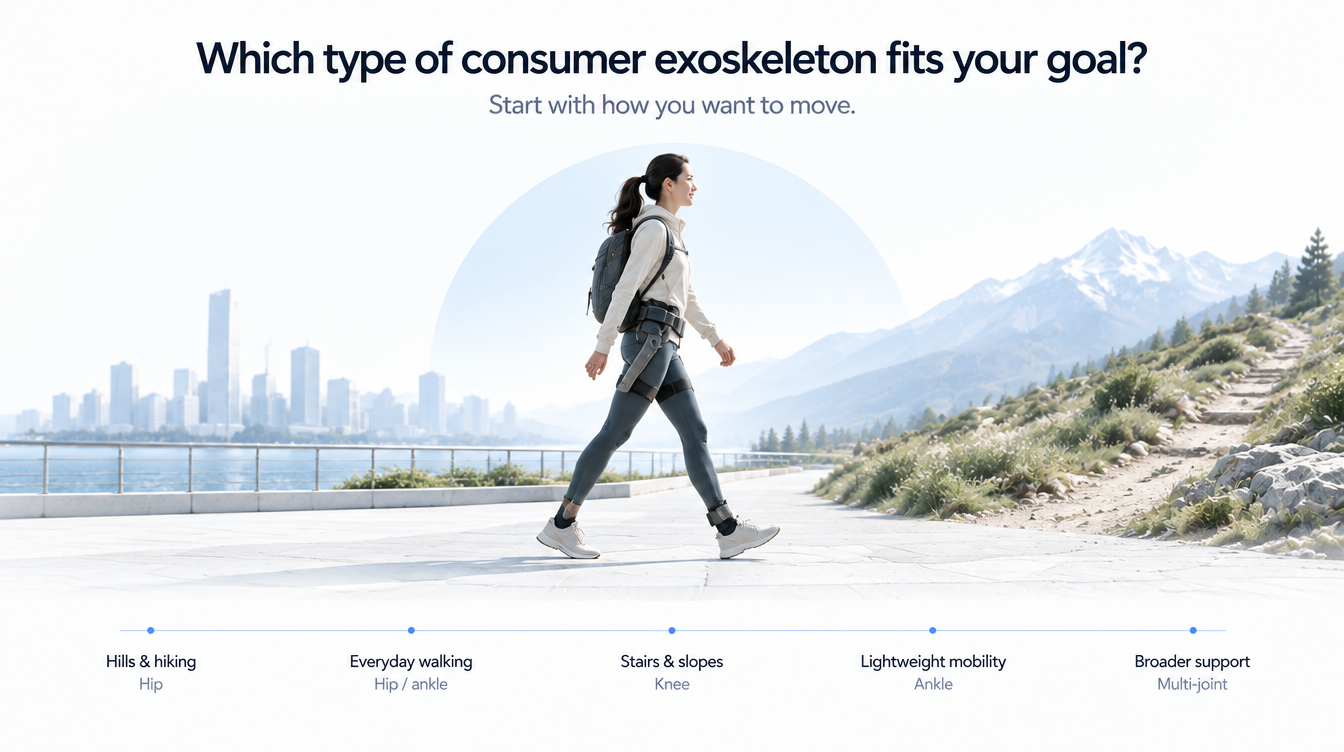
Which type of consumer exoskeleton fits your goal?
The easiest way to narrow the market is to start with the activity you want to preserve or improve, then decide where assistance should be applied.
What matters more than the headline specifications
Consumer exoskeletons are wearable robots. The best specification sheet does not automatically produce the best experience because motors must transfer force through a moving human body at the right time, through contact points that remain comfortable enough to wear.
Smooth, well-timed assistance can feel more useful than stronger but abrupt assistance.
Waist, thigh, calf and height ranges affect comfort and how effectively force reaches the body.
Terrain, assistance level, speed, user mass and temperature all change endurance.
A system that is fast to put on and comfortable while sitting is more likely to remain part of a routine.
Mechanical sound and the sensation of being pushed matter in a consumer product used around other people.
Warranty, replacement parts, return windows and local support are part of the product, not administrative details.
Do not buy a knee problem with a hip solution simply because one product has the larger motor number.
Separate manufacturer claims, journalist hands-on use, peer-reviewed evidence and customer testimony.
If you are moving from research to an actual purchase or pilot, our Practical Exoskeleton Buyer’s Guide goes deeper into trials, fit, warranty, maintenance, support and procurement.
For the full cost landscape rather than a single shortlist, see How Much Do Exoskeletons Cost in 2026?. For older users specifically, see Exoskeletons for Older Adults in 2026.
What can you actually buy today?
Commercial status deserves its own section because a polished launch page can make a preorder, a region-limited product and a device shipping this week look equally mature.
- Hypershell X Series
- DNSYS X1
- DNSYS Z1
- Ascentiz H Series
- NAVEE EXO S Pro
- Dephy Sidekick
- VIGX π Plus
- WIRobotics WIM S — commercial in Korea
- Some products remain dependent on local distribution, demo or fitting channels
- Hypershell Halo — shipping stated from late November 2026
- MO/GO — current preorder points to 2027 delivery
Are consumer exoskeletons actually worth it in 2026?
For the right activity, increasingly yes. The strongest reason to buy one today is not to become “superhuman.” It is to extend an activity that already matters to you: walking farther, climbing with less fatigue, handling long days on your feet or keeping difficult terrain accessible.
Are they worth it for hiking?
Hiking remains one of the clearest current consumer use cases because sustained inclines create exactly the type of repetitive lower-limb demand that powered assistance can address. Terrain modes, battery strategy, fit and weather resistance matter more here than a headline wattage number. If trail use is your main goal, see our dedicated Hiking With an Exoskeleton in 2026 analysis.
Are they worth it for everyday walking?
This may ultimately become the larger market. WIM S and Dephy Sidekick point toward a category where portability, quick donning, sitting comfort and lower-profile assistance can matter more than maximum power. A device that is slightly less dramatic but easier to wear repeatedly may create more real value.
Are they worth it for older adults?
Potentially, but age alone is not the deciding variable. An independently mobile older adult who tires on hills may be a good candidate for a consumer system, while somebody with impaired balance or a neurological gait disorder may need a completely different assistive or medical pathway. Our Exoskeletons for Older Adults in 2026 Insight examines that boundary in detail.
Are they worth it for running?
Running is still a less convincing buying case than walking or hiking. Some systems can assist faster movement and sprint-like activity, but added mass, control timing and the interaction with a natural running gait make the benefit more user-dependent. For most buyers in 2026, walking, inclines and fatigue reduction remain the more mature reasons to purchase.
Who should consider a consumer exoskeleton?
The strongest current use case is not “become superhuman.” It is do more of an activity you already value with less fatigue or fewer self-imposed limits. That can mean hiking farther, managing long sightseeing days, keeping up with friends on hills, handling repeated stairs or simply making ordinary walking feel less demanding.
That is also why buyer fit matters more than age alone. An active older adult, a frequent hiker and a traveller with declining endurance may all benefit from assistance for different reasons. Our dedicated older-adults analysis explores that distinction in more detail.
There is, however, an important boundary. Most products in this guide require independent walking and balance and explicitly state that they are not medical devices. Someone seeking balance replacement, neurological gait rehabilitation or a regulated personal mobility device is looking at a different technology category.
Exoskeleton Index verdict
2026 is the first year in which “Which consumer exoskeleton should I buy?” feels like a genuinely useful question.
There is now real competition, meaningful price separation, multiple assistance architectures, better independent testing and products designed for distinctly different ways of moving.
There is still no universal winner. But that is increasingly a sign of market maturity rather than weakness: consumers are beginning to have actual choices.
If we were building a shortlist today, we would start with Hypershell X Ultra S for a premium hip system, DNSYS X1 for value, Ascentiz H Pro for modularity, NAVEE EXO S Pro for a new EU value option, DNSYS Z1 for dedicated knee assistance and Dephy Sidekick if ankle-powered everyday walking is the better fit.
Methodology
This guide was refreshed using public information available through 11 October 2026. Inclusion in the primary shortlist required a combination of consumer positioning, identifiable commercial access, sufficiently clear specifications and enough public information to evaluate the product beyond a concept announcement.
Commercial verification: “available” means a consumer could place an order through a current public sales channel at the research cutoff. “Regional” means commercial access exists but is geographically limited. “Preorder” means the final product is not yet broadly shipping to ordinary buyers.
Evidence hierarchy: manufacturer specifications and performance claims are treated as first-party claims; independent journalist testing is used to evaluate real-world feel and usability; peer-reviewed evidence is considered when it directly matches the product or architecture; customer testimony is not treated as clinical proof.
Ranking philosophy: Exoskeleton Index does not assign universal numerical scores across hip, knee, ankle and multi-joint systems because they apply assistance differently. “Best” labels in this guide refer to a defined buying decision, not a claim that one device is superior for every person or activity.
Affiliate disclosure: Exoskeleton Index may earn commissions from selected partner links, including Hypershell. Commercial relationships do not determine inclusion, evidence grading or editorial conclusions.
Frequently asked questions
What is the best consumer exoskeleton in 2026?
There is no universal winner. Hypershell X Ultra S is our premium all-round reference point, DNSYS X1 is one of the strongest value entries into hip assistance, Ascentiz H Pro is a strong modular challenger, NAVEE EXO S Pro is an important new EU option, DNSYS Z1 is the clearest dedicated-knee choice in this shortlist, and Dephy Sidekick offers a distinct ankle-powered approach.
How much does a consumer exoskeleton cost?
Mainstream powered consumer systems now span from below US$1,000 to several thousand dollars. At the 11 October 2026 cutoff, DNSYS X1 listings started around US$829, NAVEE EXO S Pro was €1,099, Ascentiz H Pro was US$1,199 on sale, Hypershell X Ultra S had a US$1,999 MSRP and Dephy Sidekick cost US$4,500.
Can you actually buy a consumer exoskeleton today?
Yes. Hypershell X Series, DNSYS X1 and Z1, Ascentiz H Series, NAVEE EXO S Pro, Dephy Sidekick and VIGX π Plus all had direct public commercial channels at the research cutoff. WIM S was commercially available in Korea, while Halo and MO/GO remained preorder products.
Is a hip or knee exoskeleton better?
Neither is universally better. Hip systems are currently the largest consumer category and fit general walking, hiking and leg-swing assistance well. Knee systems are more directly relevant when stairs, slopes or knee flexion/extension are the central use case.
Do consumer exoskeletons actually reduce effort?
Independent hands-on testing repeatedly shows that powered systems can make assistance noticeable, especially on inclines or during longer walking. The magnitude and usefulness vary by product, user, terrain and setting, so manufacturer percentage claims should not be treated as universal outcomes.
Are consumer exoskeletons medical devices?
Most products in this guide are explicitly sold as consumer mobility, lifestyle or wellness products rather than regulated medical devices. They generally require independent walking and balance and should not be treated as substitutes for clinical mobility technology or medical advice.
Selected sources
- Hypershell — current X Series pricing and specifications.
- WIRED — Hypershell X Ultra S review, 2026.
- DNSYS — X1 current product page, configurations and intended-use notes.
- WIRED — DNSYS / Hypershell head-to-head testing, 2026.
- Ascentiz — H Pro current commercial page.
- Tom’s Guide — Ascentiz CES 2026 hands-on.
- NAVEE — EXO S Pro current EU retail listing.
- Sky TG24 — NAVEE EXO S Pro field test.
- WIRobotics — WIM S current Korean product listing.
- The Verge — extended WIM S hands-on at CES 2026.
- DNSYS — Z1 current product page and configuration information.
- Dephy — Sidekick Starter Pack current pricing and specifications.
- Engadget — Dephy Sidekick CES 2026 hands-on.
- Ascentiz — H Ultra current pricing and specifications.
- VIGX — π Plus current retail listing.
- Hypershell — Halo preorder pricing, specifications and delivery timing.
- Skip — MO/GO current preorder terms and 2027 delivery window.
Editorial note: Exoskeleton Index is constructive about the long-term development of wearable robotics, but bullishness is not a substitute for verification. Commercial status, price and product specifications can change quickly; manufacturer claims remain attributed to manufacturers, and buyer recommendations may change as independent evidence and owner experience accumulate.