
The factory floor is teaching the industry what specifications cannot
Industrial exoskeletons are no longer judged only by how much assistance they can deliver in a demonstration. Workers must be able to put them on, move naturally, complete a full shift and decide they are worth wearing again tomorrow.
A new Spanish-language publication brings unusually broad operational experience to that question. Authors Yaniel Torres, Israel Benavides and Gustavo Rosal draw on interventions involving more than 600 workers, over 20 exoskeleton models and six industrial sectors in Colombia, Germany and Spain.
Their message is encouraging for companies serious about implementation: the technology is reaching real jobs, but success depends as much on selection and integration as on the device itself.
These figures describe the scope of the authors’ professional experience. The article is not a pooled effectiveness study or head-to-head test of 20 devices.
Three obstacles that determine whether devices stay in use
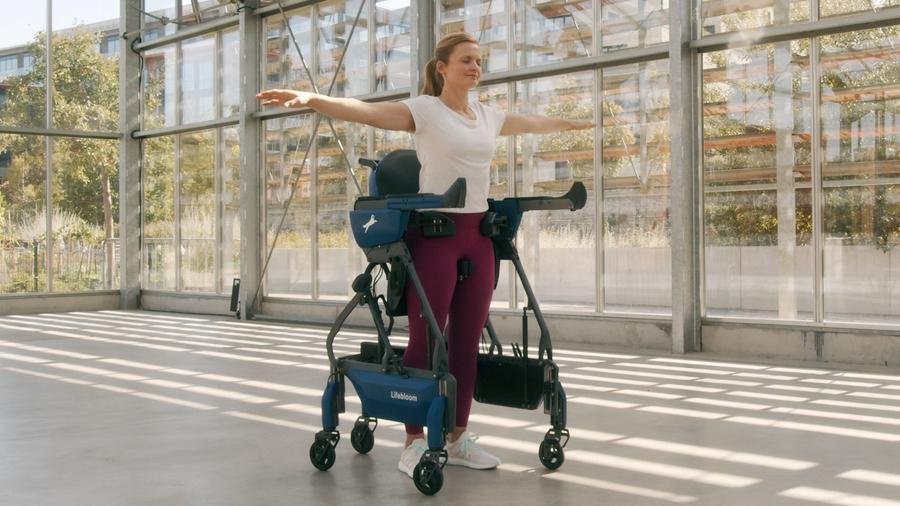
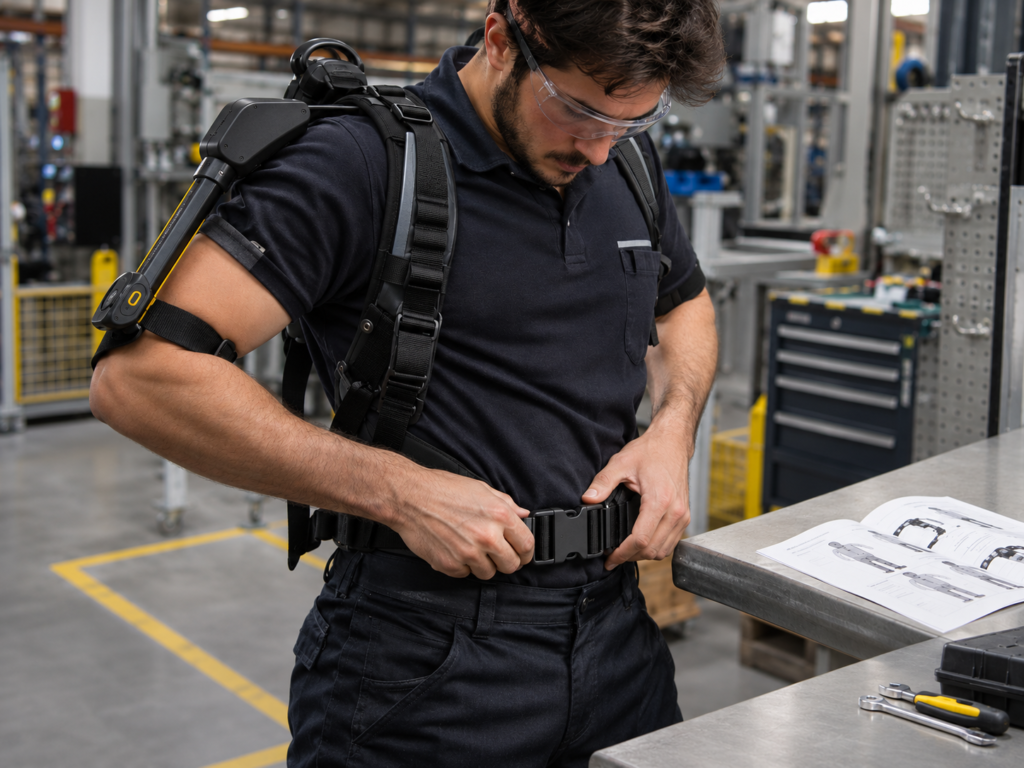
The authors describe recurring friction between the laboratory and the workplace. Weight, heat, pressure points and fitting complexity affect comfort. Tight spaces, hygiene routines and rapid task changes can interrupt work. Training, worker acceptance and follow-up shape whether early enthusiasm survives operational reality.
One particularly useful observation is that a lighter, simpler system may be worn for longer than a more powerful but less practical alternative. Maximum assistance on paper is only one part of the value proposition; the time a worker actually uses the equipment matters just as much.
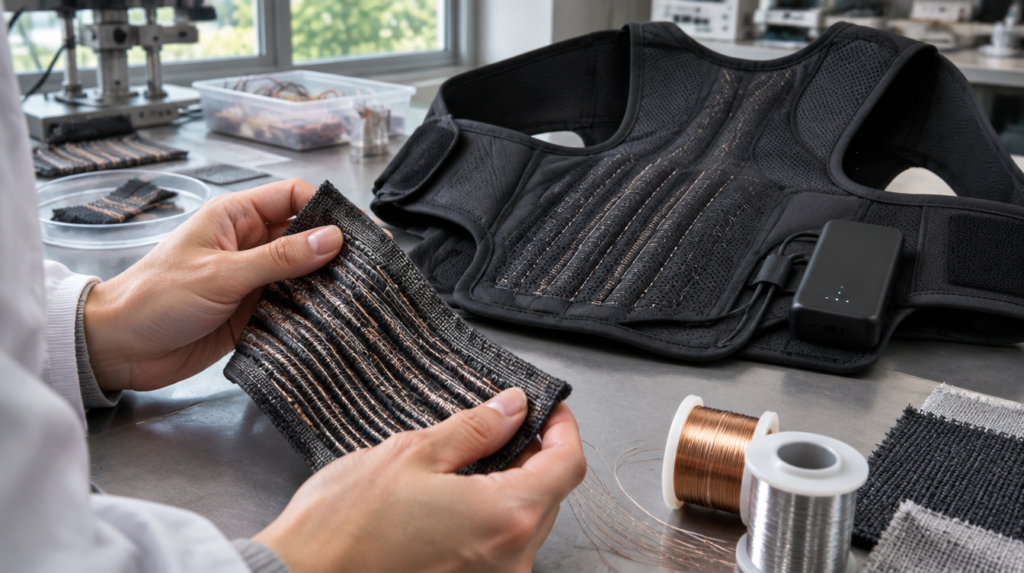
Weight, heat, sizing and pressure points can decide whether a device survives a normal shift.
Transitions, confined spaces, cleaning and donning time belong in the evaluation.
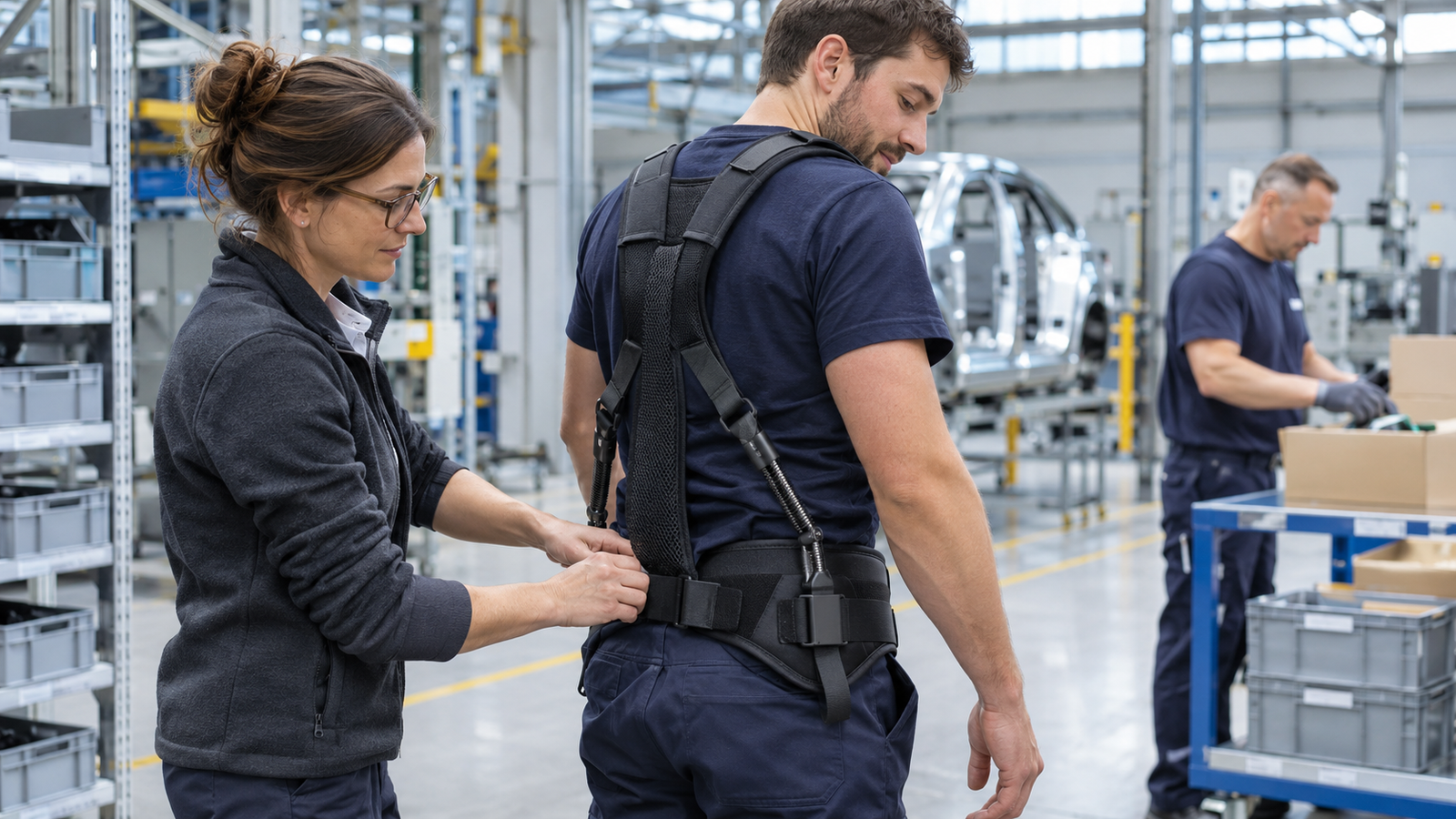
Training, feedback and follow-up are essential to sustained, voluntary adoption.
Exoskeleton Index analysis
This paper arrives at an important moment. Workplace buyers have more designs to choose from, and the market is moving beyond the question of whether exoskeletons can assist a movement. The stronger commercial question is which tasks justify a device and what it takes to make that device part of ordinary work.
The findings support a more mature, and potentially larger, industrial market. As implementation practice improves, buyers can move from one-off showcases toward repeatable assessments, appropriately scoped pilots and informed purchasing decisions. Device makers that prioritise comfort, usable support and serviceability may gain as much from this shift as those pursuing higher headline assistance figures.
For a broader view of available products, use our 2026 industrial exoskeleton guide. Our separate analysis of 106 industrial studies examines the published evidence base rather than implementation experience. Application-specific routes can also be explored through manufacturing, logistics and the product directory.
How to read the 600-worker figure
This is an expert account of lessons across several professional interventions, not a prospective study showing that 600 workers benefited or that one model outperformed another. The paper discusses practical barriers and implementation approaches; it does not provide a pooled effect size or a universal return-on-investment estimate.
What companies should take into the next pilot
Start with a specific high-exposure task, not a broad promise to eliminate strain. Involve employees and ergonomics specialists, trial the equipment across a representative work cycle, and track actual wear time alongside comfort and task compatibility. An exoskeleton only creates value when people can use it in the work they really do.
Considering exoskeletons for your workforce?
Tell us about the task, industry and location. Exoskeleton Index can help you assess the options and connect with relevant providers for an informed pilot.
Discuss an industrial pilotIndependent, application-led guidance. No claims of guaranteed injury prevention.Sources and reporting notes
Torres, Benavides and Rosal, Archivos de Prevención de Riesgos Laborales, October 26, 2026, doi:10.12961/aprl.2026.29.4.788. Read the full article (Spanish PDF). The publication is a practice-based account, with limitations distinct from controlled clinical or workplace trials.