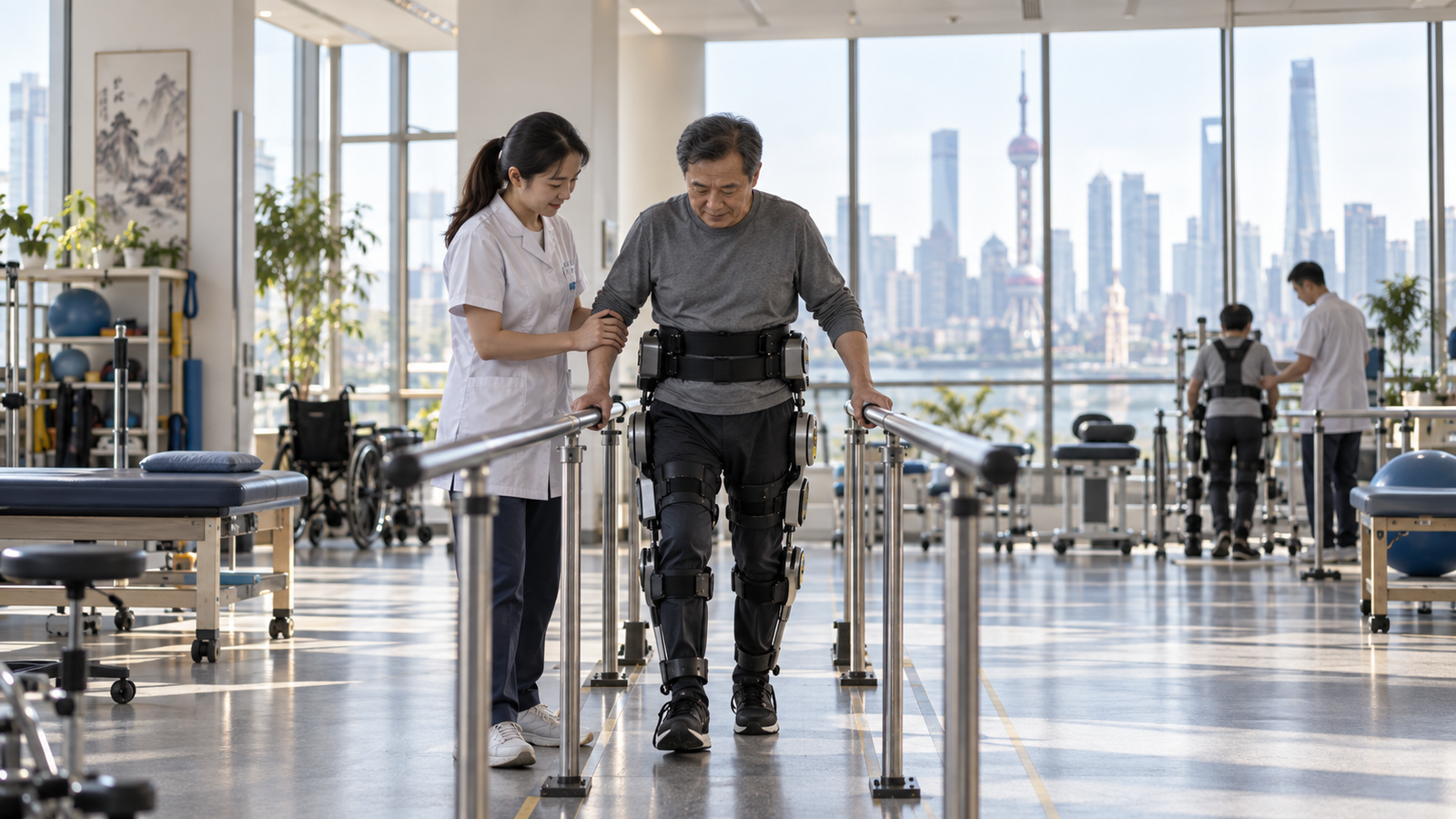
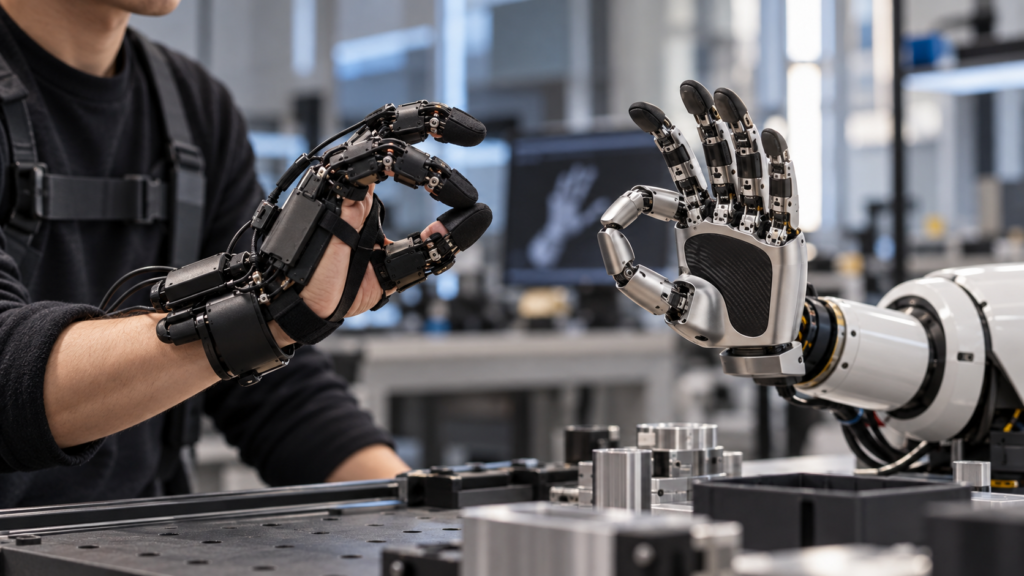
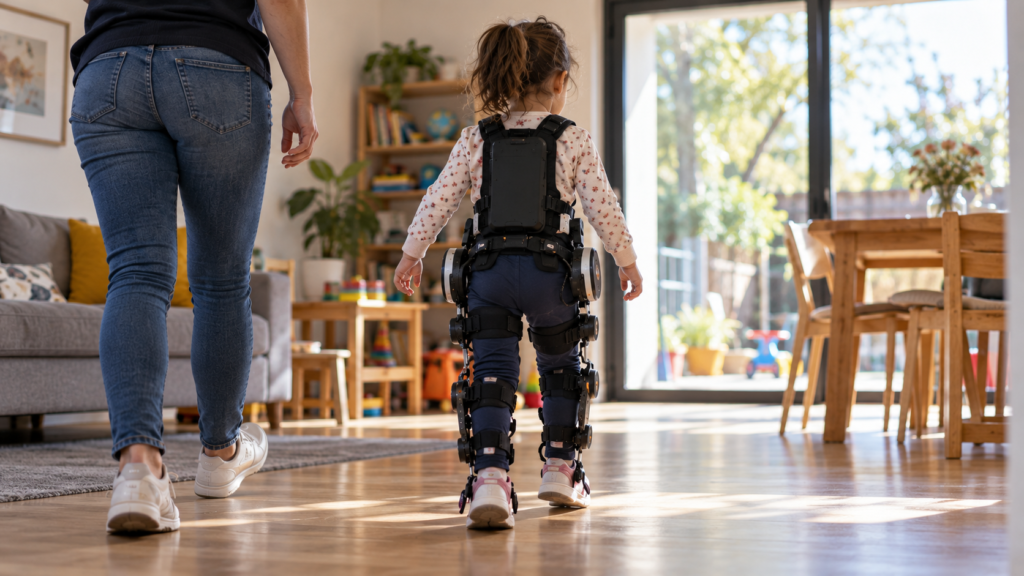
China has put exoskeleton robots directly into its national medical-industry development plan, alongside brain-computer-interface-driven exoskeletons and AI gait-analysis systems.
The inclusion appears in the new
15th Five-Year Plan for the Development of the Pharmaceutical Industry, jointly issued by 10 national departments and published on 18 September 2026.
Under its section on smart medical devices, the plan identifies
exoskeleton robots, brain-computer-interface-driven exoskeletons and AI gait-analysis systems among the rehabilitation medical technologies China wants to develop during the period through 2030.
For the exoskeleton industry, the important signal is not that China has discovered wearable robotics. Exoskeletons are already appearing across the country’s medical, consumer and industrial markets. What has changed is where the technology now sits inside national policy: explicitly within the development agenda for advanced medical devices.
At a glance
| Policy |
15th Five-Year Plan for the Development of the Pharmaceutical Industry |
| Published |
18 September 2026 |
| Issuing bodies |
10 national departments led by China’s Ministry of Industry and Information Technology |
| Exoskeleton provision |
Development of exoskeleton robots as rehabilitation medical devices |
| BCI provision |
Development of brain-computer-interface-driven exoskeletons |
| Related technology |
AI gait-analysis systems |
| Planning horizon |
Through 2030 |
Exoskeletons now sit inside the smart medical-device agenda
The new plan covers the wider pharmaceutical and medical-device industries rather than exoskeletons alone.
Its smart-medical-device priorities span areas including advanced diagnostic systems, AI-assisted medical technologies, surgical equipment, home medical devices and rehabilitation technology.
Within rehabilitation, however, the wording is unusually specific. Rather than referring only to robotics or intelligent rehabilitation in general, the plan names three closely connected technologies:
- exoskeleton robots;
- brain-computer-interface-driven exoskeletons; and
- AI gait-analysis systems.
That grouping is important because it points toward a rehabilitation stack that increasingly combines powered hardware, human-intent sensing and software-based movement analysis.
An exoskeleton can provide mechanical assistance. A brain-computer interface can potentially provide another pathway for detecting user intent or closing a rehabilitation feedback loop. Gait-analysis systems can measure movement before, during and after intervention.
The technologies are not interchangeable, and their clinical maturity varies substantially. But placing them together inside a national medical-device plan suggests China sees them as related parts of future rehabilitation technology development rather than isolated research categories.
This is different from China’s recent consumer exoskeleton policy
The announcement comes only weeks after another national Chinese policy explicitly brought exoskeleton robots into the consumer and ageing discussion.
That earlier plan called for exoskeleton robots and other age-friendly products to enter elderly households while expanding distribution through communities, hospitals, pharmacies, care institutions and conventional retail channels.
Exoskeleton Index covered that development in
China’s National Consumer Plan Pushes Exoskeleton Robots Into Elderly Homes.
The two policies address different parts of the market.
The consumer initiative is primarily about
access, distribution and age-friendly consumption. The new pharmaceutical-industry plan places exoskeletons inside the development of
rehabilitation medical devices.
Taken together, they show exoskeleton technology appearing in two distinct national policy channels: consumer mobility and medical rehabilitation.
BCI-driven exoskeletons are becoming a more explicit policy category
Brain-computer-interface-controlled exoskeletons are not a new research concept, but their explicit appearance in industrial policy is worth separating from laboratory progress.
China had already signalled this direction in its 2025 national implementation guidance for the brain-computer-interface industry.
That policy called for the development of exoskeleton products using brain-signal feedback and identified medical rehabilitation among the major application areas for BCI technology.
Since then, several Chinese provincial and national initiatives have continued to connect brain-computer interfaces with rehabilitation robotics, functional electrical stimulation and assistive devices.
The new pharmaceutical-industry plan strengthens that connection by naming
BCI-driven exoskeletons specifically inside the rehabilitation medical-device category.
That does not mean brain-controlled exoskeletons are suddenly ready for widespread clinical deployment. Clinical performance, user selection, safety, training requirements, regulatory classification and evidence quality remain separate questions.
But it does mean that the category has progressed far enough to appear inside national industrial planning rather than only research programmes.
The broader plan targets medical-device innovation through 2030
Exoskeletons represent only a small part of a much larger policy.
China’s Ministry of Industry and Information Technology says the plan contains 25 major tasks across eight areas, covering innovation, industrial resilience, digital transformation, precision medicine, clinical translation, manufacturing, healthcare access and international cooperation.
Among its broader 2030 targets, the plan calls for more than
200 innovative medical devices to reach the market during the planning period.
That target applies to innovative medical devices overall. It should
not be interpreted as a target for 200 exoskeleton products.
The plan also calls for closer coordination between research, clinical validation, industrialisation, regulatory review, healthcare policy and manufacturing.
For rehabilitation robotics companies, that wider ecosystem may ultimately matter as much as being named in the technology list. Medical exoskeleton adoption depends on more than hardware: validation, procurement, training, clinical workflow, regulatory approval and payment all influence whether a system moves beyond demonstration projects.
China’s exoskeleton market is already splitting into distinct segments
The policy also arrives as China’s exoskeleton market becomes increasingly segmented.
Medical rehabilitation systems remain the highest-value portion of the domestic market, while much larger unit volumes are beginning to appear in consumer walking assistance, tourism and outdoor mobility.
Exoskeleton Index previously reported data attributed to IDC indicating that China’s overall exoskeleton robot market exceeded RMB 1.6 billion in 2025, with medical rehabilitation accounting for most reported market value while consumer-assist systems represented the majority of units shipped.
See our analysis:
China’s Exoskeleton Robot Market Tops RMB 1.6 Billion as Consumer Shipments Accelerate.
The difference matters because a hospital rehabilitation exoskeleton and a lightweight consumer walking-assist system operate under fundamentally different purchasing, evidence and regulatory models.
The new plan is primarily relevant to the
Healthcare & Rehabilitation side of that market.
What the policy does not establish
The inclusion of exoskeleton technology in the plan should not be read as evidence that every system will receive government funding, reimbursement or accelerated regulatory approval.
The published material reviewed by Exoskeleton Index does not set an exoskeleton-specific sales target, shipment target or dedicated national subsidy amount.
It also does not identify individual manufacturers as preferred suppliers.
The significance is narrower but still important:
exoskeleton robotics has been explicitly included among the rehabilitation medical technologies China intends to develop as part of its national medical-industry strategy through 2030.
What to watch next
The next signal will be implementation.
National plans in China are often followed by provincial programmes, demonstration projects, procurement initiatives, standards work and industry-specific funding mechanisms.
For exoskeletons, several questions now matter:
- Which provinces translate the national plan into dedicated rehabilitation-robotics programmes?
- Whether hospitals increase procurement or clinical trials involving powered exoskeleton systems;
- How BCI-driven exoskeleton products move through medical-device regulation;
- Whether common gait-analysis and performance metrics begin to emerge;
- and whether national and provincial support produces greater commercial separation between medical rehabilitation and consumer-assistance products.
China is already one of the most active markets globally for exoskeleton development, manufacturing and deployment.
The latest plan does not settle which technologies or companies will succeed. It does, however, make the policy direction clearer: wearable robotics, brain-computer interfaces and AI-based movement analysis are becoming part of the country’s formal medical-technology development agenda.
For broader market context, see
The Exoskeleton Market in 2026, or explore current medical systems through the
Exoskeleton Index Product Directory.
Sources
- Ministry of Industry and Information Technology of China, interpretation of the 15th Five-Year Plan for the Development of the Pharmaceutical Industry, published 18 September 2026.
- 15th Five-Year Plan for the Development of the Pharmaceutical Industry, jointly issued by 10 Chinese national departments, 2026.
- Ministry of Industry and Information Technology and six other departments, Implementation Opinions on Promoting Innovation and Development of the Brain-Computer Interface Industry, 2025.