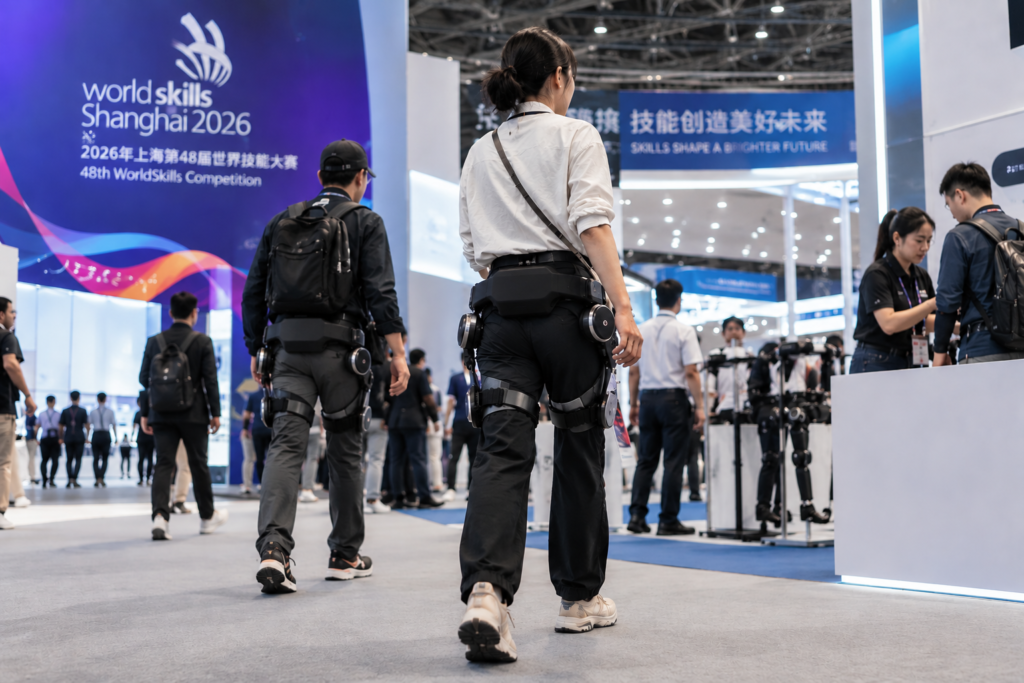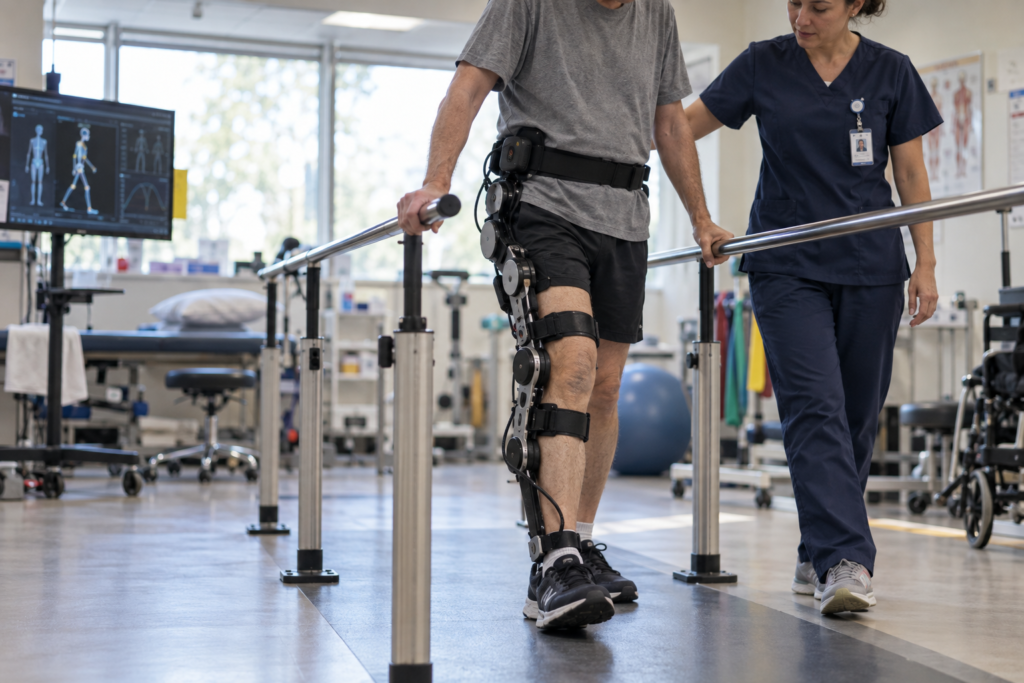

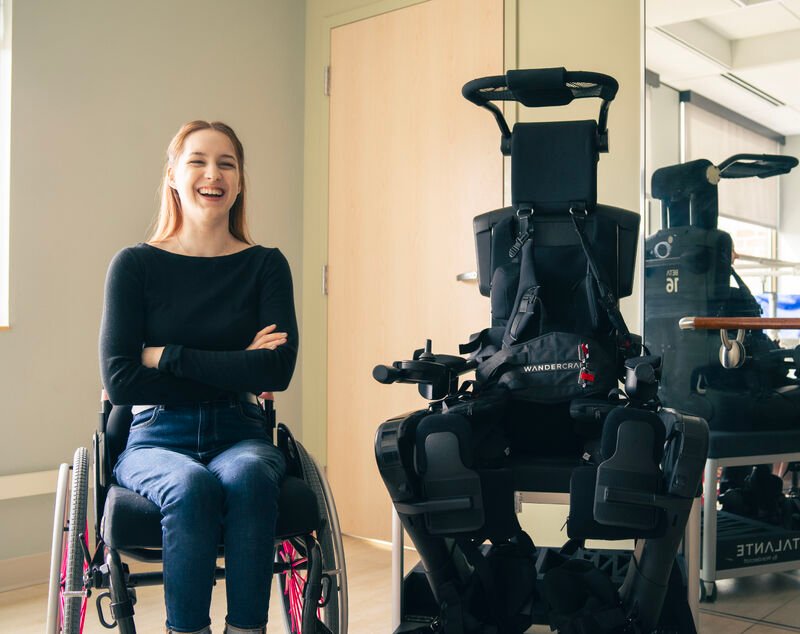
Wandercraft has acquired Ekso Bionics from a subsidiary of ChronoScale Holdings, bringing Atalante X, EksoNR, Eve and Indego Personal under one robotics group. The transaction was approved, signed and closed on 1 October, with financial terms undisclosed. Wandercraft says Atalante X and EksoNR together support patients across more than 700 rehabilitation centers worldwide, making this one of the most consequential consolidation moves yet in medical exoskeletons.
- Acquirer
- Wandercraft
- Acquired business
- Ekso Bionics, Inc.
- Seller
- A subsidiary of ChronoScale Holdings Corporation
- Transaction announced
- 1 October 2026
- Transaction status
- Signed and closed simultaneously
- Financial terms
- Not disclosed
- Rehabilitation platforms
- Atalante X and EksoNR
- Personal mobility platforms
- Eve and Indego Personal
- Reported rehabilitation footprint
- More than 700 rehabilitation centers worldwide across Atalante X and EksoNR, according to Wandercraft
- Product continuity
- Wandercraft says it intends to continue supporting all four medical exoskeleton platforms
- Strategic fit
- Wandercraft’s EMEA and Physical AI capabilities combined with Ekso Bionics’ U.S. clinical and commercial presence
The buyer of Ekso Bionics is now known
The transaction resolves one of the more important open questions in the exoskeleton industry this year.
At that point, no buyer, purchase price or transaction structure had been disclosed.
ChronoScale had already decided to separate the exoskeleton business as it shifted its continuing public-company strategy toward accelerated computing infrastructure.
On 1 October, Wandercraft announced that it had acquired Ekso Bionics, Inc. from a ChronoScale subsidiary.
ChronoScale separately confirmed that the sale had been completed.
The boards of Wandercraft and ChronoScale unanimously approved the transaction, and Wandercraft says the agreement was signed and closed simultaneously.
No purchase price or other financial terms were disclosed.
Four important medical exoskeleton platforms now sit under one group
The clearest immediate effect is on the medical product portfolio.
Wandercraft brings Atalante X, its self-balancing rehabilitation exoskeleton, and Eve, its personal mobility system.
Ekso Bionics brings EksoNR, one of the longest-established clinical gait-rehabilitation exoskeleton platforms, and Indego Personal, its modular personal exoskeleton for eligible users with spinal cord injury.
That gives the combined group two distinct rehabilitation platforms and two distinct personal mobility architectures.
Wandercraft says there are currently no plans to discontinue the existing products and that the company intends to continue supporting all four, along with the clinicians, centers and users already relying on them.
That continuity matters because medical exoskeletons are not products that can be replaced casually.
Hospitals and rehabilitation centers invest in staff training, patient protocols, service relationships and clinical workflows around specific systems.
For personal users, device support can be even more critical because the exoskeleton becomes part of an individual mobility pathway.
Atalante X and EksoNR create a much larger clinical network
Wandercraft says Atalante X and EksoNR together currently support patients at more than 700 rehabilitation centers worldwide.
That figure is company-reported, but it gives a useful indication of the combined clinical footprint.
Wandercraft separately says Atalante X is deployed in more than 150 rehabilitation and research centers.
EksoNR brings Ekso Bionics’ long-established hospital and rehabilitation-center network, particularly in the United States.
The acquisition therefore does more than add another piece of hardware to Wandercraft’s catalogue.
It adds clinical relationships, trained institutions, service infrastructure and commercial reach that would have taken years to recreate organically.
Wandercraft says rehabilitation centers will be able to consult specialists familiar with both Atalante X and EksoNR while retaining dedicated product-specific support.
The company has not suggested that the two systems will be merged into a single platform.
The two rehabilitation systems are complementary rather than identical
Atalante X and EksoNR both address robotic gait rehabilitation, but they use substantially different architectures.
Atalante X is a self-balancing lower-limb exoskeleton designed to support multidirectional walking during supervised rehabilitation without requiring the user to continuously rely on crutches or a walker for balance.
EksoNR uses a different wearable architecture and has accumulated extensive clinical use across neurological rehabilitation environments.
Wandercraft says the two platforms collectively hold U.S. FDA clearances and CE marking across indications involving stroke, spinal cord injury, multiple sclerosis and acquired brain injury.
Those regulatory scopes are product-specific and should not be interpreted as meaning that every indication applies identically to both devices.
The acquisition therefore creates a broader portfolio rather than one interchangeable rehabilitation product.
For clinical buyers, the relevant question may increasingly become which architecture is appropriate for a particular patient population, treatment objective and rehabilitation workflow.
Personal mobility becomes another important part of the deal
The acquisition also brings together two different approaches to personal exoskeleton mobility.
Wandercraft launched Eve commercially in the United States in September following FDA clearance earlier this year.
Eve uses Wandercraft’s self-balancing architecture and is designed to provide hands-free upright mobility for eligible people with spinal cord injury within its cleared use conditions.
Indego Personal follows a more established modular architecture designed to support standing and walking for eligible users with spinal cord injury.
Wandercraft says both products will remain part of the combined portfolio.
That gives the company two routes into a part of the exoskeleton market increasingly shaped not only by hardware, but also by prescription, reimbursement, training and long-term support.
In the United States, qualifying personal exoskeletons can access Medicare reimbursement under the brace benefit category through HCPCS code K1007 when applicable eligibility and medical-necessity conditions are met.
Wandercraft has already been building its own access infrastructure around Eve, including its Walk in New York rehabilitation center and a dedicated team supporting documentation, benefits, reimbursement, financing and coordination with clinicians and payers.
Ekso’s existing U.S. infrastructure adds another established layer to that strategy.
The geographic fit may be as important as the products
The acquisition is unusually complementary geographically.
Wandercraft has built a strong base in France and the wider EMEA market while expanding rapidly into the United States.
Ekso Bionics brings a much longer U.S. commercial history, a large installed clinical base and established relationships with American rehabilitation providers.
Wandercraft explicitly identifies that combination as one of the central reasons for the transaction.
The company says the deal joins its advanced robotics and Physical AI capabilities and EMEA position with Ekso Bionics’ U.S. clinical experience and commercial reach.
That could accelerate expansion in both directions.
Wandercraft gains infrastructure and customer relationships in the market where it is currently commercializing Eve.
Ekso’s products gain access to a group with stronger European infrastructure and a broader robotics platform.
Exoskeleton Index analysis
This acquisition is important because it represents genuine consolidation inside the exoskeleton industry rather than a conventional partnership or distribution agreement.
Two of the sector’s longest-running medical exoskeleton developers are now part of the same group.
That says something about where the market is heading.
Medical exoskeletons are increasingly difficult to scale through hardware alone.
A commercially viable platform needs regulatory approvals, clinical evidence, trained centers, service infrastructure, reimbursement support, distribution, manufacturing capability and enough installed systems to justify the operating structure around them.
Building all of those layers independently in every market is expensive and slow.
An acquisition can accelerate that process.
Wandercraft does not simply gain EksoNR and Indego Personal.
It gains years of clinical relationships, regulatory experience and commercial infrastructure around those systems.
Ekso, meanwhile, moves from a parent company that had formally classified the exoskeleton business as held for sale into a robotics group whose core strategy remains directly connected to human mobility.
That may be the most strategically important part of the deal.
The acquisition places Ekso’s technology inside an organisation actively investing across rehabilitation, personal mobility, Physical AI and robotics rather than treating exoskeletons as a discontinued side business.
There is also a broader market implication.
If medical exoskeleton adoption continues to depend heavily on clinical networks, reimbursement and service capacity, scale may increasingly come through consolidation as well as organic product growth.
That does not automatically make larger portfolios better.
But it can make the infrastructure surrounding those products more efficient and easier to expand internationally.
This is not simply a bigger product catalogue
The difficult part starts after the acquisition.
Wandercraft now has overlapping products in two major medical categories.
Atalante X and EksoNR both target institutional rehabilitation.
Eve and Indego Personal both address personal upright mobility for people with spinal cord injury.
The systems are technologically different, but customers will still need a clear reason to understand where each platform fits.
That creates several integration questions.
Will rehabilitation centers be offered both systems?
Will clinical sales teams become cross-trained?
Will the products continue using separate service networks?
Will Wandercraft eventually build shared software, data or training infrastructure across the portfolio?
And how will the company position two personal exoskeletons that solve similar mobility problems using different architectures?
The initial announcement does not answer those questions.
For now, Wandercraft’s message is continuity rather than rationalization.
The company says existing products will continue to be supported and that customers will gain access to broader clinical expertise across the combined organisation.
Ekso’s industrial technology adds another layer
Ekso Bionics is not exclusively a medical exoskeleton company.
Its portfolio has also included occupational systems such as Ekso EVO, a passive upper-body exoskeleton designed for overhead work.
Wandercraft, meanwhile, has expanded beyond healthcare through its Physical AI platform and industrial humanoid programme.
The acquisition announcement is primarily framed around medical mobility and does not provide a detailed strategy for Ekso’s industrial exoskeleton portfolio.
That makes the industrial side another area worth monitoring.
It is possible that Wandercraft sees value in technologies, customers or engineering capabilities beyond the four medical platforms highlighted in the announcement, but the company has not yet provided enough detail to establish how those assets will fit into its wider industrial strategy.
What remains unverified
The financial terms of the acquisition have not been disclosed.
It is therefore not currently possible to assess the transaction valuation or compare it meaningfully with Ekso Bionics’ recent assets, revenue or historical market value.
Wandercraft’s figure of more than 700 rehabilitation centers across Atalante X and EksoNR is company-reported. The announcement does not provide a center-by-center breakdown or specify how many sites currently operate each system.
The company has confirmed that it intends to continue supporting Atalante X, EksoNR, Eve and Indego Personal, but it has not disclosed a detailed long-term product roadmap.
The announcement also does not establish whether manufacturing, sales, clinical-support or service teams will remain structurally separate or become integrated.
No detailed timeline has been provided for combining the companies’ distribution, software, data, reimbursement or customer-service infrastructure.
Finally, the transaction itself does not establish that the combined company will achieve greater adoption or improved clinical outcomes.
Those outcomes will depend on execution after the acquisition.
What to watch next
The first question is how Wandercraft positions four medical exoskeleton platforms without creating unnecessary overlap.
Product continuity is useful for existing customers, but the combined sales organisation will eventually need clear criteria for deciding when Atalante X, EksoNR, Eve or Indego Personal is the appropriate solution.
The second question is commercial integration.
Ekso’s U.S. clinical network could become particularly important for Wandercraft as it scales Eve, while Wandercraft’s European infrastructure could create additional routes for Ekso products.
Evidence of cross-selling, shared service centers or coordinated distribution would show whether that potential is translating into an operational advantage.
The third issue is reimbursement.
Personal medical exoskeletons are increasingly moving from exceptional purchases toward structured payer pathways, particularly in the United States.
A larger access and reimbursement team supporting both Eve and Indego Personal could become one of the most commercially significant consequences of the deal.
And finally, the acquisition raises a broader market question.
If regulatory, clinical and service infrastructure increasingly determine which medical exoskeleton companies can scale, Wandercraft’s acquisition of Ekso Bionics may not remain an isolated consolidation event.
For now, one thing is clear: the uncertainty around Ekso’s ownership has ended, and one of the industry’s longest-running exoskeleton businesses is now part of a company making robotic mobility its core strategy.
Read our earlier analysis of Ekso Bionics being classified as held for sale, explore the Eve personal exoskeleton and Indego Personal, or browse the wider Healthcare & Rehabilitation exoskeleton landscape.
Sources
- Wandercraft: Wandercraft acquires Ekso Bionics, 1 October 2026
- Wandercraft / GlobeNewswire: acquisition announcement and transaction details, 1 October 2026
- ChronoScale Holdings: confirmation of completed Ekso Bionics sale, 1 October 2026
- Wandercraft: post-acquisition customer and product-support FAQ