
South Korean police have searched Cosmo Robotics as part of an investigation into allegations that approximately KRW 3.5 billion in 2025 revenue was falsely recorded before the wearable-robot company’s KOSDAQ listing. The amount under investigation is equivalent to roughly 40% of the KRW 8.863 billion in consolidated revenue the company reported for 2025. The allegations remain under investigation and have not been established as wrongdoing.
- Company
- Cosmo Robotics Co., Ltd.
- Headquarters
- Seoul, South Korea
- Police action
- Search of the company’s Seoul office on 29 September 2026
- Investigating authority
- Seoul Metropolitan Police Agency Financial Crime Investigation Unit
- Suspected offence
- Alleged violation of South Korea’s Capital Markets Act
- Revenue under investigation
- Approximately KRW 3.5 billion in allegedly false 2025 revenue
- Reported 2025 consolidated revenue
- KRW 8.863 billion
- Relative scale
- The amount under investigation is approximately 40% of reported 2025 consolidated revenue
- KOSDAQ listing
- 11 May 2026
- Status
- Police investigation ongoing. No final finding of wrongdoing has been reported.
Police are examining wearable-robot sales recorded before the IPO
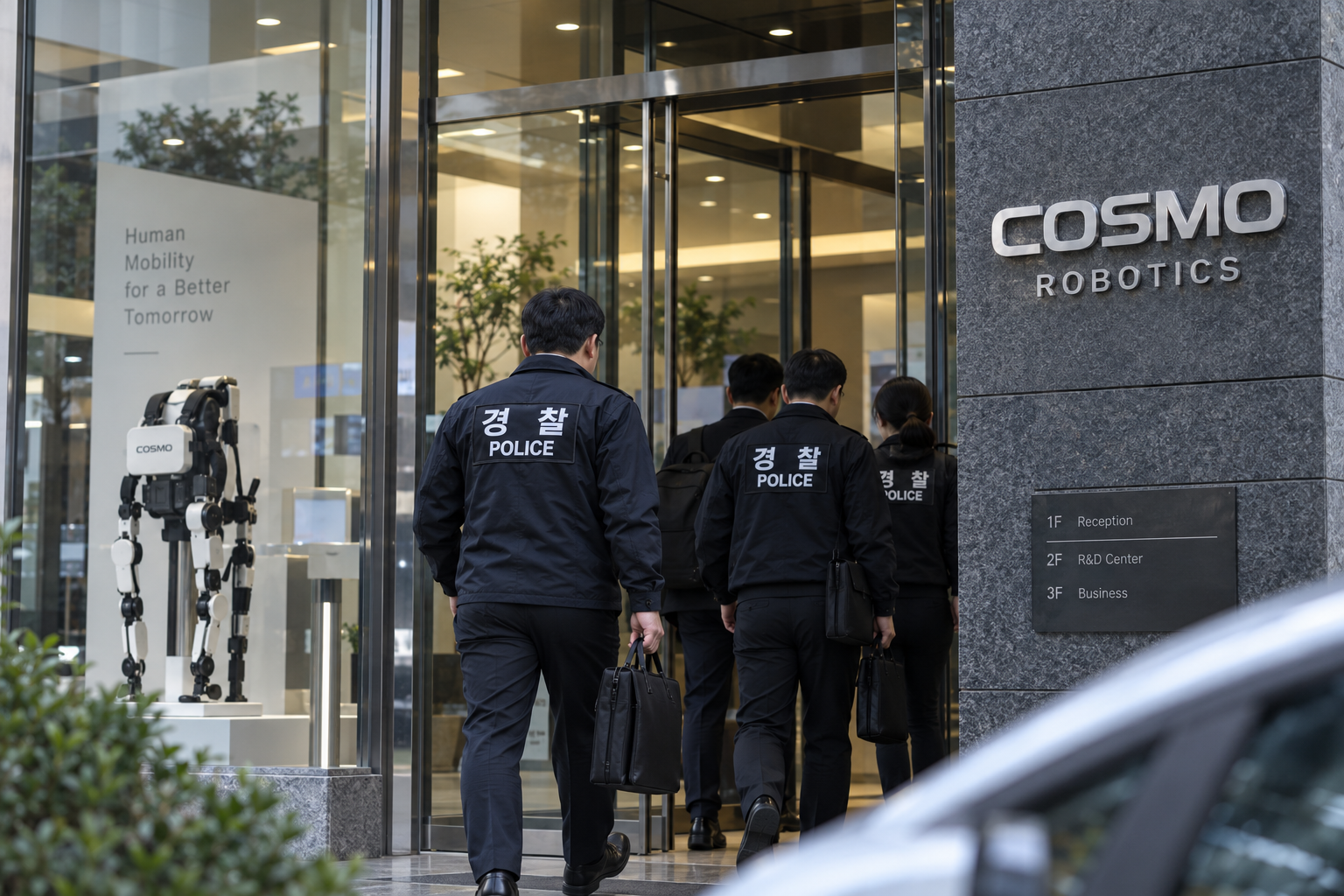
South Korea’s Seoul Metropolitan Police Agency Financial Crime Investigation Unit searched the Seoul office of Cosmo Robotics on 29 September.
According to Yonhap and other South Korean reporting, investigators suspect the company recorded sales of wearable robots that did not reflect genuine transactions and incorporated that revenue into its 2025 financial statements.
One transaction under investigation dates to around March 2025.
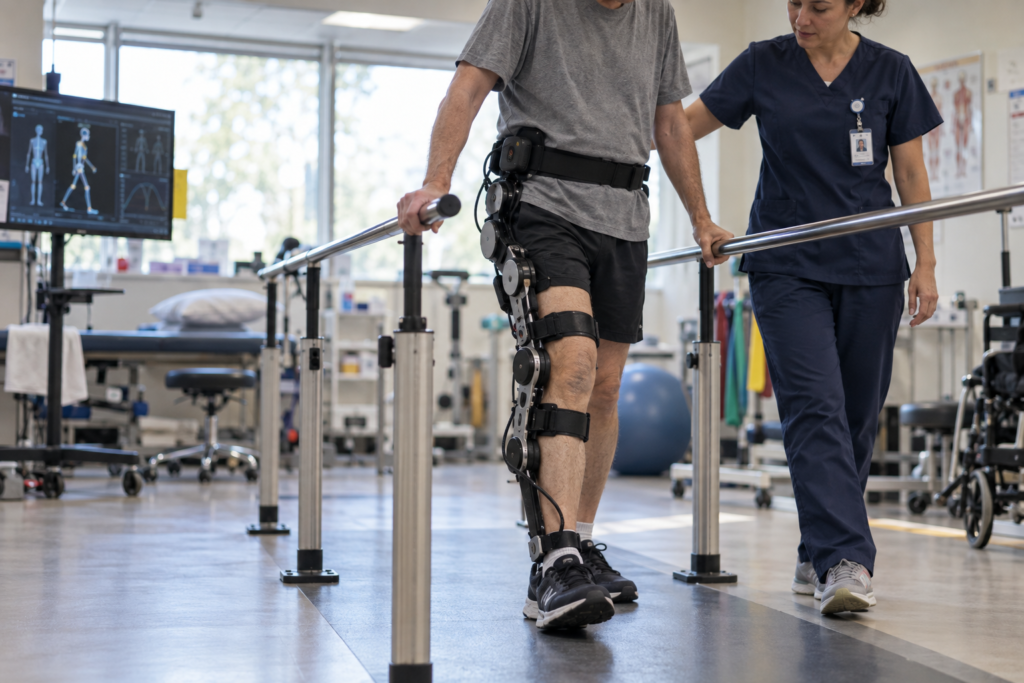
Police suspect Cosmo Robotics recorded approximately KRW 400 million in revenue as if rehabilitation wearable robots had been sold to another company.
A second transaction concerns overseas revenue.
Investigators suspect that in December 2025 a European subsidiary recorded approximately KRW 2 billion in robot sales that police believe did not reflect genuine sales.
South Korean reporting says police are examining approximately KRW 3.5 billion in allegedly false revenue in total.
The two transactions described publicly so far therefore do not account for the entire amount under investigation. The available reporting does not yet identify all of the transactions making up the KRW 3.5 billion figure.
The disputed amount is significant relative to reported revenue
Scale is what makes the investigation particularly relevant.
Cosmo Robotics reported KRW 8.863 billion in consolidated revenue for 2025 during its listing process.
The approximately KRW 3.5 billion being questioned by police is therefore equivalent to roughly 40% of that reported annual revenue.
That does not mean 40% of Cosmo Robotics’ 2025 revenue has been proven false.
It means the amount police are investigating is material relative to the company’s reported sales and could significantly change how its pre-listing commercial performance is interpreted if the allegations are ultimately substantiated.
Police suspect the disputed revenue was incorporated into the company’s 2025 financial statements and subsequently presented to investors during the KOSDAQ listing process.
Investigators are examining whether those figures made the company’s revenue appear to be growing more consistently than it actually was.
Cosmo Robotics entered the public market in May
Cosmo Robotics listed on South Korea’s KOSDAQ market on 11 May 2026.
Korea Exchange records identify wearable robots as the company’s principal product category and classify the business within medical-device manufacturing.
The company develops wearable systems across rehabilitation, personal mobility and occupational assistance.
Its roots are closely connected to the ExoAtlet rehabilitation platform, while the wider Cosmo Robotics portfolio has expanded across several wearable-robotics applications.
This makes the investigation relevant to the exoskeleton sector beyond the immediate financial case.
Dedicated wearable-robotics companies reaching public markets remain relatively uncommon. Cosmo Robotics’ listing placed the company in a different commercial environment, where revenue recognition, financial reporting and international transactions are subject to considerably greater external scrutiny.
The investigation highlights a distinction the industry increasingly needs to make
Wearable robotics can have a complicated commercial pathway.
A manufacturer may announce a distributor, hospital evaluation, product trial, framework agreement, purchase intention, international partnership or shipment before hardware reaches an end customer and revenue is formally recognized.
All of those events can indicate commercial progress.
They are not financially equivalent.
An announced order is not automatically recognized revenue. A distribution agreement does not necessarily establish unit sales. A shipment within an international group is different from a completed end-customer transaction.
For private wearable-robotics companies, detailed financial information is often limited.
That changes when a company enters the public market.
Investors, regulators and exchanges can examine not only how much commercial activity a company reports, but how individual transactions were structured and when revenue was recognized.
Exoskeleton Index analysis
The Cosmo Robotics investigation is company-specific and the allegations remain unresolved.
Its broader relevance is that wearable robotics is entering a more mature commercial phase.
Companies across the sector are raising larger funding rounds, building international subsidiaries and distributor networks, winning institutional procurement and, in a small number of cases, accessing public markets.
That development is itself an important sign of industry maturation.
But maturity also brings a different level of financial, governance and disclosure scrutiny.
For years, commercial progress in wearable robotics has often been communicated through pilot projects, partnerships, distributor appointments, memoranda of understanding and announced orders.
Those remain useful signals.
They simply describe different stages of commercialization.
A product trial can demonstrate customer interest without generating revenue. A distributor agreement can expand market access without guaranteeing sales. An order can become commercially meaningful before it appears as recognized revenue.
The challenge for anyone tracking the sector is to understand exactly which stage has been reached.
This is also why Exoskeleton Index distinguishes between intent orders, confirmed deployments, procurement awards, shipments and reported revenue when evaluating commercial developments.
The investigation does not suggest a broader problem with exoskeleton companies.
Instead, it illustrates what happens when a wearable-robotics business reaches a stage where its commercial performance is assessed under the same financial standards applied to other publicly traded technology and medical-device companies.
For the sector, that is part of becoming a more established industry.
Why the overseas transaction is particularly worth watching
One of the transactions being examined reportedly involves approximately KRW 2 billion in sales recorded through a European subsidiary.
The available reporting does not yet explain the structure of that transaction in enough detail to independently assess it.
That makes the eventual findings particularly interesting from an industry perspective.
International expansion is becoming increasingly important to Asian wearable-robotics manufacturers.
Companies regularly establish subsidiaries, regional offices and distributor relationships to obtain regulatory access, support demonstrations, manage inventory and serve customers outside their domestic markets.
How revenue moves through those structures can therefore become an important part of understanding genuine international commercialization.
More information about the European transaction could help establish whether the issue alleged by police concerns the existence of the sale itself, the timing of revenue recognition, the relationship between entities or another accounting question.
Those details are not yet public.
What remains unverified
The allegations against Cosmo Robotics remain under investigation.
No final police finding, prosecution or court judgment establishing false revenue recognition has been reported.
The public reporting reviewed by Exoskeleton Index identifies approximately KRW 400 million in questioned rehabilitation-robot sales and approximately KRW 2 billion in questioned sales associated with a European subsidiary.
Those two transactions total approximately KRW 2.4 billion, while police are reported to be investigating approximately KRW 3.5 billion in allegedly false revenue overall.
The remaining transactions behind that difference have not yet been publicly detailed.
The available reporting also does not provide the underlying contracts, delivery records, invoices, payment documentation or accounting analysis for the questioned transactions.
It is therefore not possible from currently public evidence to independently determine how the sales were structured or whether the accounting treatment was improper.
Exoskeleton Index is treating the KRW 3.5 billion figure strictly as an amount alleged by investigators to have been falsely recorded, not as confirmed fabricated revenue.
What to watch next
The most important development will be what investigators establish from the documents and records obtained during the search.
Any subsequent police findings, prosecutorial action, Korea Exchange disclosure or revision to Cosmo Robotics’ financial statements would materially change the evidence available.
A detailed public response from Cosmo Robotics addressing the individual transactions would also help clarify the company’s position.
The overseas transactions will be particularly worth following because international subsidiaries and distribution networks are becoming an increasingly important part of how Asian wearable-robotics manufacturers expand into Europe and other markets.
For the wider industry, the case is also a reminder that commercial maturity brings more than larger orders and greater visibility.
It brings greater expectations around financial transparency, governance and evidence behind reported growth.
Until additional facts emerge, the correct description remains narrow: South Korean police are investigating allegations that Cosmo Robotics overstated its 2025 revenue by approximately KRW 3.5 billion before its KOSDAQ listing.
Explore the Cosmo Robotics company profile or browse the wider Exoskeleton Product Directory.
Sources
- Yonhap News: Police search Cosmo Robotics over alleged KRW 3.5 billion revenue inflation, 29 September 2026
- News1 Korea: Police investigate alleged revenue inflation before Cosmo Robotics’ KOSDAQ listing, 29 September 2026
- Seoul Economic Daily: Police investigation into alleged pre-IPO revenue inflation at Cosmo Robotics, 29 September 2026
- Korea Exchange KIND: Cosmo Robotics new KOSDAQ listing information, May 2026
- Korea Exchange KIND: Cosmo Robotics company and listing review information