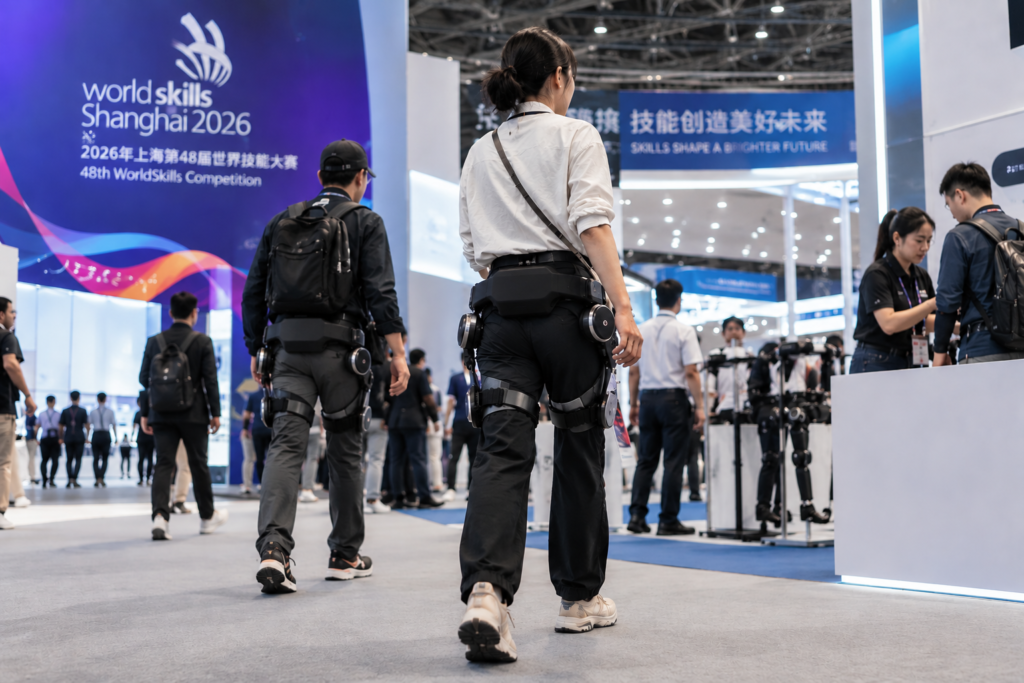

Wandercraft says Ecuador’s ARCSA has cleared Atalante X for the market, extending the rehabilitation exoskeleton’s regulatory footprint in Latin America. The available announcement should not be read as evidence of comparative clinical superiority.
At a glance
- Claim: A Wandercraft-distributed announcement reports ARCSA clearance in Ecuador.
- Verification: Exoskeleton Index did not locate a matching public ARCSA database entry or official publication during this review.
- Product: Atalante X, a powered, self-balancing lower-limb exoskeleton for supervised rehabilitation.
- Setting: Rehabilitation institutions under trained professional supervision—not independent personal mobility.
- Evidence boundary: Market access does not establish comparative clinical superiority, reimbursement, adoption or patient outcome.
What Wandercraft reports
A company-distributed announcement says that Ecuador’s National Agency for Health Regulation, Control and Surveillance, known as ARCSA, has cleared Atalante X for the Ecuadorian market. The report places the decision within Wandercraft’s expansion in Latin America.
Exoskeleton Index searched ARCSA’s public web material and official-domain results but did not locate a matching registration, resolution or database record that independently establishes the precise regulatory term, registration holder, identifier, date or scope. For that reason, this article attributes the claim to Wandercraft and uses “says” in the headline. It does not state the reported status as independently regulator-confirmed fact.
What Atalante X is intended to do
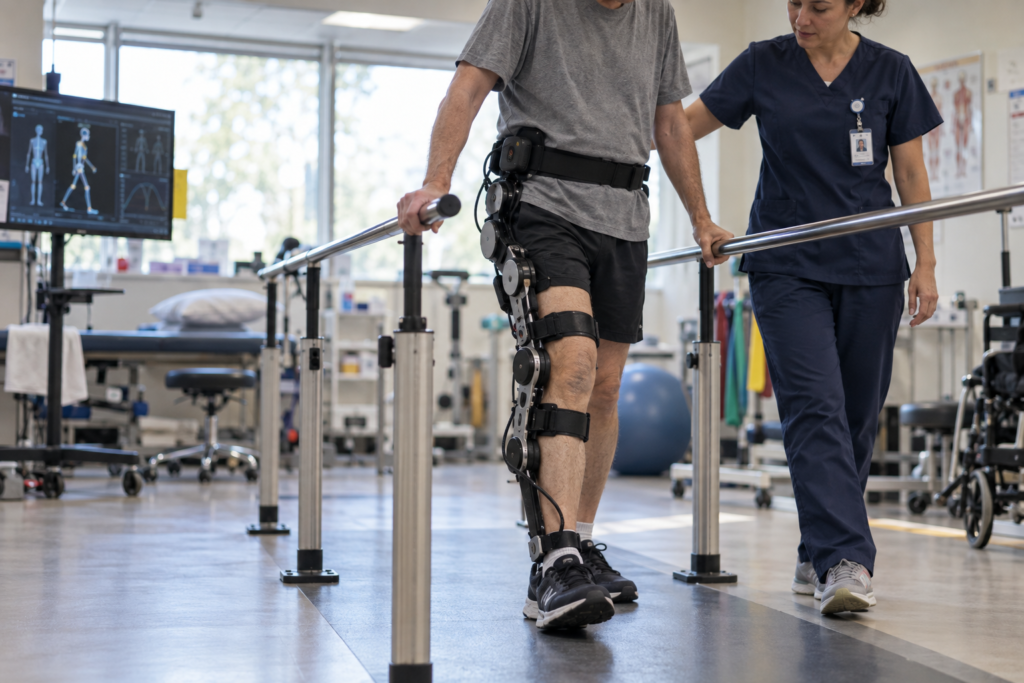
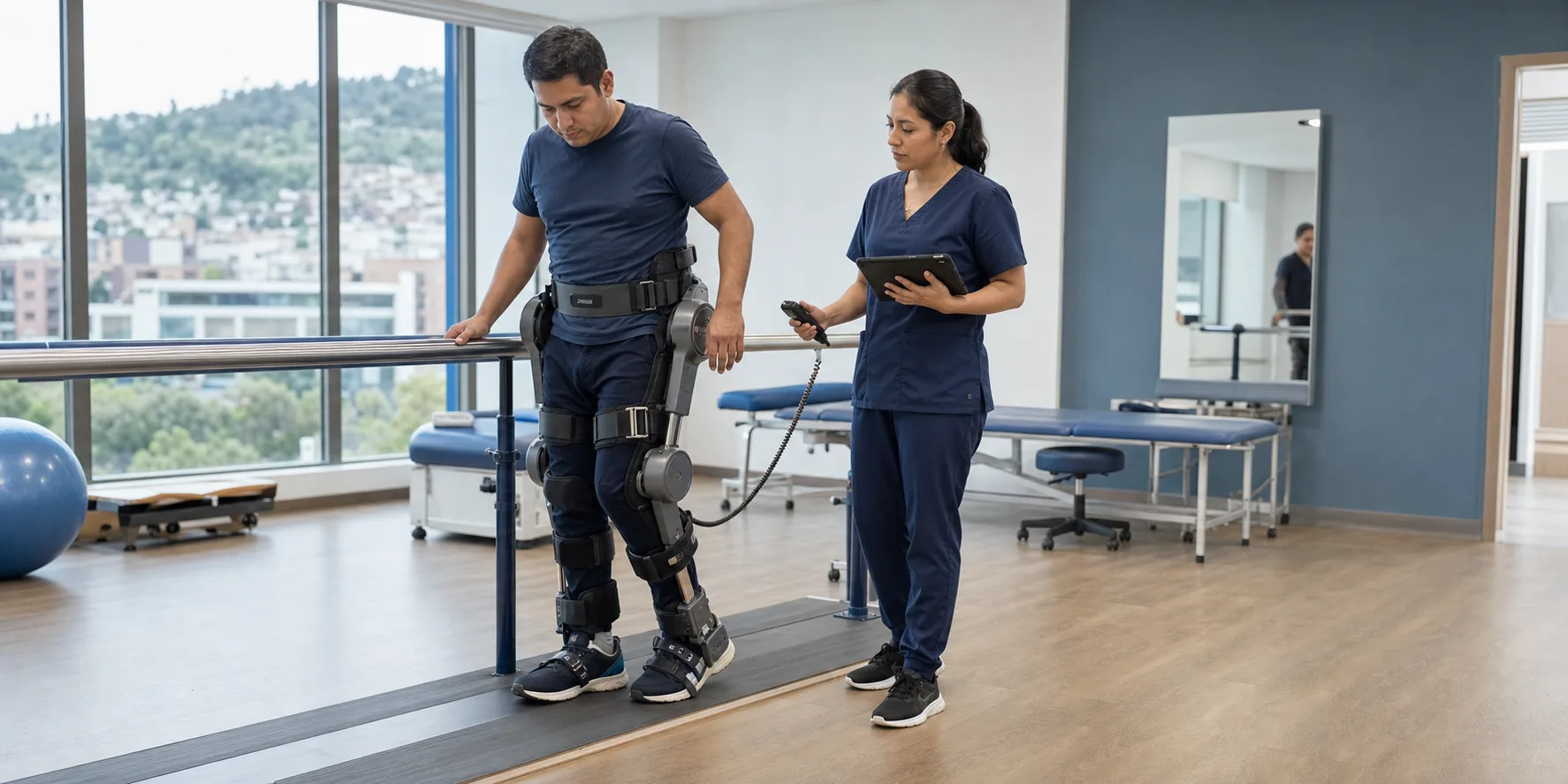
Atalante X is a powered lower-limb rehabilitation exoskeleton designed to help adults with severe gait impairment stand and perform hands-free walking exercises. Its self-stabilizing architecture differs from personal exoskeletons that require crutches or are intended for independent community mobility.
Wandercraft’s product information describes use in rehabilitation institutions under a trained operator. The system supports configurable gait and balance exercises, and its interface can track usage, kinematics and functional progression. In the United States, the stated populations include adults with hemiplegia following stroke, spinal-cord injury at C4 to L5 and multiple sclerosis, subject to the cleared labeling and ability to tolerate standing. Ecuadorian labeling could differ and should be checked against the missing ARCSA record.
What a market clearance would mean
If the reported status is confirmed, it would indicate that the device has passed the applicable Ecuadorian regulatory pathway for the documented indication and can be supplied under the conditions of that record. It would expand Wandercraft’s addressable institutional market and give rehabilitation providers a regulated procurement route.
It would not by itself show that a hospital has purchased the device, that clinicians have been trained, that reimbursement is available, or that Atalante X produces better outcomes than conventional therapy or another robotic system. Regulatory conformity, clinical effectiveness, service readiness and procurement economics are different questions.
Exoskeleton Index analysis
The regulatory development is potentially significant, but the evidence trail is incomplete without the regulator’s own record. Buyers and researchers should request the ARCSA registration number, official status wording, issue and expiry dates, local authorization holder, intended-use statement and any conditions before relying on the announcement.
Atalante X should also be assessed as a clinical programme, not only a device. Staffing, patient selection, transfers, emergency procedures, room layout, cleaning, maintenance, training, session preparation and data governance all affect safe use. A market-access milestone does not answer those implementation questions.
Existing regulatory and clinical context
Wandercraft’s official product page clearly separates Atalante X rehabilitation use from personal mobility. The US Food and Drug Administration’s 510(k) record for Atalante X documents non-clinical testing and substantial-equivalence review for the US indication. Those records help establish the product’s broader regulatory history, but neither verifies the Ecuadorian action.
Wandercraft also states that comparative studies are needed to confirm potential clinical benefits. That is an appropriate boundary. Increased step dosage, upright exercise or therapist workflow may be important intermediate outcomes, yet they do not automatically translate to durable gains in independent walking, participation or quality of life.
Providers evaluating the system should review the applicable labeling, patient exclusions and professional responsibilities, then compare expected clinical use with service capacity. The Exoskeleton Index standards and regulation guide explains why certification, clearance, intended use and local implementation must remain separate.
Questions Ecuadorian providers should resolve
Before procurement, a provider should obtain the official registration document and Spanish labeling, then confirm the local authorization holder, approved indications, contraindications, training requirements, maintenance route and incident-reporting process. It should also distinguish availability from reimbursement and establish whether local clinical engineering teams can support inspections, updates and repairs.
Clinical evaluation should report patient selection, session dose, therapist time, transfers, adverse events and outcomes that matter to patients. Device-recorded steps can describe exposure, but they do not on their own show improved independent walking or participation. Comparative conclusions require an appropriate study design and follow-up.
Providers should publish enough implementation detail for other clinics to interpret results: the number and diagnosis of participants, concurrent therapy, assistance settings, completed sessions, withdrawals and follow-up period. A case report can document feasibility, but it cannot establish comparative effectiveness or justify claims across different neurological populations.
Verification limitation
No matching public ARCSA record was independently located as of 31 July 2026. The exact status may be registration, authorization, clearance or another local category; this draft preserves the wording of the company-distributed report without presenting it as regulator-verified. Editorial review should re-check ARCSA before publication and update the headline only if the official record is found.