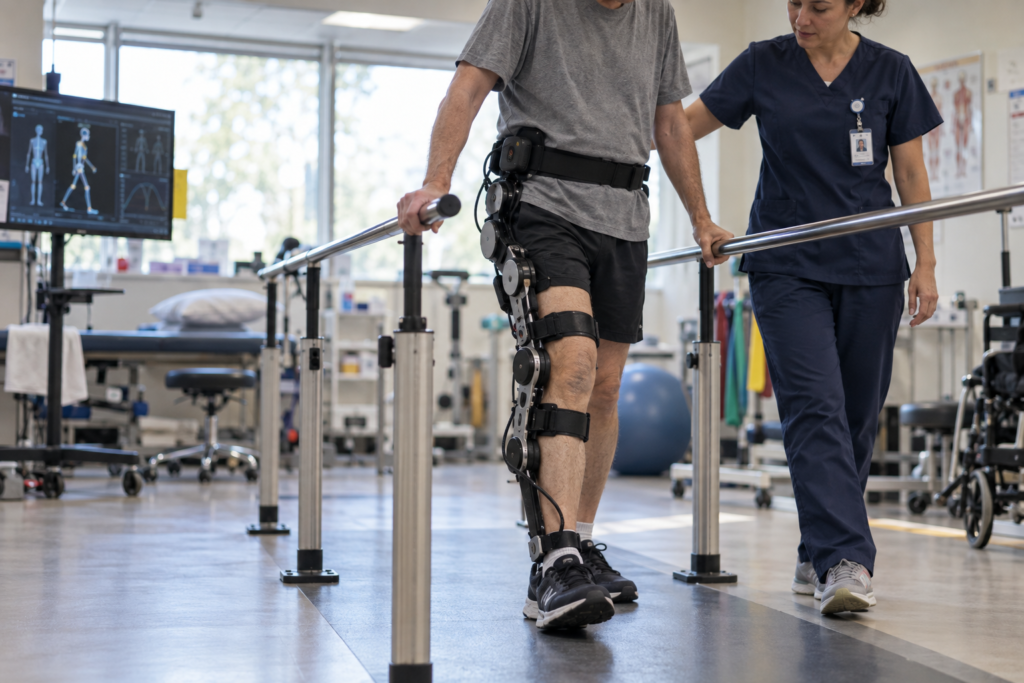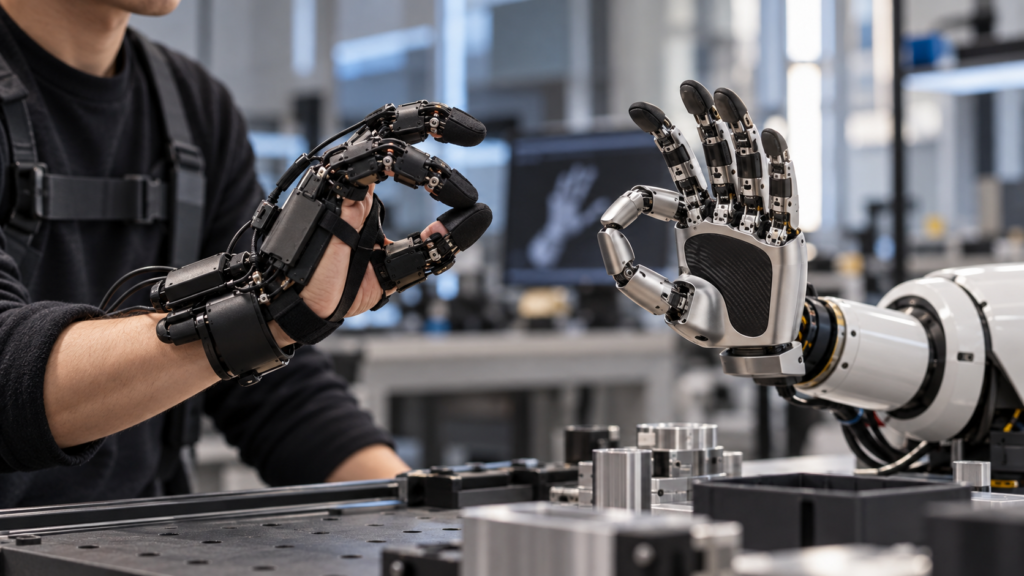


Ascentiz is bringing its H hip-assistance module and new K knee module to IFA Berlin 2026, expanding its consumer wearable-robotics system into a modular multi-joint platform. The company has also published European pricing for the K and combined H+K configurations, with the H+K Ultra Combo listed at €3,999.
At a glance
- Company
- Ascentiz
- Platform
- Shared Exo-Belt with interchangeable H hip and K knee assistance modules
- H Pro
- €1,599
- H Ultra
- €2,299
- K Pro
- €2,399
- K Ultra
- €2,999
- H+K Pro Combo
- €3,599
- H+K Ultra Combo
- €3,999
- Availability
- H is commercially available; K and H+K availability is still to be announced
- Software platform
- BodyOS open wearable-robotics developer platform
- IFA 2026
- September 4–8, Berlin, Hall 12, Booth 109
Ascentiz is moving beyond a single hip exoskeleton
Ascentiz entered the consumer market with its H Series, a compact powered system designed to provide assistance around the hips for activities including walking, hiking, stair climbing and other forms of personal mobility.
The company is now extending that architecture to the knee.
At IFA Berlin 2026, Ascentiz is presenting its H and K modules as parts of one shared wearable platform rather than as independent devices. The central Exo-Belt carries the battery, controller and core electronics, while assistance modules can be configured around different joints.
According to Ascentiz, the K module provides what it calls Adaptive Knee Augmentation, combining dynamic knee assistance with sustained support and load management across level walking, stairs, climbs and descents.
The company’s broader argument is that consumers should not necessarily need to replace an entire exoskeleton when their assistance requirements change. Instead, the same base system could support different modules over time.
European pricing now puts a number on the modular strategy
The pricing announced ahead of IFA makes that strategy more concrete.
The existing Ascentiz H Series starts at €1,599 for H Pro and €2,299 for H Ultra. The new K configurations are priced at €2,399 for K Pro and €2,999 for K Ultra.
Customers combining both assistance modules would move into a higher price tier: €3,599 for the H+K Pro Combo and €3,999 for the H+K Ultra Combo.
The distinction between price and availability remains important. Ascentiz says the H Series is commercially available now, while availability for K and the combined H+K systems will be announced later.
That makes the IFA presentation a meaningful product-platform expansion, but not yet a full commercial launch of every configuration being shown.
BodyOS is arguably the more important long-term move
The hardware is only one part of what Ascentiz is trying to build.
Underneath H, K and future modules sits BodyOS, which Ascentiz describes as a common software and control foundation for modular wearable robotics.
The platform combines mechanical, electrical and software interfaces intended to allow additional hardware and applications to operate on the same wearable base. Ascentiz says BodyOS has been opened to developers and researchers, with the aim of supporting both company-built modules and external experimentation.
This changes the strategic question around Ascentiz.
Instead of evaluating H only as a consumer hip exoskeleton, the more relevant question becomes whether the company can establish an ecosystem in which the belt, modules, software and future third-party development reinforce one another.
That is considerably more ambitious than selling another standalone wearable robot.
Exoskeleton Index analysis
The most interesting part of Ascentiz’s IFA announcement is not the addition of knee assistance by itself. Consumer exoskeleton manufacturers are increasingly exploring multi-joint support, and additional hardware configurations will continue to appear.
The more significant move is architectural.
Ascentiz is attempting to separate the wearable platform from the individual assistance module. If that approach works commercially, a customer could theoretically buy into one base system and add or replace functionality later rather than buying a completely new exoskeleton generation.
That model is familiar in mature technology categories but remains relatively unusual in consumer wearable robotics, where products have historically been designed as fixed-purpose systems.
It could also address one of the industry’s harder commercialization problems: consumer needs are highly variable. Hiking, stair climbing, prolonged walking and knee-load reduction do not necessarily require identical assistance.
A modular system gives the manufacturer a way to serve those use cases without building a completely separate product architecture for each one.
There is also a potential ecosystem effect. If BodyOS becomes genuinely usable outside Ascentiz itself, the platform could attract researchers, developers and specialist hardware teams that would otherwise need to build their own wearable control stack from scratch.
But that is the long-term opportunity, not yet the proven outcome.
Why this matters for the consumer exoskeleton market
Consumer exoskeleton competition is starting to move beyond a simple race for lighter hardware or higher assistance figures.
Manufacturers increasingly have to answer broader questions: Can a customer try the product before purchase? Can the system adapt to different activities? Can software improve after purchase? Can components be upgraded? Is there a service network? And does the initial purchase create a relationship with a platform or simply deliver one fixed device?
Ascentiz’s answer is increasingly centered on modularity.
That puts the company into an interesting position alongside a broader wave of consumer mobility systems targeting hiking, outdoor recreation and everyday movement. Exoskeleton Index has previously examined the commercial launch of the Ascentiz H Pro and H Ultra, as well as the growing field of consumer and hiking exoskeletons.
The H+K architecture now gives Ascentiz a way to compete not just on one device, but on how the device can evolve.
What remains unknown
Several commercial questions are still unresolved.
Ascentiz has published prices for K and H+K, but it has not yet announced when those configurations will begin shipping. Independent testing of the combined system is also still limited, and there is not yet enough public evidence to determine how frequently consumers will swap modules in practice or whether modularity materially improves long-term ownership economics.
The company’s description of its system as the “world’s first modular exoskeleton platform” should also be treated as Ascentiz’s positioning rather than an independently established industry classification.
BodyOS faces a similar proof point. An open developer architecture can become strategically valuable only if developers actually build useful hardware, software or applications around it.
The next proof points
IFA should provide the first opportunity for a broader audience to see H and K operating within the same platform architecture.
After that, the milestones become more commercial: a confirmed K shipping date, first H+K customer deliveries, independent testing, evidence of module switching in real use and signs that external developers are doing meaningful work with BodyOS.
If those pieces develop, Ascentiz could end up demonstrating something more consequential than another consumer exoskeleton launch: a path toward upgradeable wearable robotics.
Readers evaluating currently available consumer systems can also explore the Exoskeleton Index comparison tool and our broader exoskeleton market analysis.
Disclosure: Some product links in this article are affiliate links. Exoskeleton Index may earn a commission if a purchase is made through them, at no additional cost to the reader.