
Why the Indian Army’s exoskeleton tender stands out
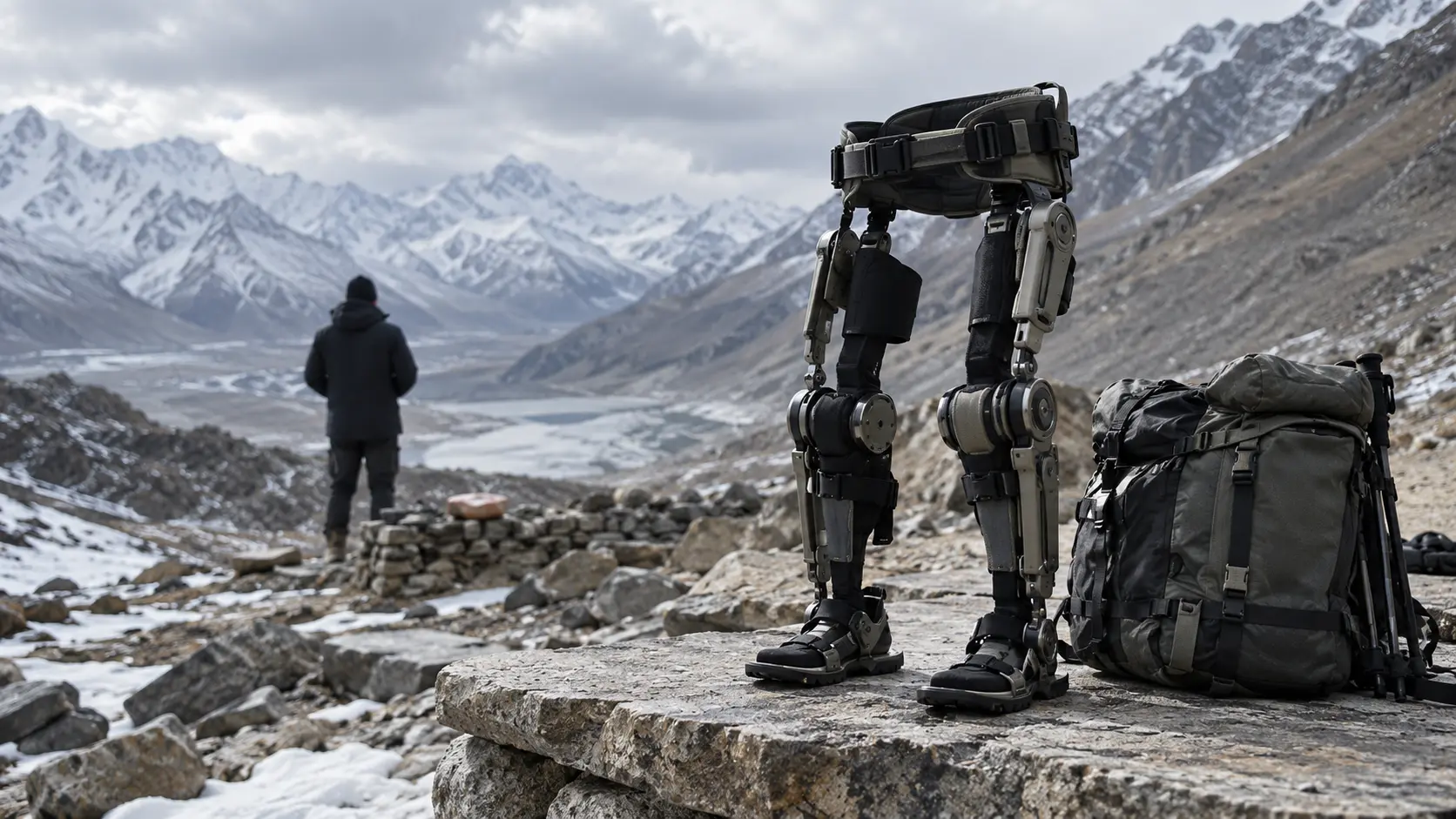
An Indian Army procurement notice for an outdoor exoskeleton in Leh includes an unusually concrete operating condition: the equipment must successfully complete a trial at minus 20 degrees Celsius before the contract is considered final.
The tender, identified as GEM/2026/B/8180630 and published on October 19, 2026, concerns a single unit. It is listed through India’s Government e-Marketplace procurement system, with a submission deadline of October 30.
The quantity is modest, but the acceptance condition is revealing. For wearable robotics intended for difficult field environments, a catalogue specification is not enough. The equipment must perform where it is expected to be used.
What the tender establishes
The published tender information identifies the Indian Army as the buyer, Leh in Ladakh as the delivery and trial location, and an outdoor exoskeleton as the requested product.
The buyer-added terms state that final contract acceptance is conditional on a successful trial at the unit location. The listing does not identify a winning manufacturer or confirm that a device has passed that trial.
It also does not establish the intended operational mission, physical-assistance specification or purchase value. Describing the notice as a confirmed Army deployment would therefore overstate the available evidence.
Why the temperature requirement matters
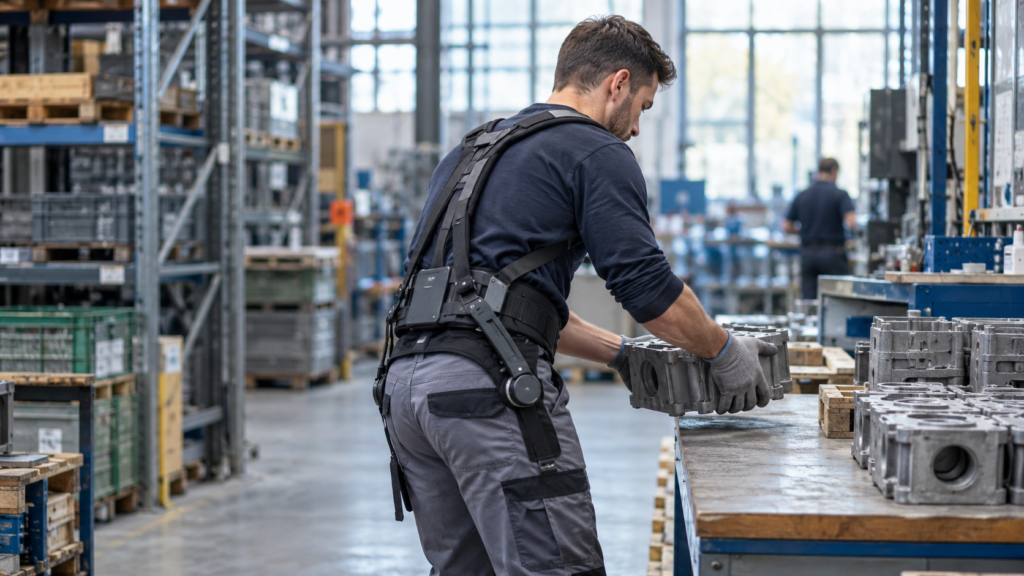
Cold-weather reliability is a system-level problem. Battery behaviour, mechanical tolerances, moving parts, straps, materials and usability while wearing winter clothing can all affect practical operation.
For powered systems, the effect of low temperature on battery performance and operating time is a particular consideration. For passive systems, fit, material behaviour and freedom of movement remain relevant.
The tender does not disclose which architecture is being considered, so these are engineering considerations rather than confirmed test criteria.
Energy supply, runtime and mechanical reliability need validation under actual environmental conditions.
Winter clothing, carried loads and protective equipment can change fit, comfort and usable range of motion.
Uneven terrain, changing postures and unexpected interruptions can expose limitations absent from controlled testing.
Altitude and uneven terrain add further complexity. An exoskeleton that performs acceptably on a level indoor test surface may still encounter difficulties during field movement, particularly if the user must change posture, carry equipment or operate in bulky clothing.
Exoskeleton Index analysis
The strongest signal in this notice is not the procurement quantity. It is the decision to make performance under a specified environmental condition part of final acceptance.
This is an important distinction for defense and emergency-response buyers. Payload-support claims, motor torque and advertised operating range do not by themselves establish field readiness.
The relevant evaluation must include the actual operating environment, equipment compatibility, movement requirements and the consequences of a device becoming unavailable during use.
A procurement signal, not evidence of operational adoption
A one-unit tender may represent evaluation, a limited requirement or another procurement purpose. Without an award notice or documented field use, it should not be interpreted as a wider military rollout.
Nor should it be presented as the first Indian Army interest in exoskeletons. Other procurement activity has been reported previously, and individual notices may not indicate a new programme.
The development nonetheless adds to a broader pattern of interest in wearable support systems for demanding environments. Exoskeleton Index maps relevant products and suppliers in its Defense & Emergency Response industry section.
What to watch next
Three questions will determine the significance of this tender: which supplier, if any, receives an award; whether the specified cold-weather trial is completed successfully; and whether further procurement follows.
Until those answers are available, the most accurate description is a conditional, single-unit procurement opportunity.
Explore exoskeletons for demanding field operations
Discover wearable support systems mapped to load carriage, outdoor mobility, rescue and emergency response. Compare relevant products and suppliers while keeping commercial maturity and field evidence in perspective.
Explore defense and response systems Product and supplier information organized by applicationSources and reporting notes
Procurement record. Government e-Marketplace bid GEM/2026/B/8180630, published October 19, 2026. View the mirrored tender listing.
Exoskeleton Index reporting note. Details were reviewed through a third-party mirror of the GeM listing. A direct official award record, successful trial result or field deployment has not been independently verified.