
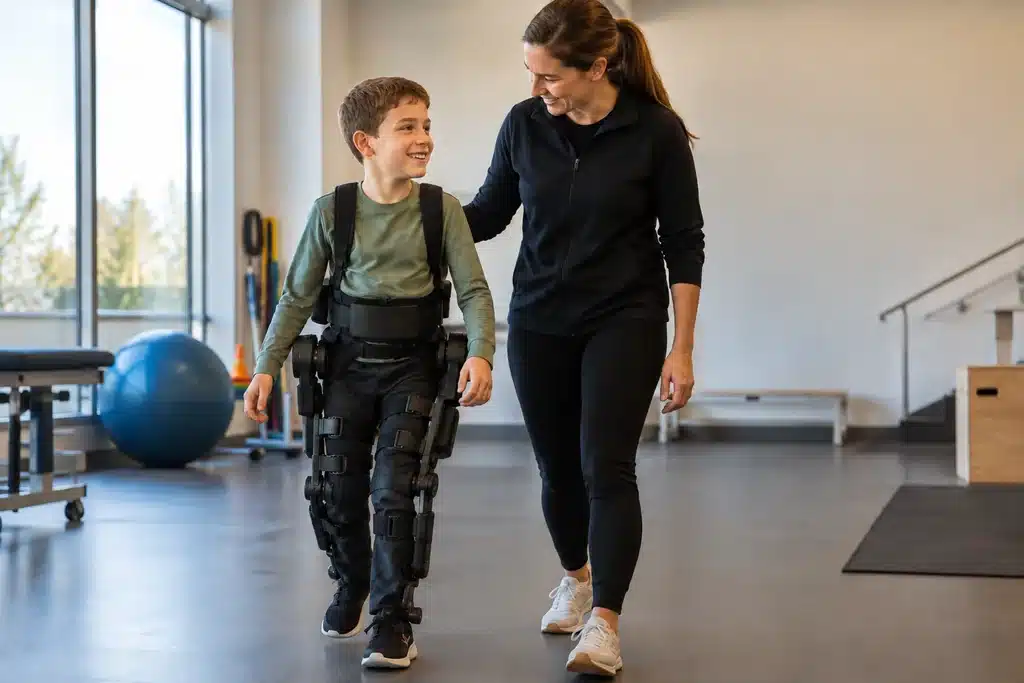
Trexo Robotics has received U.S. FDA 510(k) clearance for Trexo Theo, a powered exoskeleton intended for people aged 12 and older with cerebral palsy. The clearance covers supervised community and clinical use, creating a new regulatory pathway for pediatric robotic mobility outside traditional rehabilitation settings.
- Company
- Trexo Robotics
- Product
- Trexo Theo
- Regulatory status
- FDA 510(k) cleared
- FDA identifier
- K254198
- Decision date
- 2 September 2026
- Target users
- People aged 12 and older with cerebral palsy
- Use settings
- Community, home and clinical environments under trained supervision
- U.S. availability
- Trexo says deliveries are expected to begin in 2027
What the FDA clearance covers
The clearance is narrower than a general approval for independent pediatric mobility. Trexo Theo is a prescription powered exoskeleton intended for users aged 12 and older with cerebral palsy.
According to Trexo’s published safety information, community use requires a certified companion, while clinical use requires a certified therapist. The device is not intended for activities such as sports or stair climbing.
This distinction matters because regulatory clearance establishes a defined pathway for use, but does not mean every person with cerebral palsy is an appropriate candidate or that the device can be used without assessment, training and supervision.
Why home and community use matters
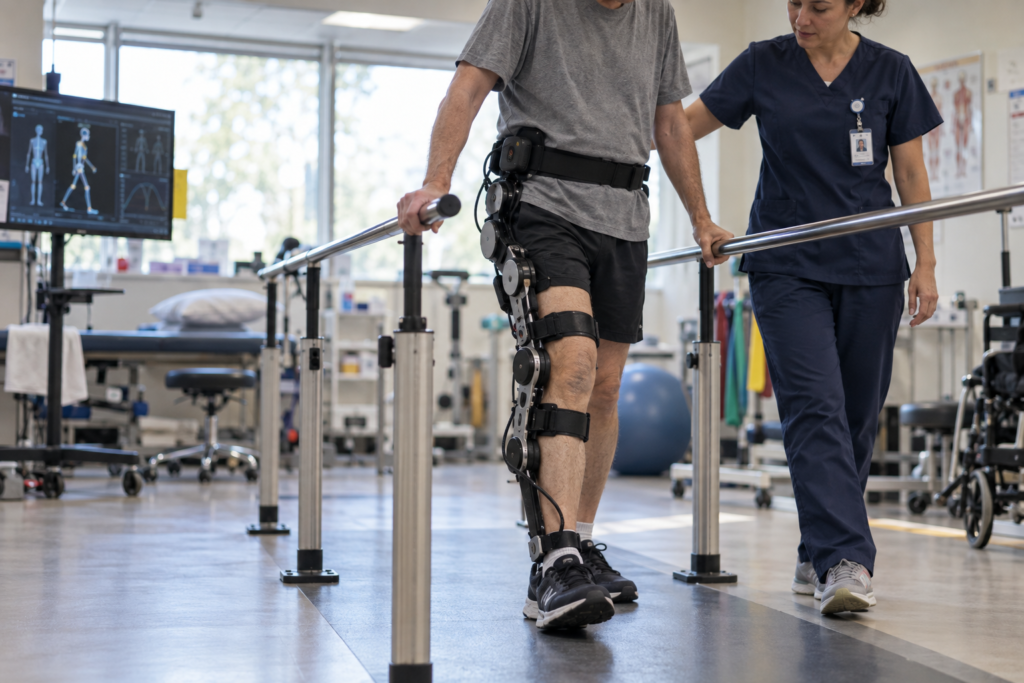
Many rehabilitation exoskeletons remain concentrated in hospitals and specialist clinics. Expanding use into the home and community changes the potential role of the technology.
Instead of being limited to scheduled therapy sessions, a system designed for supervised community use can potentially become part of a broader mobility and rehabilitation routine.
For pediatric exoskeleton developers, this also raises practical questions around fitting, caregiver training, maintenance, changing body dimensions and long-term support as users grow.
Exoskeleton Index analysis
The regulatory milestone is important because pediatric exoskeletons remain a much smaller commercial category than adult rehabilitation systems.
Trexo has already built a presence around robotic gait assistance for children, but FDA clearance for Theo gives the company a clearer route into the U.S. medical and home-use market.
The broader signal is that medical exoskeleton commercialization is increasingly moving beyond hospital ownership alone. Personal, community and supervised home-use pathways are becoming an important part of the sector, alongside clinical rehabilitation.
That shift could eventually affect how pediatric systems are distributed, financed and supported. Access, however, will depend on more than regulatory clearance. Pricing, reimbursement, clinician adoption, training requirements and real-world usability will determine how widely systems such as Theo are ultimately used.
What remains unclear
FDA clearance should not be interpreted as proof of broad clinical effectiveness for every eligible user. Individual outcomes can vary, and the clearance does not remove the need for professional assessment and supervision.
Trexo has also not yet established the scale of U.S. home adoption. The next important signals will be pricing, reimbursement pathways, delivery volumes and evidence from longer-term use outside controlled clinical environments.
What to watch next
Trexo says U.S. deliveries are expected to begin in 2027. That will make commercial access, training requirements and reimbursement particularly important areas to follow.
The clearance also adds another significant data point to the growing pediatric exoskeleton sector, where companies are attempting to move robotic mobility from specialist rehabilitation facilities into everyday environments.