
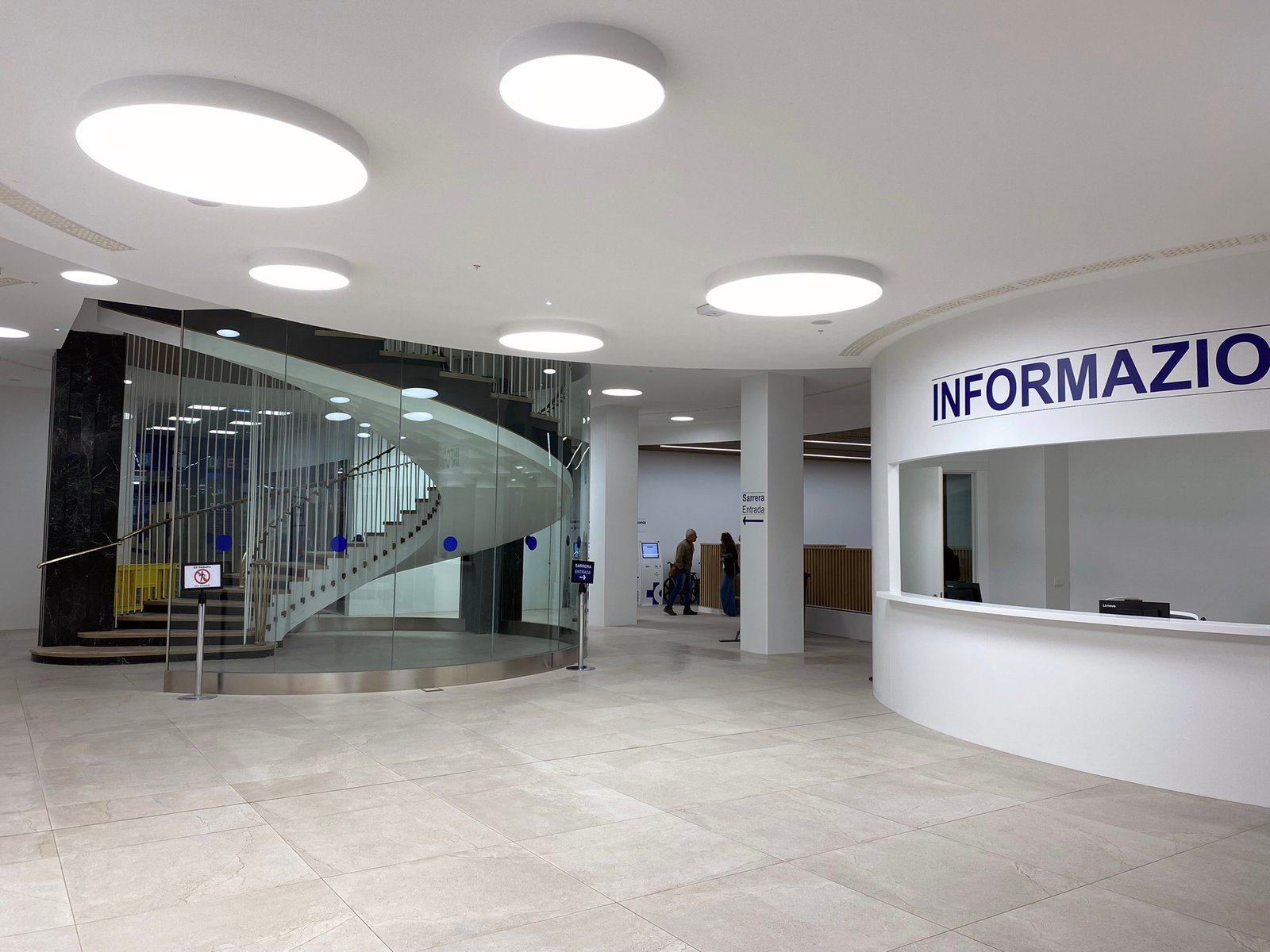
Hospital Universitario Cruces in Spain’s Basque Country has separate open tenders for adult and pediatric rehabilitation exoskeletons with a combined pre-VAT budget of €302,000, providing another concrete signal that public healthcare buyers are treating wearable robotics as capital equipment rather than one-off demonstrations.
At a glance
- Buyer
- Osakidetza — Basque Health Service
- Hospital
- Hospital Universitario Cruces, Barakaldo, Bizkaia
- Adult tender
- 2026/01305 — €111,000 before VAT
- Adult deadline
- September 9, 2026 at 14:30
- Pediatric tender
- 2026/01598 — €191,000 before VAT
- Pediatric deadline
- September 24, 2026 at 14:30
- Combined current budget
- €302,000 before VAT
- Current suppliers
- Not selected; both procedures are open
Cruces is buying adult and pediatric systems through separate tenders
Hospital Universitario Cruces, one of the major public hospitals in the Basque health system, is currently seeking two different rehabilitation exoskeleton systems.
The adult procurement, expediente 2026/01305, covers the supply of an exoskeleton for the rehabilitation service of OSI Ezkerraldea Enkarterri Cruces. The official Basque procurement record lists an estimated value and pre-VAT budget of €111,000.
The tender is open, with bids due September 9 at 14:30. The current evaluation structure gives 50% of the weighting to price, 45% to technical characteristics and 5% to delivery time and warranty.
The current deadline is later than the one originally published. Procurement history on the official platform shows an earlier August 5 deadline before corrected documents and a September 9 submission date were issued.
A separate pediatric procurement, expediente 2026/01598, was published in August for a pediatric exoskeleton for the same integrated health organization’s rehabilitation service. The listed budget is €191,000 before VAT, with bids due September 24.
Together, the two open procurements represent €302,000 in planned exoskeleton spending before VAT.
The split between adult and pediatric systems is commercially important
The tenders do not treat rehabilitation exoskeletons as one interchangeable technology category.
Adult gait rehabilitation and pediatric exoskeleton use can involve different patient populations, anthropometric ranges, supervision requirements, therapy objectives, regulatory considerations and clinical workflows.
By running separate procedures, Cruces is effectively defining two equipment needs rather than asking a single device to cover both.
That distinction matters for suppliers because the pediatric market is considerably narrower and has fewer established commercial systems than adult rehabilitation.
It also matters for hospitals. Pediatric systems need to accommodate growth, smaller body dimensions and diagnoses that differ from the typical adult neurorehabilitation population.
This is not Osakidetza’s first exoskeleton procurement
The new Cruces tenders sit inside a broader pattern of public purchasing.
In a separate Osakidetza procurement for equipment intended to improve care for patients with rare diseases, adult and pediatric exoskeleton lots were awarded in December 2025.
The adult exoskeleton lot was awarded to ABLE Human Motion for €396,000 before VAT. The pediatric exoskeleton lot was awarded to Marsi Bionics for €722,000 before VAT. The contracts were formalized in January 2026.
That earlier procurement was substantially larger and was supported by European Union recovery funding. It is separate from the current Hospital Cruces tenders and should not be interpreted as identifying the eventual winners of the 2026 procedures.
Exoskeleton Index tracks Marsi Bionics and its pediatric rehabilitation portfolio, including ATLAS 2030 and EXPLORER MB, as well as the wider healthcare and rehabilitation exoskeleton market.
Exoskeleton Index analysis
The strongest signal here is repeat procurement.
A hospital trial can demonstrate clinical interest. An open tender requires a healthcare organization to define a need, allocate budget, publish technical requirements, compare bids and plan for delivery, warranty and operation.
When the same public health system appears repeatedly in exoskeleton procurement, the story becomes less about whether rehabilitation robotics is interesting and more about how it is being integrated into equipment purchasing.
Cruces is also a significant setting. Osakidetza describes the hospital as one of Euskadi’s principal medical centres, with more than 6,000 professionals and reference services that include pediatrics and spinal-cord injury care.
The current adult tender’s scoring is revealing. Price accounts for half of the evaluation, but technical characteristics account for 45%. That means suppliers are not competing on cost alone.
For the exoskeleton industry, this is where market maturity becomes visible: technical performance, clinical suitability, delivery and warranty are being translated into formal public procurement criteria.
The combined €302,000 value is not large enough to transform the European market by itself. The significance comes from the buyer behaviour and the fact that adult and pediatric needs are being funded separately.
Public tenders create a different kind of evidence than product announcements
Medical exoskeleton news is often dominated by regulatory clearances, research papers and manufacturer launches.
Procurement documents answer another question: is a healthcare provider prepared to spend budget on the technology?
That makes tenders especially useful market-intelligence signals.
They can reveal where demand exists, how buyers define categories, which performance areas matter in evaluation and whether a technology is moving into routine capital planning.
For manufacturers considering hospital sales, Exoskeleton Index’s buyer’s guide explains why supplier support, training, maintenance, fit and lifecycle cost matter alongside the hardware itself.
What remains unknown
Neither current tender has been awarded.
Exoskeleton Index is therefore not linking the 2026 adult or pediatric requirements to ABLE Human Motion, Marsi Bionics or any other manufacturer unless an award is formally published.
The current tender values are budget ceilings or estimated procurement values, not final transaction prices.
The procurement records also do not establish how many patients will use each system, treatment volumes, clinical outcomes or whether additional devices will be purchased later.
Finally, the earlier 2025 Osakidetza awards demonstrate previous public procurement but are separate contracts with a different stated program objective. They provide context, not proof that the current Cruces tenders are replacements or expansions of those exact devices.
What to watch next
The adult tender reaches its submission deadline on September 9, followed by technical opening stages and a formula-based evaluation currently scheduled for October 1. The pediatric tender remains open until September 24.
The next meaningful market signal will be the award decisions: which suppliers win, the final prices, the technical configurations selected and whether the hospital later reports clinical implementation.
For a broader view of hospital and rehabilitation systems, browse the Exoskeleton Index Healthcare & Rehabilitation sector and compare exoskeleton products across the database.
Sources
- Basque Government / Euskadi procurement portal — adult rehabilitation exoskeleton tender 2026/01305
- Tender record sourced from the Basque public procurement platform — pediatric exoskeleton tender 2026/01598
- Basque Government — earlier Osakidetza adult and pediatric exoskeleton procurement, including 2025 awards to ABLE Human Motion and Marsi Bionics
- Osakidetza — Hospital Universitario Cruces profile