
India’s Army seeks 650 exoskeletons in a new procurement tender
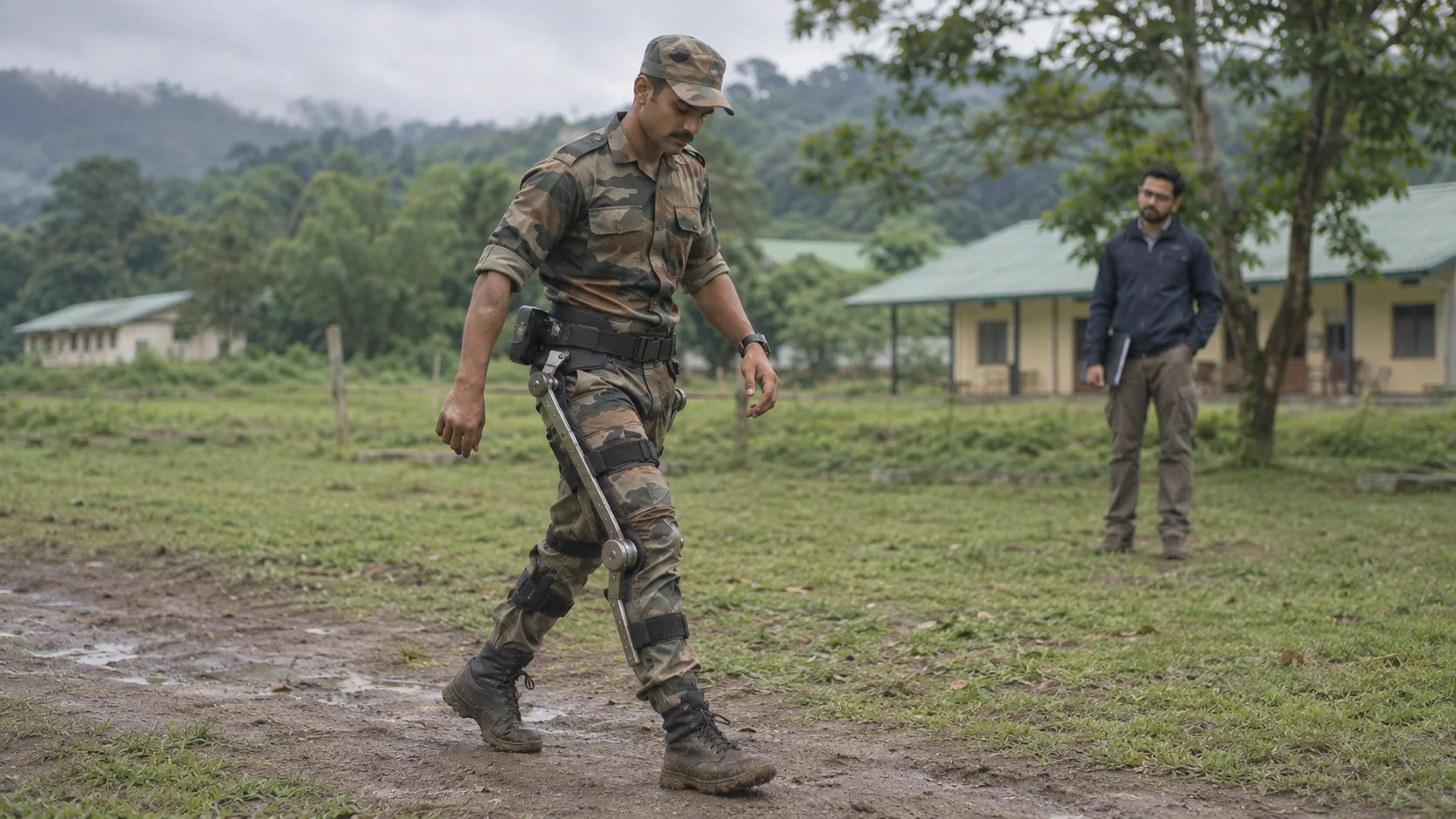
India’s Ministry of Defence has issued a tender for 650 exoskeleton units through the Government e-Marketplace (GeM), marking a notable procurement opportunity for wearable robotics in the country’s defence sector.
The notice, identified as GEM/2026/B/8033676, was published on October 26, 2026, with a bidding deadline of November 16. The listing specifies delivery to Kamrup, Assam, within 120 days and includes a sample-evaluation requirement at HQ 33 Corps.
The quantity makes this a substantially larger procurement notice than the single-unit exoskeleton tender recently identified in Leh, Ladakh. However, the announcement remains a tender. It does not confirm that 650 systems have been purchased, delivered or deployed.
What the tender establishes
The available procurement record identifies the Indian Army as the buyer and specifies 650 units. It also describes the evaluation process, delivery timeline and supplier eligibility requirements.
According to the tender information, sample evaluation will be conducted by the user at HQ 33 Corps. Bulk supplies are subject to inspection by a board at the consignee location.
This matters because the procurement process extends beyond a supplier’s written product specifications. The notice establishes an evaluation step before the larger quantity can be accepted.
The listing also includes requirements relating to previous supply experience, manufacturer qualifications, warranty support and documentation. Imported products require an Indian registered office for after-sales support under the stated buyer conditions.
Why a 650-unit tender is significant
Military exoskeleton projects often begin with research programmes, demonstrations or limited equipment evaluations. A procurement notice covering hundreds of units is therefore worth examining, particularly when it includes defined supplier and evaluation requirements.
Yet quantity alone cannot establish the scale of actual adoption. The outcome will depend on the technical specifications, evaluation results, supplier selection and whether the Army proceeds with the planned purchase.
A 650-unit tender represents a materially larger stated requirement than a single-device evaluation.
Evaluation at HQ 33 Corps forms part of the procurement process before bulk acceptance.
Experience, documentation, warranty coverage and after-sales capability are relevant requirements.
The procurement listing references the GeM category for Passive Exoskeleton for Augmentation and Rapid Logistics (PEARL). However, that category reference should not be treated as a complete technical description of the requested systems.
The full buyer specifications would be needed to establish the precise assistance mechanism, supported body areas, expected activities and performance requirements.
How this compares with the earlier Indian Army tender
The latest notice follows a separate Indian Army procurement opportunity for a single outdoor exoskeleton in Leh. That earlier tender included a requirement for successful operation during an on-site trial at −20°C.
The two notices differ in quantity, location and stated evaluation conditions. They should not be interpreted as parts of the same programme without evidence linking them.
Exoskeleton Index previously examined the Leh cold-weather exoskeleton tender and its implications for equipment reliability in demanding field environments.
Two procurement notices, not one confirmed rollout
The Leh notice concerns a single outdoor exoskeleton with a specified cold-weather trial. The newer GeM notice requests 650 units for delivery to Assam, with sample evaluation at HQ 33 Corps.
Neither notice, on the evidence reviewed, establishes completed delivery or operational deployment. The relationship between the two procurement activities has not been confirmed.
Exoskeleton Index analysis
The most interesting aspect of this tender is the combination of a substantial requested quantity and a formal evaluation process.
A 650-unit requirement suggests that the buyer is considering exoskeletons at a scale beyond an isolated equipment demonstration. But the distinction between a procurement intention and a completed acquisition is essential.
For manufacturers, the tender also highlights the importance of practical readiness. Technical capability alone is unlikely to be sufficient. Documentation, prior supply experience, servicing arrangements and the ability to deliver and support equipment at scale are part of the purchasing process.
The next meaningful evidence will come from the tender’s outcome, the selected technology and any subsequent confirmation of deliveries or field use.
What remains unknown
The currently available information does not establish which manufacturer will supply the equipment, whether a contract will be awarded or which exoskeleton architecture will ultimately be selected.
It also does not confirm the systems’ intended operational tasks, measured assistance performance or eventual deployment locations.
These distinctions matter. A procurement request involving hundreds of devices is a significant market signal, but it should not yet be reported as an operational fleet.
What to watch next
The November 16 bidding deadline is the immediate milestone. Subsequent developments to monitor include supplier selection, sample-evaluation results, contract award and confirmation of deliveries.
Those outcomes will determine whether this procurement becomes a substantial equipment acquisition or remains an unfulfilled requirement.
Explore exoskeletons for demanding field operations
Discover wearable support technologies used or proposed for load carriage, outdoor mobility, rescue and other demanding applications. Explore relevant products and manufacturers while comparing their capabilities and available evidence.
Explore defense and response systems Products and suppliers organized by applicationSources and reporting notes
Procurement notice. Government e-Marketplace bid GEM/2026/B/8033676, published October 26, 2026. View the mirrored procurement listing.
Independent listing. Tender Impulse also records the Ministry of Defence procurement under the same GeM reference. View the tender summary.
Related reporting. Exoskeleton Index, October 31, 2026. Indian Army Exoskeleton Tender Requires Successful Trial at −20°C.
Editorial note. Details were reviewed through publicly accessible procurement mirrors. The complete official technical specifications, supplier award and subsequent deployment have not been independently verified. The reported quantity represents a procurement request, not confirmed deliveries.