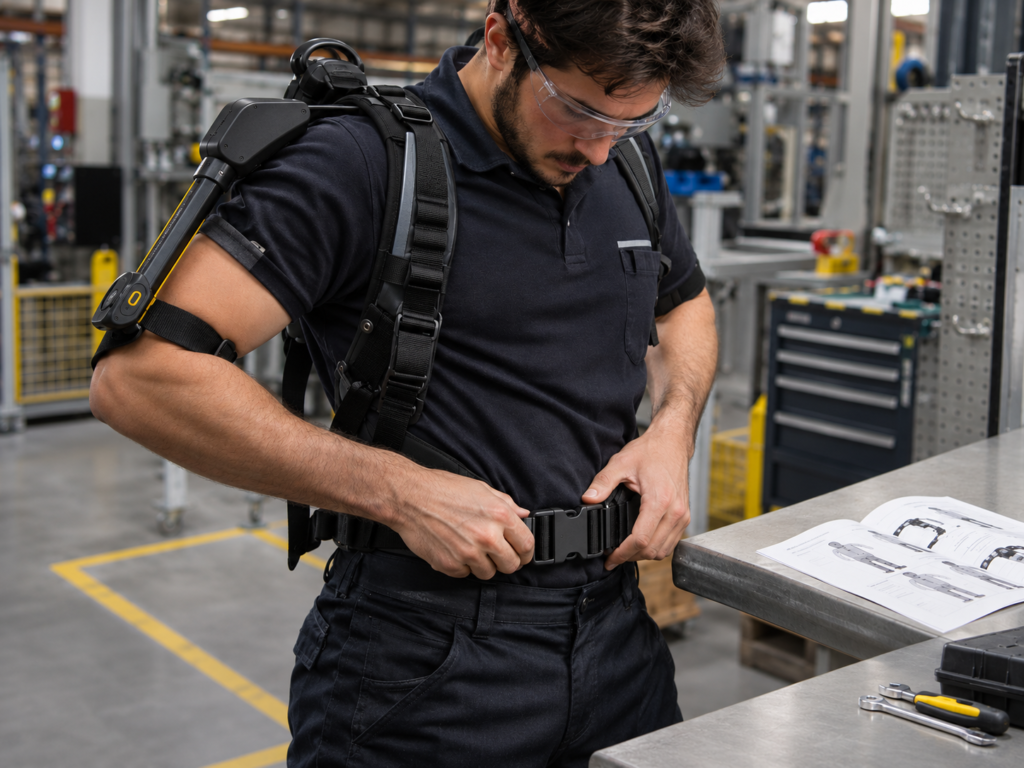

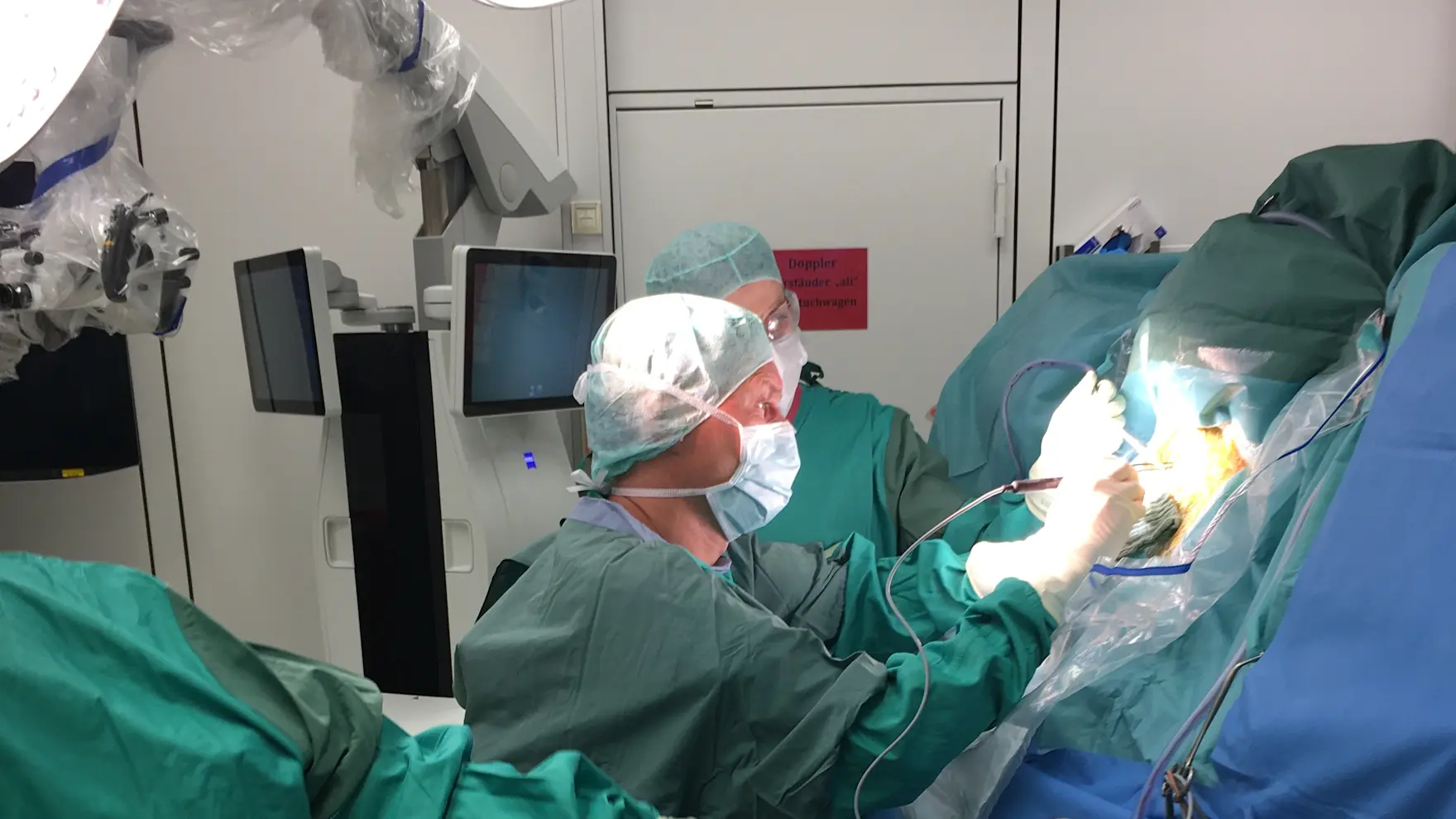
ENT surgeons at Lister Hospital in England are performing live operations while wearing an Ottobock exoskeleton as part of a new NHS study examining whether wearable support can reduce physical strain in the operating theatre. Researchers plan to observe 180 procedures and measure neck and shoulder muscle activity, strength, pain and fatigue during surgery.
These Are Live Operations, Not Laboratory Simulations
The most notable detail in the study appears in its eligibility criteria.
Participating ENT surgeons must already have completed at least five documented surgical procedures while wearing the Ottobock exoskeleton.
That means the technology is not being introduced for the first time inside a controlled research session.
Surgeons at Lister Hospital have already used the exoskeleton during real procedures before formally entering the study.
Researchers will compare operations performed with the exoskeleton against procedures performed under normal conditions without wearable support.
The study covers transoral, endoscopic and transcervical ENT surgery.
Study details are based on the ClinicalTrials.gov registration and UK Health Research Authority research summary.
Researchers Will Measure Muscle Activity During Surgery
The study is designed to go beyond simply asking surgeons whether the exoskeleton feels more comfortable.
Surface electromyography, or sEMG, will be used to measure muscle activity in the neck and shoulders while operations are underway.
Researchers will also perform maximum voluntary contraction measurements before and after procedures.
Pain and fatigue scores will be collected at 10-minute intervals during surgery.
The UK Health Research Authority says the study will also examine whether wearing the exoskeleton affects preparation time or how easily surgeons can perform procedures.
The aim is therefore not simply to determine whether the device reduces muscle loading.
Researchers also need to establish whether that support can be delivered without interfering with surgical workflow.
Surgeon Ergonomics Is a Measurable Occupational Problem
The project addresses a problem that has been documented across surgical specialties for years.
A UK survey involving 323 ENT surgeons found that 47.4% reported work-related musculoskeletal disorders.
Among affected surgeons, 85% had sought treatment, 22.9% had taken time away from work and six respondents reported retiring early.
The study was led by Ananth Vijendren, who is now a consultant ENT surgeon at Lister Hospital and principal investigator of ExoskeletonENT.
His research has focused extensively on occupational hazards affecting ENT surgeons, including musculoskeletal strain and surgical ergonomics.
The problem extends beyond ENT.
Long procedures, static posture, awkward positioning and minimally invasive techniques can expose surgeons to repeated neck, shoulder and back loading over an entire career.
Why ENT Surgery Is an Interesting Exoskeleton Test Case
ENT surgery combines precision with prolonged static posture.
During endoscopic and transoral procedures, surgeons may need to hold their arms, shoulders and neck in relatively constrained positions while maintaining precise control of instruments.
Transcervical procedures can introduce different postural demands around the operating table.
An exoskeleton therefore has to do more than reduce muscle activity.
It must provide support without restricting movement, interfering with sterile workflow or making it harder for the surgeon to access the patient.
That is why evidence from live procedures is considerably more useful than a laboratory demonstration alone.
Ottobock Has Already Tested Exoskeletons in Surgery
The idea of wearing an occupational exoskeleton inside an operating theatre is not entirely new.
Ottobock previously documented use of its passive Paexo Shoulder during neurosurgical procedures at University Medical Center Göttingen.
The company said surgeons in Germany, Switzerland and the Netherlands had experimented with the system during operations.
A 2024 prospective study also evaluated the Paexo Shoulder during real orthopedic, trauma and general surgery procedures.
Twenty-five surgeons performed comparable operations with and without the passive upper-body exoskeleton.
Researchers reported reductions in postoperative discomfort affecting the neck, shoulders and back when the device was used.
The Paexo Shoulder in that study weighed 1.99 kg and provided mechanical support without motors or batteries.
The publicly available ExoskeletonENT study record identifies the current device only as an Ottobock exoskeleton. Exoskeleton Index is therefore not assuming that the NHS study is using the Paexo Shoulder unless the model is formally confirmed.
This Is Occupational Support, Not Patient Rehabilitation
ExoskeletonENT is registered as an observational study rather than a clinical trial of a treatment for patients.
The surgeon is the person being studied.
The exoskeleton is intended to reduce occupational strain on the clinician rather than provide rehabilitation or mobility assistance to the person undergoing surgery.
That distinction could become important for how exoskeletons enter healthcare systems.
Purchasing decisions may sit closer to occupational health, workforce wellbeing and hospital ergonomics than conventional medical-device procurement.
If an exoskeleton can reduce cumulative physical strain without compromising precision or workflow, the potential value extends beyond comfort.
Reduced injury, fewer absences and longer healthy surgical careers could eventually form part of the economic case.
The current NHS study has not yet demonstrated those outcomes.
Exoskeleton Index analysis
The most interesting part of ExoskeletonENT is not simply that an exoskeleton has entered an operating theatre.
It is that occupational wearable robotics is being evaluated inside normal NHS surgical workflow using measurable physiological data.
Industrial exoskeleton adoption has traditionally focused on manufacturing, logistics, construction and overhead assembly.
Healthcare creates a very different value proposition.
Surgeons are highly skilled workers whose physical capacity is directly connected to the availability of specialist care.
Losing an experienced surgeon to chronic neck, shoulder or back problems has consequences that go well beyond individual discomfort.
That potentially changes the economics of ergonomic intervention.
A passive exoskeleton does not necessarily need to make surgery faster to create value.
If it can meaningfully reduce cumulative physical strain without affecting precision, sterility or workflow, preventing even a relatively small amount of occupational injury or lost operating time could matter.
The study design is also unusually practical.
Participating surgeons must already have completed at least five operations wearing the exoskeleton, reducing the influence of first-use unfamiliarity.
The key question will be whether reductions in muscle activity translate into meaningful reductions in pain or fatigue across different procedure types.
If they do, surgery could become a more important occupational-exoskeleton market than its current size suggests.
What to Watch Next
The study is expected to continue into 2027, and several findings will be particularly important.
The first is whether sEMG measurements show consistently lower neck and shoulder loading while surgeons wear the exoskeleton.
Researchers will also need to determine whether those physiological changes translate into lower perceived fatigue or pain.
Differences between transoral, endoscopic and transcervical procedures could reveal where the technology provides the greatest benefit.
Workflow will matter just as much.
Preparation time, freedom of movement and compatibility with normal operating-room practice could determine whether surgeons continue using the technology even if measurable ergonomic benefits are found.
The longer-term signal will be whether the NHS Trust continues using exoskeletons after the observational study ends.
For now, the study shows another way wearable robotics is moving beyond its traditional industrial environments.
The exoskeleton is not assisting the patient on the operating table.
It is assisting the person performing the operation.
Sources and reporting notes
ClinicalTrials.gov. ExoskeletonENT study record, NCT07855159 .
UK Health Research Authority. Exoskeleton ENT research summary .
Ottobock. Earlier use of the Paexo Shoulder during neurosurgical procedures .
Journal of Occupational Health, 2024. Prospective evaluation of an upper-body exoskeleton during surgical procedures .
Reporting note: The exact Ottobock model used in the current NHS ExoskeletonENT study is not identified in the public study record. References to the Paexo Shoulder relate to earlier surgical research and should not be interpreted as confirmation that the same model is being used at Lister Hospital.