

China’s consumer exoskeleton market has received a new official growth indicator. Sales revenue from exoskeleton assistance devices increased 12.8% year over year on monitored major platforms during the first six days of the 2026 National Day holiday, according to figures from China’s Ministry of Commerce reported by Xinhua on October 7.
Exoskeletons Enter China’s Consumer Spending Data
China’s National Day holiday is one of the country’s major periods for domestic travel and consumer spending. This year’s Ministry of Commerce reporting highlighted growth in intelligent products, outdoor equipment and emerging robotics categories.
Exoskeleton assistance devices were among the products tracked, recording a 12.8% year-over-year increase in sales revenue.
The report also identified growth in outdoor sporting equipment and embodied-intelligence robots, placing wearable assistance technology within a broader picture of consumer spending on new hardware categories.
Year-over-year sales revenue changes for October 1–6, 2026, as reported from Ministry of Commerce monitoring. The categories differ in scope and starting market size.
What the 12.8% Increase Actually Measures
The distinction between revenue growth and unit sales is important. A 12.8% increase in revenue does not necessarily mean that 12.8% more exoskeleton devices were sold.
Revenue can be affected by changes in product pricing, sales volumes and the mix of devices purchased. The published figures do not disclose absolute sales revenue, unit shipments or individual manufacturer performance.
They also represent monitored major platforms rather than the entire Chinese market. Sales through offline stores, direct manufacturer channels and rental operators may not be captured in the same way.
The data therefore offers a useful indicator of consumer spending, but it cannot yet establish the overall size of China’s consumer exoskeleton industry.
From Demonstrations to Consumer Access
The figures arrive as exoskeletons are becoming more visible outside traditional industrial and medical environments.
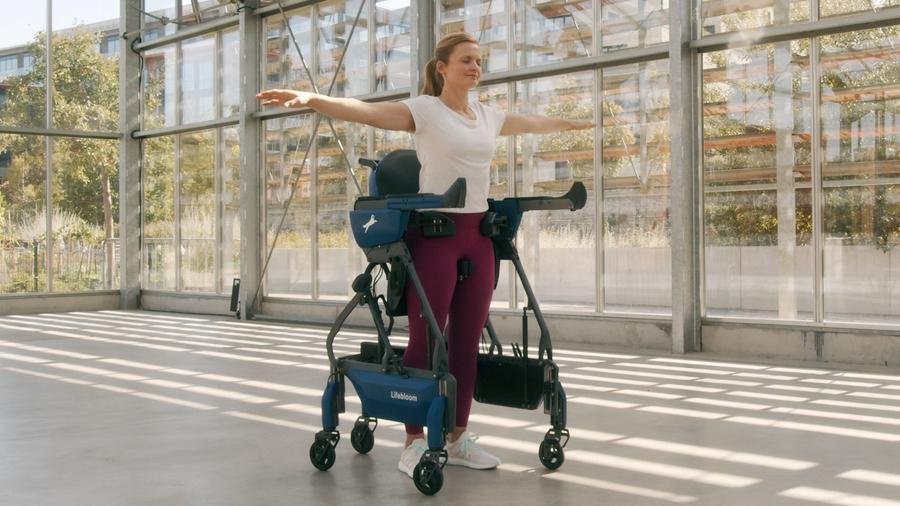
In China, walking-assistance devices are increasingly being introduced through outdoor tourism services, rental stations and consumer-facing retail experiences.
These distribution models are important because they allow people to experience powered walking assistance before deciding whether to purchase a device.
Tourism rentals, in particular, provide opportunities for consumers to evaluate assistance during uphill walking, stair climbing and other physically demanding activities.
However, rental usage and retail purchases are different commercial indicators. The Ministry of Commerce figures do not establish how much of the reported growth is attributable to outdoor exoskeletons, personal mobility devices or other products within the monitored category.
Exoskeleton Index Analysis
Exoskeleton Index analysis
The significance of this report extends beyond the 12.8% figure. Exoskeleton assistance devices are now appearing as a distinct category in China’s official consumer spending statistics.
That is an important development for an industry still working to establish how wearable robotics fits into everyday consumer markets.
The commercial challenge is no longer limited to making powered assistance lighter, more comfortable or more affordable. Manufacturers must also establish whether consumers see enough recurring value to purchase, maintain and regularly use these devices.
China’s expanding rental and retail experiments may help answer that question. Short-term access lowers the initial commitment and gives potential buyers direct experience with the technology.
Yet increased visibility does not automatically translate into sustainable demand. Repeat usage, customer retention, service requirements and willingness to pay remain critical indicators.
The Ministry’s data should therefore be interpreted as an encouraging but limited market signal, not proof that consumer exoskeletons have reached mass adoption.
The next meaningful milestone will be transparent reporting of unit sales, repeat customers and sustained demand outside major holiday periods.
What to Watch Next
Further market reporting will be needed to determine whether the increase reflects a sustained shift in consumer demand or spending concentrated around the holiday period.
Manufacturer shipment data, retail sales volumes, rental utilization and repeat customer behavior would help clarify the relationship between consumer curiosity and lasting commercial adoption.
For now, China’s latest figures provide a measurable indication that spending on exoskeleton assistance devices is growing within the platforms monitored by the Ministry of Commerce.
Sources and reporting notes
Xinhua, October 7, 2026. National Day holiday consumer spending report, citing China’s Ministry of Commerce.
Chinese government portal. Government-hosted republication of the Xinhua report.
Methodology: Reported growth figures refer to year-over-year sales revenue on monitored major platforms for October 1–6, 2026. They do not represent total market size or device shipments.